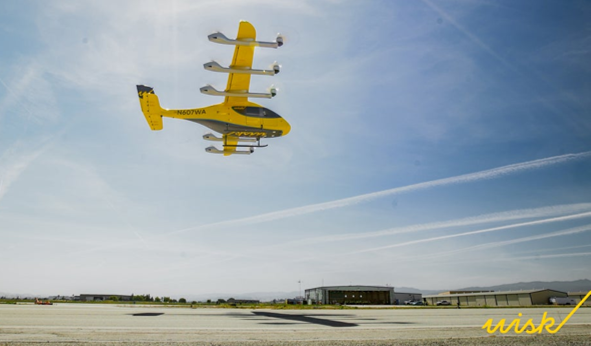
Powerful permanent magnets assembled into motors for primary propulsion are increasingly making their way aloft in passenger aircraft – albeit mostly in test flights at present but relentlessly proving their way toward operational status in the future. One of the latest demonstrations of electric flight was accomplished by Boeing-owned Wisk Aero in California. In May, the developer of autonomous electric vertical take-off-and landing airplanes marked the successful first flight of its second Generation 6 aircraft.
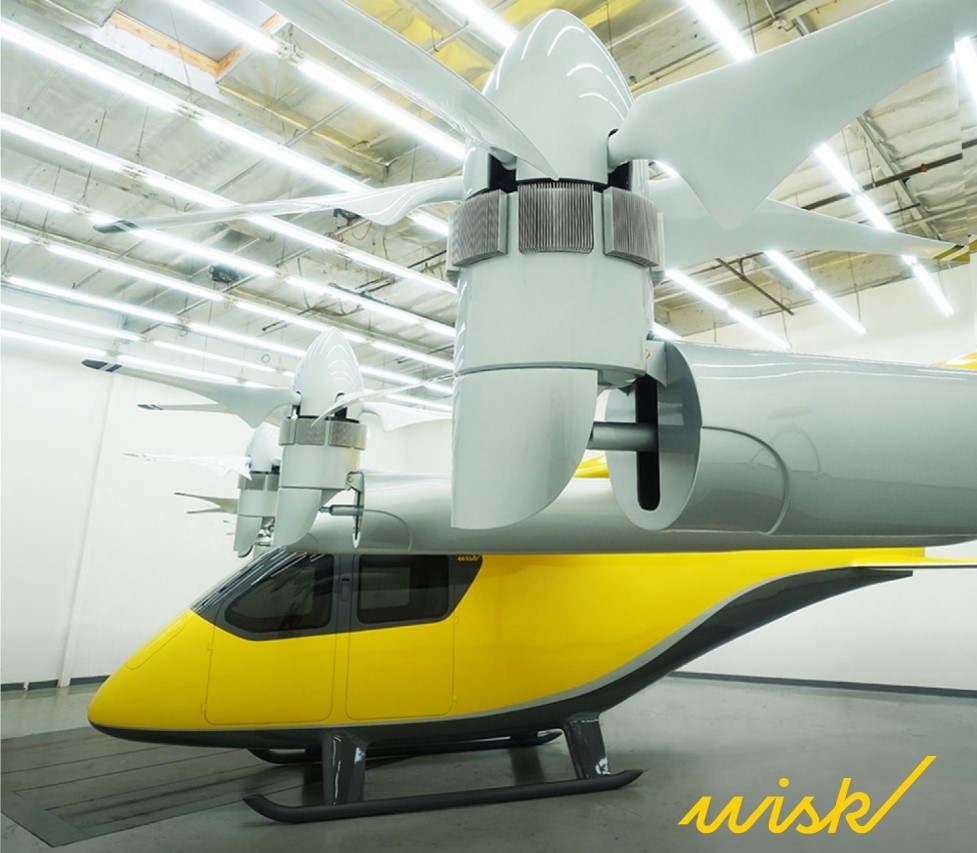
Wisk’s eVTOL aircraft use a proprietary all-electric distributed propulsion system with 12 independent electric motors driving 12 rotors-propellers which are housed on booms under the wings. All 12 motors work to lift the aircraft, then the front six motors tilt to transition from vertical lift to horizontal flight and the process reverses for landing. The battery-powered system is designed to provide power, efficiency and redundancy for autonomous air taxi operations.
Wisk builds its own air-cooled motors and drivetrain components using brushless permanent magnet synchronous motors, each designed with extreme simplicity and internal redundancies featuring only a single moving part per motor. PM motor technology is a prevalent choice for eVTOL aircraft due to their high power-to-weight ratio and exceptional torque density.
The milestone is a testament to Wisk’s flight test program and scale, coming shortly after the first Gen 6 aircraft started its flight test campaign in mid-December. Conducted at Wisk’s flight test facility in Hollister, California, the flight included vertical takeoff, hover, and chirp maneuvers – an important first step in characterizing the aircraft’s performance. The addition of a second active Gen 6 flight test vehicle significantly expands Wisk’s capacity to collect data, validate systems, and accelerate the flight test campaign.

“Seeing the second Gen 6 aircraft take to the skies is a proud moment for Wisk,” said Sebastien Vigneron, CEO of Wisk. “This pace of execution is exactly what is required to meet the rigorous safety standards of commercial aviation. Having multiple aircraft in flight testing allows us to move faster, learn quicker, and stay on the leading edge of autonomous aviation. Every flight provides crucial data that matures our aircraft and autonomous system, bringing us one step closer to delivering a certified, autonomous air taxi service.”
Next, the dual-aircraft testing phase will focus on expanding the flight envelope, including transitions from hover to wing-borne flight, while continuing to refine the control laws and system performance. Wisk’s Gen 6 aircraft is designed to meet or exceed current commercial aviation safety standards. The aircraft is all-electric and autonomous, with human oversight from a ground-based operator – a model Wisk believes is necessary for safety, scalability and affordability. See www.wisk.aero.