With a growing roster of full-vessel systems engineering projects along with discrete product launches, ABB is electrifying diverse maritime fleets around the world. Recent notable undertakings include:
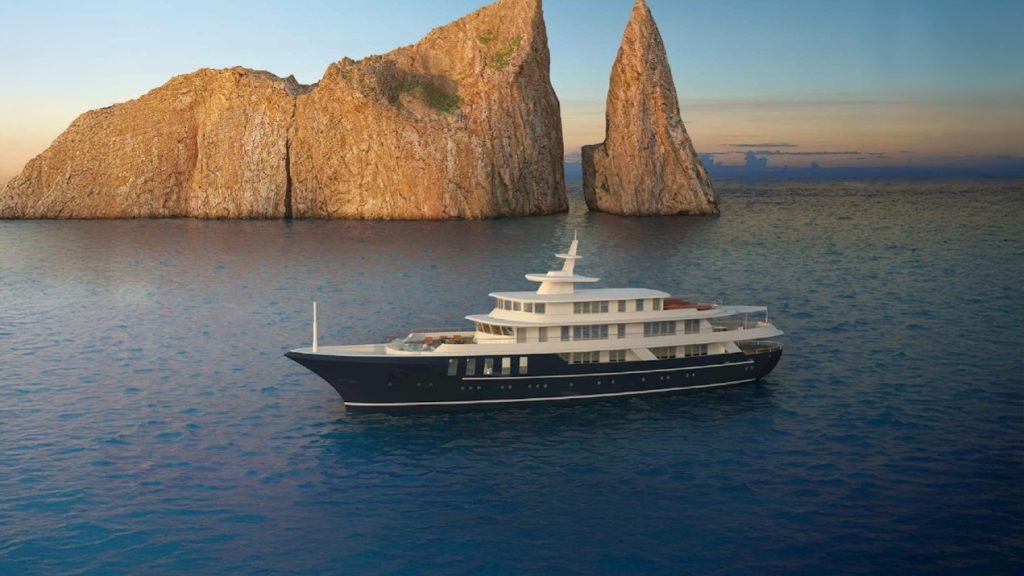
- Modernizing an iconic yacht built in Italy 50 years ago to equip it for hybrid-electric propulsion for expedition cruising in the Galapagos Islands off Ecuador.
- Equipping a new ferry in Busan, Korea for all-electric propulsion.
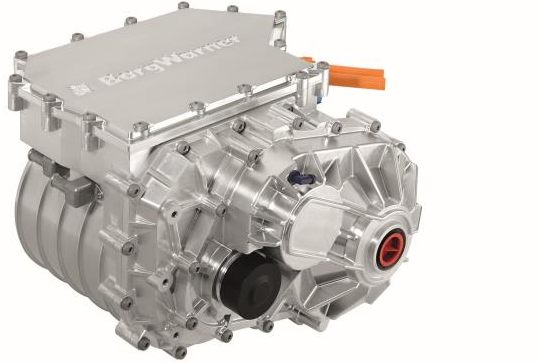
- Launching a new series of permanent-magnet motors that are seen as a core technology for future maritime electrification efforts.
In Ecuador, ABB is collaborating with expedition travel company Quasar Expeditions to modernize the iconic yacht formerly known as Galú for hybrid-electric propulsion. The conversion will make the vessel, originally built by Italian shipyard Benetti in the 1970s, the first of its kind.
The conversion from conventional combustion engines to hybrid-electric propulsion will allow guests on board the 52.9-meter vessel to experience quiet, comfortable, and low-emission sailing in one of the world’s most sensitive biosphere reserves. Comprising ABB Onboard DC Grid power system platform, energy storage system, permanent magnet propulsion motors and modern diesel gensets, the hybrid-electric propulsion system allows the vessel to operate entirely on battery power during anchor and short crossings. In addition to minimizing fuel consumption, this will support compliance with Galápagos National Park’s strict noise and emission regulations.
“Our first visit to the Galápagos in 1979 changed us forever and inspired Quasar Expeditions,” commented Eduardo Diez, Owner and Chairman, Quasar Expeditions. “Today, tourism brings both benefits and risks to these islands we love. That’s why we partnered with ABB to develop Quasar Conservation, a hybrid-electric yacht that redefines sustainable luxury without compromise.”
As well as extending Quasar Conservation’s operational life by up to 25 years, the modernization project preserves the yacht’s classic aesthetic and craftsmanship – and is more cost-efficient and sustainable than building a new vessel.
“Expedition cruising is one of the most technology-intensive growth segments in the maritime industry, with operators increasingly specifying advanced solutions that enhance efficiency while preserving luxury and passenger comfort,” said Tomas Arhippainen, Business Line Manager, Marine Service & Digital, ABB’s Marine & Ports division. “By using ABB’s hybrid-electric system, Quasar Expeditions’ Quasar Conservation perfectly demonstrates the benefits that can be achieved through a comprehensive, collaborative modernization project.”
Well suited to space-limited retrofit applications, ABB’s Onboard DC Grid provides the high fault- tolerance levels that are critical for exploration cruise vessels operating in remote waters. The modular DC power platform enables the seamless integration of the 814-kilowatt-hour battery ESS and modern diesel gensets. With ABB’s PEMS power and energy management system optimizing the use of total onboard energy resources, this combined hybrid solution – including highly efficient permanent magnet motors – offers significant grid-to-propeller efficiency gains compared to conventional mechanical drivetrains.
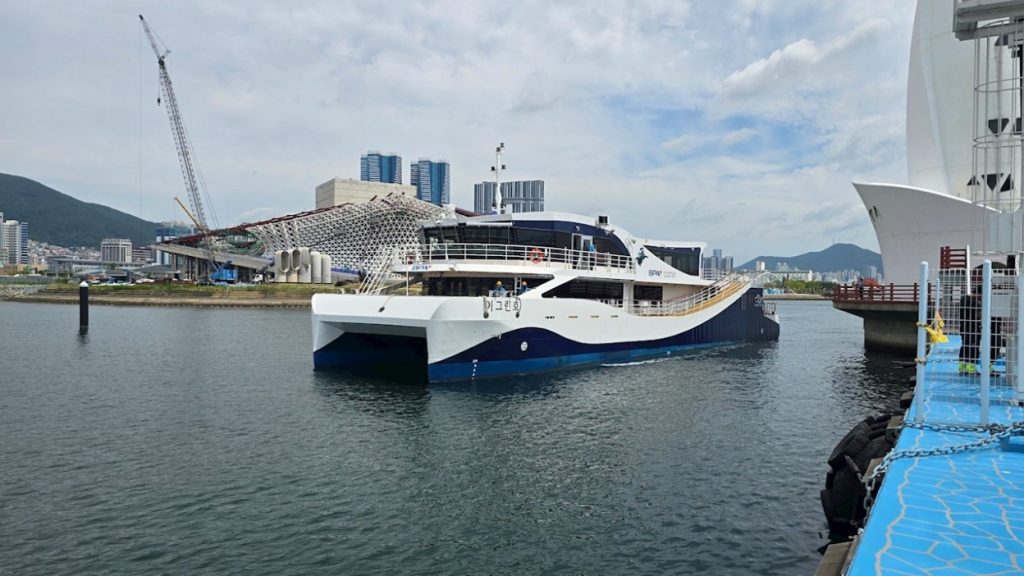
Demonstrating a significant advance in South Korea’s strategy for maritime decarbonization, Busan Port Authority has officially launched the first state-owned all-electric ferry, with the end-to-end electric power and propulsion system supplied by ABB. Built by Busan’s Kangnam Corporation, the new passenger ferry is the first realization by South Korean authorities of their plan to replace 140 state-owned assets with ships running on cleaner energy sources by 2030.
“This vessel demonstrates Busan Port Authority’s commitment to cleaner, smarter port operations,” said Woong-Ki Lee, Port Manager, Busan Port Authority. “By introducing an all-electric ferry to serve our North–South Port connection, we are reducing local emissions and noise while providing a replicable model for future harbor craft. ABB’s integrated electric propulsion and energy storage system has given us the efficiency, safety, and reliability we need to deliver a better experience for passengers and a healthier environment for our city.”
The power distribution system ensures optimal delivery of battery output to the vessel’s subsystems, with ABB’s PEMS power and energy management system controlling overall power distribution, increasing fault tolerance and providing a high degree of reliability.
Propulsion is powered by ABB low-voltage induction motors. Equipped with two 1,068-kilowatt-hour battery packs for emissions-free operations, the vessel will take approximately one hour and 30 minutes to fully charge the battery using 500 kW of power, which enables about two hours of operation. While the vessel is berthed, it is connected to the shore charging station via a stable optical communication link, allowing automatic control of charging and discharging from aboard.
“The launch of this new passenger ferry is testament to both Busan Port Authority’s and South Korea’s decarbonization ambitions and provides a blueprint in pursuit of increasing energy-efficiency and reducing emissions,” said Riccardo Repetto, Global Segment Manager, Short Distance Shipping, ABB’s Marine & Ports division. “The project also demonstrates the power of ABB’s Onboard DC Grid as an enabling platform for cleaner maritime operations.”
New permanent magnet motor series
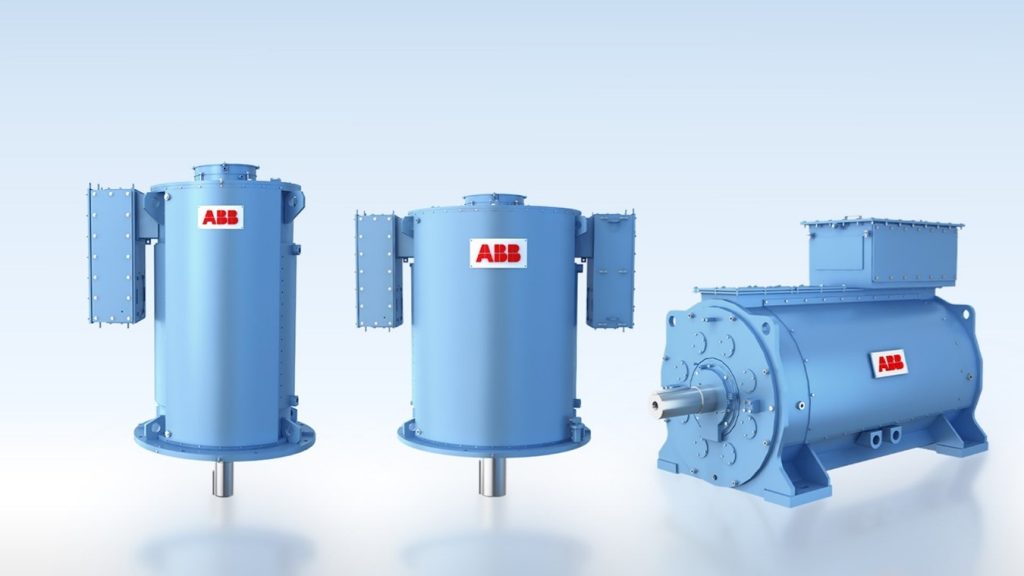
In April, ABB launched its next-generation series of permanent magnet motors with water-jacket cooling, extending its portfolio of high-efficiency electric motors. Available in frame sizes 500 and 710 with power ratings up to 5 MW, the series is designed to support growing cross-industry demand for compact, energy-efficient and low-noise solutions.
In particular, notes the company, the marine industry stands to benefit as it is in the midst of a transformation driven by the global shift towards electrification, hybridization, and the adoption of alternative fuels. Permanent magnet motors are increasingly recognized as a core technology for next generation vessels, enabling higher efficiency, reduced noise, and improved maneuverability – especially for tugboats, offshore support vessels, ferries and hybrid ships. The motors are also available for a number of other industrial variable-speed drive applications, including both geared and direct-drive configurations.
Drawing on more than three decades of permanent magnet technology expertise, the new motors deliver premium efficiency up to 98%, outstanding torque density and significantly reduced losses across the full operating range. The innovative water-jacket cooling system, combined with an optimized mechanical structure, provides exceptional thermal performance without requiring external fan units or top coolers. Customers benefit from up to 60% reduction in mounting volume, 30-40% lower vertical height, and 5-15% lower weight compared with conventional alternatives – critical advantages for L-drive azimuth thrusters, electric tugboats, offshore support vessels, and other applications where machinery space is constrained.
“Across many industries, our customers are working to decarbonize, improve energy performance, and fit more capability into tighter spaces,” said Tatu Jarvenpaa, Business Line Manager for Motors and Generators at ABB. “This new permanent magnet series combines ABB’s latest advances in magnet technology, cooling innovation, and engineering to deliver more power in less space. The motor features a fully enclosed rotor design, advanced magnet protection, and ABB’s patented PM module technology to prevent corrosion and withstand demanding environments. A uniform innerloop cooling architecture improves temperature stability around magnet modules and coil ends, enhancing demagnetization resistance, and long-term reliability. See www.abb.com.