A global price war in the market for grain-oriented electrical steel is generating intense pressure on producers outside China, impacting especially the two remaining manufacturers of GOES in Europe – thyssenkrupp Electrical Steel and ArcelorMittal. Plant shutdowns, company pleas for regulatory protection and government support measures are aspects of the fray as exporters in China flood the market and erode price levels. Laced with distinctive magnetic properties, the specialty steel is a key material for substation transformers and large generators for wind power, along with other electromechanical products dependent upon magnetic functionality.
thyssenkrupp Steel is responding with further production cuts. Following the temporary shutdown of production at the Gelsenkirchen and Isbergues sites by the subsidiary thyssenkrupp Electrical Steel at the turn of the year, and with production in Isbergues running at just 50 per cent of total capacity since January, the site has now been completely closed from June to September.
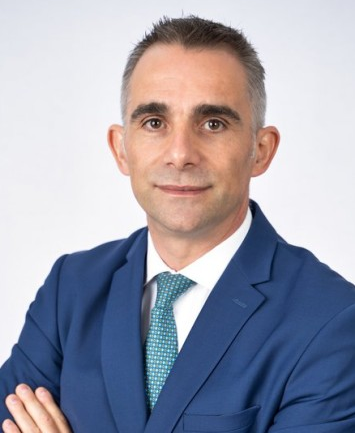
“In view of the ruinous flood of imports in the market for grain-oriented electrical steel, we see no alternative but to temporarily shut down our French site once again,” declared Angelo di Martino, CEO of thyssenkrupp Electrical Steel. “This measure is necessary to stabilise our company amid further deterioration in order intake. We are faced with import prices that in some cases lie well below production costs in the EU. We therefore urgently need appropriate trade protection to establish fair competitive conditions for this strategically important product. This also concerns around 1,200 skilled jobs, which we aim to safeguard at our sites in Gelsenkirchen and Isbergues. We are engaged in intensive and constructive dialogue with the European Commission and hope for the prompt introduction of effective safeguards. Currently, there is no effective protection. At the same time, we are doing everything within our control to strengthen our competitiveness.”
“The European market for grain-oriented electrical steel is currently under severe pressure. This is due to unchecked increases in import volumes at prices that are significantly below average production costs in the EU. Imports have tripled since 2022 and rose by a further 50 per cent in 2025; they are now estimated to account for over 50 per cent of the European market volume. These developments have led to a dramatic reduction in order volumes and, consequently, to significant underutilization of European production facilities. Nevertheless, the market for grain-oriented electrical steel remains attractive: according to market studies, global demand is set to triple by 2050.”
The material is used, for example, in transformers for substations and wind turbines. In short, emphasizes thyssenkrupp, it is essential for transmitting electricity from the power plants where it is generated all the way to the household outlet. Without high-performance electrical steel strip, this process simply cannot take place – the material is irreplaceable. To ensure that power transport is as efficient and low-loss as possible, special grades – referred to as top grades – are required. These grades are produced through a technologically advanced manufacturing process.
In the USA, Cleveland-Cliffs Steel, the only producer in the country of grain-oriented electrical steel, was recently awarded a $400 million indefinite-delivery/indefinite-quantity contract for grain oriented electrical steel by the Defense Logistics Agency. Awarded in September 2025 and extending for five years to September 2030, it supports orders from the Army, Marine Corps, Navy, Air Force and Space Force.
Technical advancements by thyssenkrupp Electrical Steel shown at Coiltech
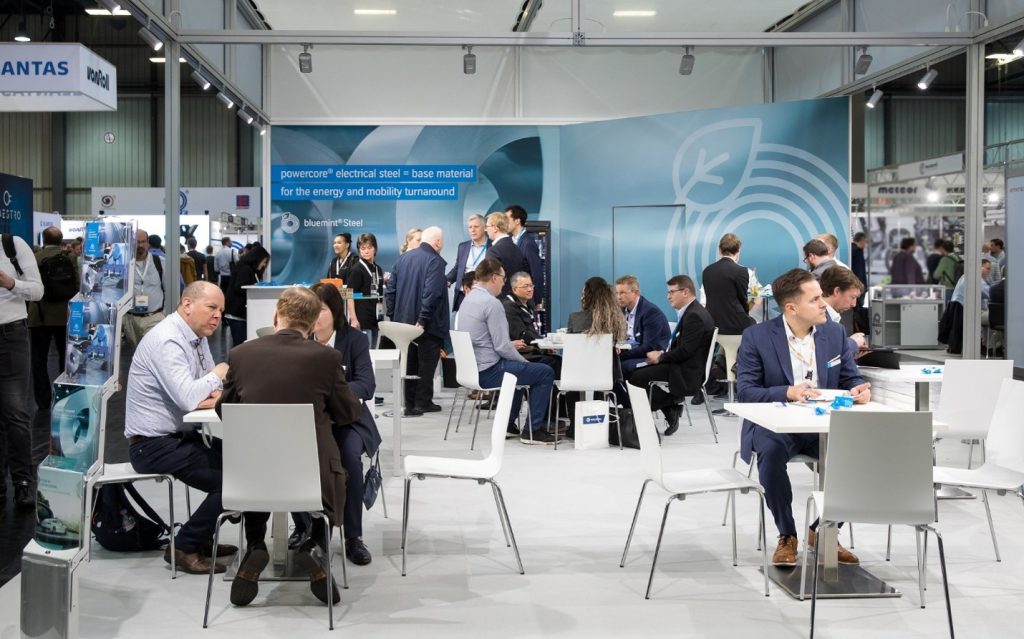
At the recent Coiltech Europe trade show held in March, thyssenkrupp Steel highlighted advancements in its electrical steel and related products targeting the EV and transformer markets. These included, in particular, the newly developed powercore® traction NGO 020‑120Y420 grade, a non-grain oriented electrical steel which it says is ideally suited for highly efficient electric drive systems in vehicles and impresses with its excellent processing properties, very low core losses and a guaranteed yield strength of 420 megapascals.
Also singled out was its stabosol® adhesive insulating varnish. Developed specifically for direct-cooled stator packs, it significantly increases motor efficiency and offers high resistance to thermal stress and magnetic core leakage. At the thyssenkrupp booth, visitors were able to experience the combination of the new steel and adhesive by exploring a stator demonstrator which was developed in collaboration with the Chair of Production Engineering of E‑Mobility Components (PEM) at RWTH Aachen University as part of the consortium study of the Scale-up E-Drive transformation hub.
Latest developments in the field of grain-oriented electrical steel by thyssenkrupp that were highlighted include applications for axial-flow motors as well as a new service offering “thyssenkrupp Electrical Steel Solutions” for the transformer industry.
Big expansions intensify the pressure at ArcelorMittal
Digesting large investments and growth plans in electrical steel, ArcelorMittal has also spoken out strongly. Paul Brettnacher, CMO Central Accounts for ArcelorMittal Europe—Flat Products, has articulated the company’s position and call for regulatory action in the corporate magazine:
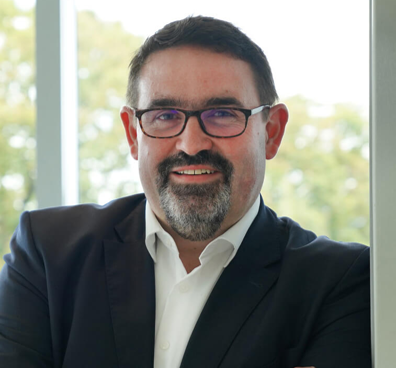
“The good news: the first step has been taken. The introduction of the Carbon Border Adjustment Mechanism (CBAM) on 1 January this year, and the upcoming changes to the EU’s Tariff Rate Quota system (TRQ) in July 2026, are a first step towards a more level playing field for a sustainable low carbon steel industry in Europe. But it is only a start.
Now the next step is urgently needed. The increase in imported steel derivative products – which are not covered by CBAM or TRQ – is threatening to erode any real benefit offered by the EU’s current measures, and undermine much of Europe’s broader steel-based value chain, not least in the strategically important electrical steels segment, but also in sectors such as automotive and packaging.
This backdrop is being exacerbated by the current volatile geo-politics and global trade dynamics.
The non-grain oriented electrical steels (NGOES) – also known as non-oriented electrical steels (NOES) – value chain of electric motors and generators, and their component parts, laminations, stator and rotor cores, are key pillars of Europe’s energy transition plans. Every wind turbine generator, every electric vehicle traction motor, every industrial motor depends on it.
As the industry body, Electromechanics Synergy Network (ESN), has said: “The trajectory is clear – without intervention, Europe will find itself unable to produce e-motors or generators domestically, with severe consequences for its strategic autonomy and defence readiness.” Make no mistake, this is also a direct threat to thousands of skilled European industrial jobs.
Global excess capacity in the steel industry is expanding at its fastest pace since the 2008 financial crisis. Most new capacity is concentrated in Asia and the Middle East, in many cases supported by massive subsidies. The result is a sustained flood of artificially cheap exports unfairly undercutting EU producers at prices no market-based competitor can match.
Within the electrical steels market in Europe, nearly 2/3 of the NGOES needed for Europe’s new electric motors and generators are now coming from outside the EU. All unhindered by EU fair trade and carbon reduction policy on the steel derivatives and downstream products. Such imports threaten Europe’s industrial capability, its competitiveness, resilience and strategic autonomy, and undermine the foundations of the EU’s green and digital transitions. There is only a short window of opportunity to turn this around.
So the threat is clear. What is needed is the political will to address it… and a sense of urgency. Three measures are urgently required, with three clear deadlines. And they are three measures that directly complement ongoing EU policy processes:
- Extend CBAM to the full NGOES downstream value chain from first-transformation steel derivatives (including laminations, stators and rotor cores) to downstream products (such as e-motors and generators). Deadline: 2027.
- Extend steel trade measures (TRQs) to the same derivatives and downstream products, closing the loophole that currently leaves higher value derivatives entirely unprotected. Deadline: 2027
- Prioritise ‘Made-in-EU’ generators and e-motors in public procurement and funding schemes, including wind generators and e-motors for powertrains. Deadline: 2027”
Two large expansions at ArcelorMittal are particularly noteworthy – startup a few months ago of new production lines in France representing a $500 million investment and construction of new production operations in North America pegged at $1.2 billion.
On March 26, the electrical steels teams at Mardyck, Dunkirk, produced the first industrial coil on the new production lines there. The culmination of several years of planning and ArcelorMittal’s largest investment in Europe in the past 10 years excluding investments in decarbonization – the project aims at building the company’s next-generation offering of innovative electrical steels for the fast-developing mobility and energy transition markets. With the first coil – over 17 tons and nearly 4 kilometres long – the new production line entered a decisive phase enabling a planned steady ramp-up, leading to validation of all the lines and products to reach full operational capacity.

“The first coil produced at Mardyck is a strong signal of ArcelorMittal’s longterm commitment to Europe. This investment goes well beyond capacity expansion: it is about securing European industrial leadership in electrification, energy transition and digitalisation. By investing at scale in next generation electrical steels, we are strengthening the European value chain, reducing dependency risks and enabling our customers to accelerate the transition towards more efficient electric mobility, renewable energy systems and data driven infrastructure. This project reflects our clear ambition to be a trusted, strategic partner for Europe’s sustainable and competitive future,” said Cristina de Lucas, CMO electrical steels ArcelorMittal Europe – Flat Products.
A year earlier, in February 2025, ArcelorMittal announced that it is proceeding with plans to build an advanced, non-grain-oriented electrical steel manufacturing facility in Alabama. Aimed for completion in 2027 and representing a $1.2 billion investment, the plant would be capable of producing up to 150,000 metric tons of NOES annually, depending on the product mix, in support of automotive and mobility, renewable electricity production, and other industrial and commercial uses, including electric motors, generators and specialized applications.
See www.thyssenkrupp-steel.com and www.arcelormittal.com.