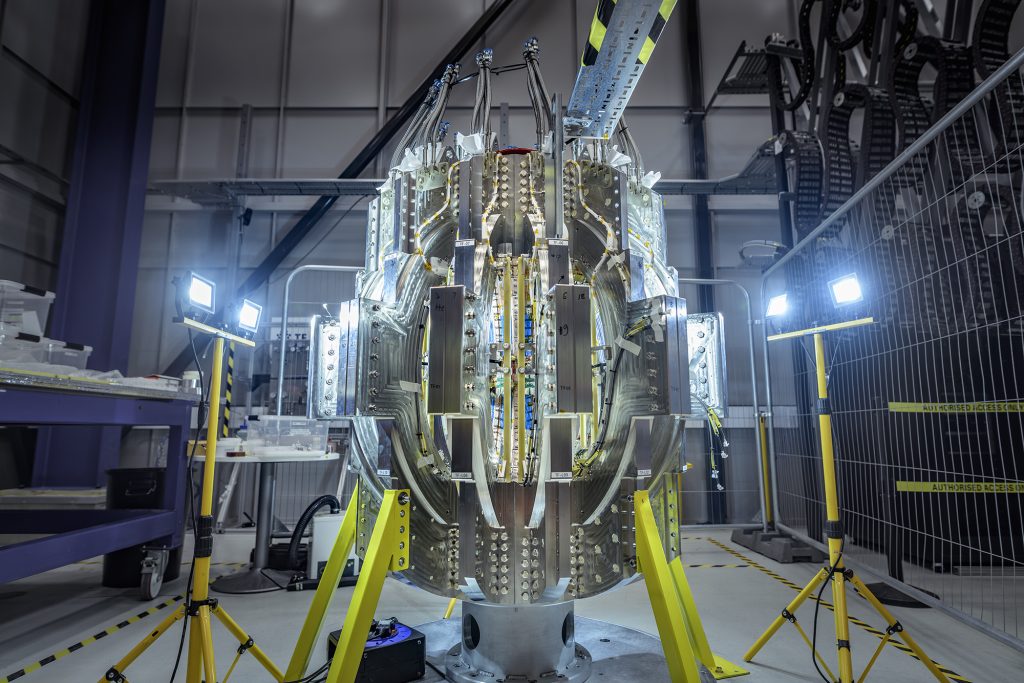
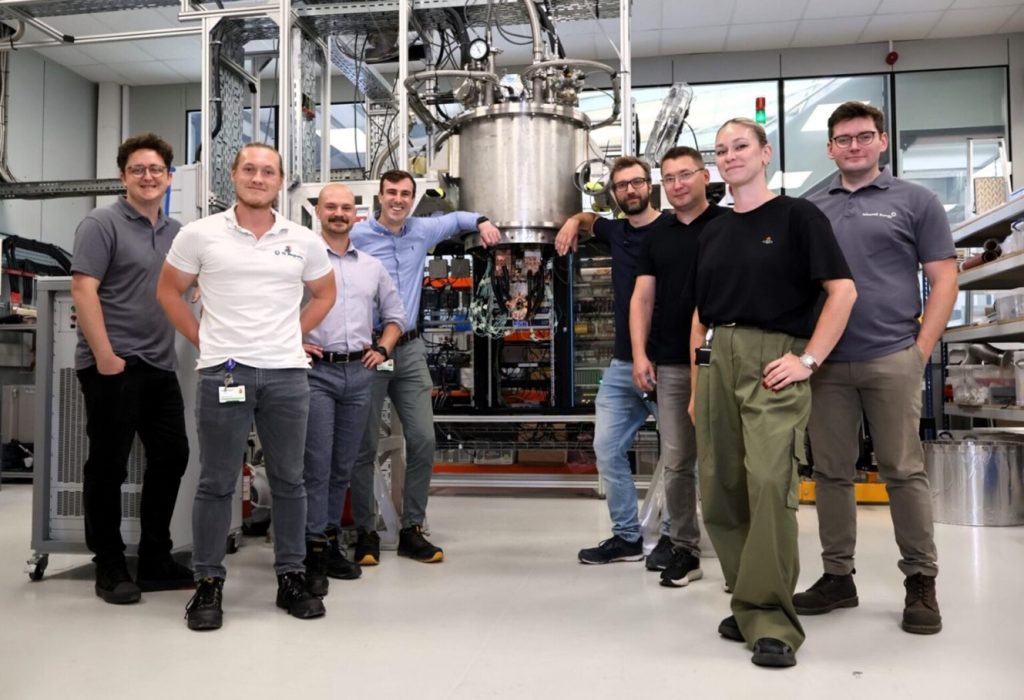
November 19, 2025- Tokamak Energy announces breakthrough results on the path to clean, limitless energy after replicating fusion power plant fields for the first time in its world-leading magnet system. Tokamak Energy’s Demo4, a complete set of HTS magnets built in a tokamak configuration, produced the milestone results at the company’s headquarters outside Oxford, achieving field strengths of 11.8 Tesla at -243 degrees Celsius in recent tests. The achievement comes amidst a rapid scale up by the company to build its new business unit, TE Magnetics, as a commercial leader in HTS magnet technology.
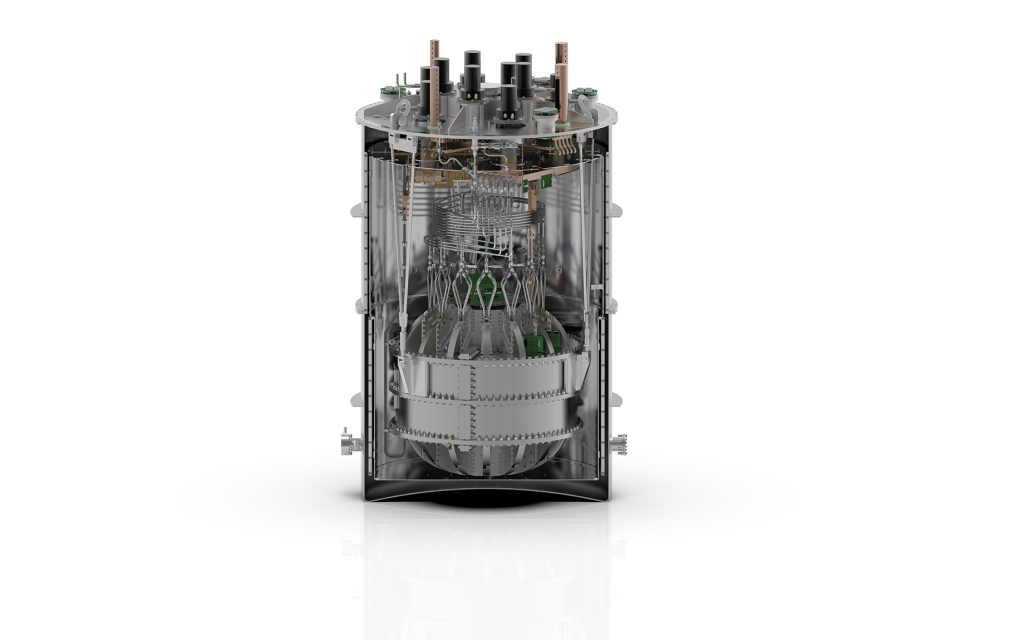
Demo4 also demonstrated the transformative potential of high temperature superconducting (HTS) technology across a range of spin-out applications, from power distribution for data centers, electric motors for zero emission flight, and fast, efficient magnetic levitation transport systems. Creating fusion energy requires extremely strong magnetic fields to confine and control hydrogen fuel, which is heated to a plasma several times hotter than the center of the sun inside a vessel called a tokamak. The system had an incredible seven million ampere turns of electrical current running through its center column, demonstrating huge potential for power distribution as HTS can deliver around 200 times the current density of copper.

“These results are a major victory for the race to deliver fusion and HTS as a disruptive new commercial technology,” said Warrick Matthews, Tokamak Energy CEO. “Demo4 represents over a decade of HTS innovation at Tokamak Energy. Born from our fusion mission, it validates one of the technical solutions for getting clean, limitless, safe and secure fusion energy on the grid. Demo4 is also best in class at showcasing and demonstrating the transformative potential for superconductors, including power distribution for high-demand environments like data centres and applications across science, power systems, propulsion, and beyond,”
Strong magnetic fields are generated by passing large electrical currents through arrays of electromagnetic coils assembled in a cage-like formation. The magnets are wound with precision from HTS tapes using multi-layered metal conductors with a crucial internal coating of ‘rare earth barium copper oxide’ (REBCO) superconducting material.
While recognising the achievement of demonstrating a single high-field HTS magnet, Tokamak Energy has focused on the next essential step; validating a complete HTS magnet system. In a fusion power plant, each REBCO superconducting tape must operate within the complex, combined magnetic environment created by neighbouring coils – conditions that significantly influence its effective critical current and structural performance. These system-level interactions cannot be captured through individual magnet tests. Demo4 is therefore a world-first high field platform to generate and study fusion-relevant forces across a system coil set (14 toroidal field magnets and two poloidal field magnets), providing uniquely valuable engineering insight and data to inform power plant designs of the future.
“Demo4 is delivering exactly what it was built for. Every test provides us with invaluable data and deepens our understanding,” said Graham Dunbar, Demo4 chief engineer at Tokamak Energy. “This isn’t just about achieving a number; it’s about gaining the confidence and build expertise to scale our technology for future energy-producing fusion systems.”
Demo4’s results confirm Tokamak Energy’s HTS magnets can generate the high fields essential for a fusion power plant and prove their capacity to support higher current densities with plug-in cooling capability. This means they can be made smaller and lighter than traditional low-temperature superconductors and operate at a fraction of the cooling cost. Further testing to reach higher magnetic fields continues, with next results due in early 2026.
Scaling up HTS magnet business through TE Magnetics division
A number of other recent developments underly its rapid scale-up to become a major commercial supplier of high-temperature superconducting magnets and technology – all centered around its launch in 2024 of TE Magnetics to focus on the industrial deployment of transformative HTS technology.
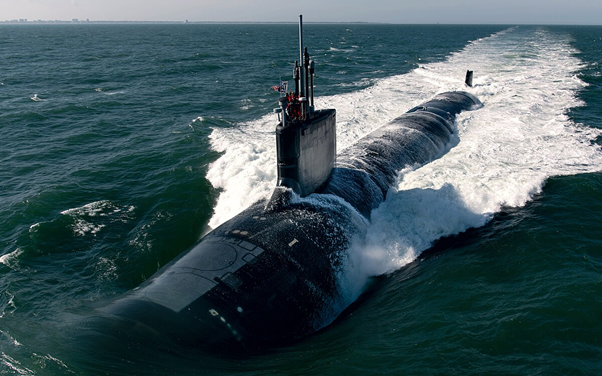
On October 21, 2025, Tokamak Energy announced that it has been contracted by General Atomics to provide critical high temperature superconducting (HTS) magnet technology for a next-generation U.S. undersea magnetohydrodynamic pump program. Launched in 2023, the Defense Advanced Research Project Agency (DARPA)’s Principles of Undersea Magnetohydrodynamic Pumps (PUMP) program was initiated with a view to creating novel electrode materials suitable for a magnetohydrodynamic drive. The program was reported earlier in Magnetics Magazine in the article, “Seeking the Ultimate in Marine Stealth”.
The contract with General Atomics will see Tokamak Energy provide the simulation, design and fabrication of the HTS magnets. General Atomics will provide magnet system integration with auxiliary systems and integration with prime contractor HRL Laboratories, who are developing the electrode technology needed to overcome existing performance limitations. These combined efforts bring together capabilities that address challenges which have previously made the technology unviable due to limitations in magnets and electrodes.
HTS is the ideal technology to be deployed for MHD as propulsion in water requires high magnetic fields in a compact package, and HTS technology is capable of enabling a more powerful, silent and efficient MHD drive.
Tokamak Energy is delivering this technology by leveraging its proprietary suite of modelling and simulation tools validated through extensive magnet testing, patented designs that enable robust magnets and versatile manufacturing technologies born from its mission to deliver clean and limitless fusion energy.
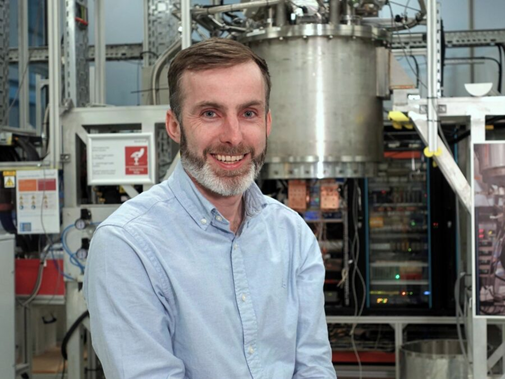
“This contract is another step towards realising a military relevant scale magnetohydrodynamic drive, and we are delighted to be working with General Atomics on this important project,” said Dr. Liam Brennan, director of TE Magnetics. “We’re excited to demonstrate how our HTS technology, born from our mission to deliver limitless, clean fusion energy, can enable a broad range of applications with significant industrial and commercial value across a range of sectors.”
“We are proud to be part of this groundbreaking collaboration and to provide our expertise in advanced magnet system integration,” said John Smith, senior director of Projects and Engineering for General Atomics Energy Group. “Our work with Tokamak Energy and HRL Laboratories shows how the unique strengths of each collaborator can overcome long-standing barriers in magnetohydrodynamic propulsion.
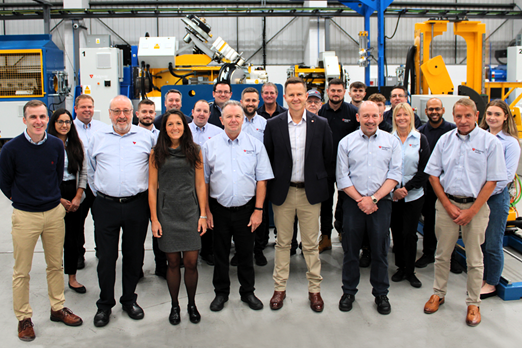
In September 2025, Tokamak Energy acquired Ridgway Machines to accelerate growth and manufacturing capabilities of its TE Magnetics business with the acquisition of specialist engineering company Ridgway Machines. Leicester-based Ridgway Machines will operate as a subsidiary of Tokamak Energy, with the existing brand, workforce and facility remaining unchanged.
Founded in 1920, Ridgway develop solutions for winding and insulating superconducting magnets and cables, and will enable TE Magnetics to scale up its UK manufacturing facilities to produce commercial products fit for multiple industries.
“Since launching the TE Magnetics brand, we have been successful in securing contracts for a range of HTS products and it is now time to scale up,” noted Matthews. “The acquisition of Ridgway Machines, a thriving business with a highly skilled workforce, will accelerate TE Magnetics’ manufacturing method development to deliver high quality products at scale. Ridgway’s specialist engineering capabilities combined with TE Magnetics’ world-leading HTS design and prototyping knowledge will deliver breakthroughs in performance, efficiency, and accessibility across a wide range of industries, helping to address global challenges and accelerate the electric revolution.”
“Throughout our hundred-years history, Ridgway has always been forward looking” noted Andy Glanville, managing director of Ridgway. “This track record means we are well suited to expansion and this new period of growth. In Tokamak Energy, we’re proud to be joining one of the UK’s most exciting technology businesses and to play our part in their ambitious and transformative plans. Both businesses exist to provide innovative solutions to some of the most pressing and important technological challenges the world is facing, and we can’t wait to get started on new projects together.”
HTS materials conduct electricity with virtually no power loss. When engineered into magnets, they generate exceptionally strong and stable magnetic fields within compact, lightweight systems – unlocking new possibilities in fusion energy and other applications ranging from electric zero emission flight to analytical science.
Tokamak Energy has pioneered HTS magnets since 2012, long before their importance for delivering clean, limitless fusion energy was widely recognized. Its advanced winding, testing and production techniques are key to creating robust and reliable HTS magnets for many industrial applications, including fusion, science and medicine, power systems, power distribution, manufacturing, and propulsion for land, water, air and space.
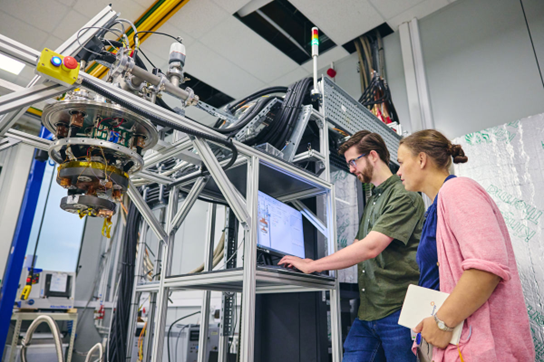
In October 2025, U.S. subsidiary Tokamak Energy Inc. was selected for the U.S. Department of Energy’s Fusion Innovative Research Engine (FIRE) Collaboratives, a $128 million initiative aimed at accelerating core fusion energy science and technology. As part of a University of Houston-led project, the company is helping to develop advanced superconducting tapes designed to withstand neutron irradiation – one of the toughest challenges in fusion environments. High-temperature superconductors are key to building the powerful magnets needed for commercial fusion energy, and this project aims to push HTS materials to the next level to meet the demands of future fusion power plants.
In addition, Tokamak Energy Inc. is serving as technical advisor on eight FIRE projects, partnering with leading U.S. national laboratories and universities to help guide early-stage fusion research toward commercial viability, including pilot plant design, fusion blanket development, and advanced materials for fusion environments. The participants include Oak Ridge National Laboratory, Savannah River National Laboratory, Idaho National Laboratory, Princeton Plasma Physics Laboratory, Lawrence Livermore National Laboratory and the University of Tennessee.
The company has also been awarded its 10th INFUSE grant by the U.S. DOE’s Innovation Network for Fusion Energy program which connects private companies with U.S. national labs and academic institutions to accelerate fusion development.
Its latest INFUSE project, led by Dr. Aaron L. Washington and Dr. Emre Yildirim, in collaboration with Savannah River National Laboratory, will investigate electrolysis of lithium for tritium extraction using high entropy oxides. This promising approach could play a vital role in enabling efficient tritium recovery, which is a key requirement for a sustainable fusion fuel cycle.
In July 2025 at the 2025 International Conference on Magnet Technology (MT29) held in Boston, Head of Magnets R&D, Greg Brittles, unveiled TE Magnetics’ latest innovation – ultra compact insulation (UCI). Traditionally, engineers faced a trade-off: fast-ramping magnets required insulation that compromised current density, thermal stability, and mechanical strength. UCI changes that. With its ultra-thin insulation and unique mechanical design, UCI removes the need for bulky insulating materials, enabling compact, robust, high-performance magnets that ramp quickly.
By supporting higher current densities, UCI reduces the amount of superconducting tape needed to reach a given field strength, which improves cost-efficiency. It enables capabilities once thought incompatible – high magnetic fields, compact footprints, and precise, rapid field control – unlocking new possibilities across a wide range of applications, from motors and generators to particle accelerators, analytical instruments, advanced manufacturing and propulsion. TE Magnetics is working with key partners to develop and deploy the technology.
Using advanced HTS tape supplied by SuperPower Inc. a subsidiary of Tokamak Energy strategic investor Furukawa Electric Group, a six-coil test magnet was cooled to 20 Kelvin and ramped to a peak field of 15 Tesla at over 5 Tesla per minute – more than five times the LTS industry standard. It was ramped to field over 100 times, including being deliberately ramped into quench from peak field, with no degradation. The compressive force in the core exceeded 30 tons – equivalent to the weight of eight Indian elephants – all within a magnet just 10cm in outer diameter and 4cm in inner diameter.
“This is a story of technical development and teamwork,” said Brittles. “We’ve developed the most compact, fast-ramping, high-field coil technology to date, combining the compactness and mechanical robustness of no-insulation coils, the quench protection and low voltage benefits of partial insulation, and the fast ramping and current-field linearity of fully insulated coils – all in one balanced package. It’s a testament to our commitment to staying at the forefront of innovation.”
Kathleen Amm, Director of the U.S. National High Magnetic Field Laboratory, commented on the test results: “I am very excited about the recent results from Tokamak Energy and the impact that they can have on the future of high magnetic field science.”
For more info, visit: www.Tokamakenergy.com