SBQuantum, a Canadian developer of quantum diamond magnetometers capable of providing accurate and timely data for navigation, defense and public safety without reliance on the Global Positioning System, is positioning for growth with investor funding, a new CEO, a new U.S. sister company — and launch of its sensor into orbit as part of the final phase of the MagQuest Challenge. Led by the U.S. National Geospatial-Intelligence Agency, the multimillion-dollar competition seeks to identify and accelerate new technologies to monitor Earth’s magnetic field and ensure the accuracy of the World Magnetic Model. SBQuantum is one of three finalists in the program.
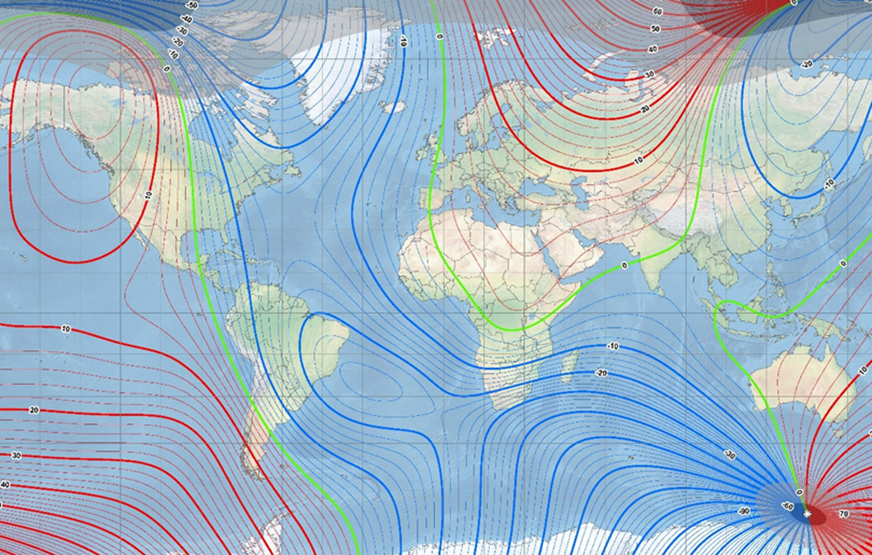
The WMM underpins navigation systems relied upon by billions of people worldwide. More than a billion smartphone users depend on it for mobile navigation apps, commercial airlines use it for flight routing, and militaries around the globe rely on it for mission-critical operations. The satellites currently collecting the data needed to produce the model are approaching end of life. Earth’s magnetic field is also shifting at an accelerating rate, making continuous, high-quality monitoring more important than ever.
“Reaching the final phase of MagQuest is the most significant technical milestone in our company’s history,” said David Roy-Guay, founder of SBQuantum, based in Sherbrooke in Quebec. “Our technology has now been validated for the most demanding conditions imaginable, and we are proud to bring to market a device which could soon play a central role in how the world navigates on land, air and sea. Applications for this sensor go far beyond the WMM itself, from defense and navigation to resource exploration and public safety. We believe quantum sensing is the next frontier, and we are at the forefront of delivering on its potential.”
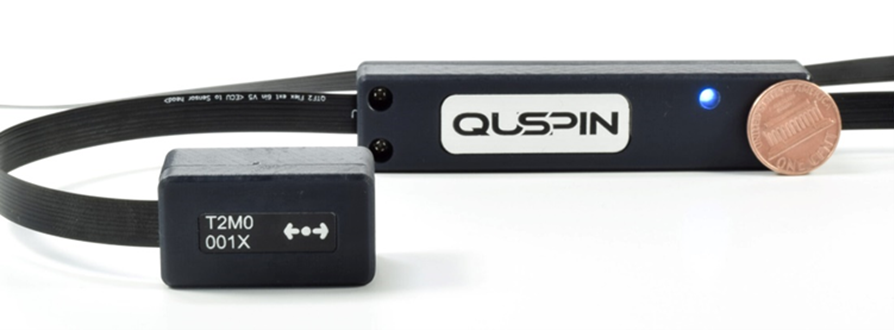
SBQuantum’s diamond quantum magnetometer represents a significant leap forward in addressing the challenge of magnetic navigation. Current infrastructure for monitoring Earth’s magnetic field is large, expensive and provides only periodic snapshots of the field. SBQuantum’s device is roughly the size of a quart of milk and harnesses the principles of quantum physics to deliver continuous, highly detailed monitoring of the field and its movement with exceptional precision, even in the extreme conditions of space.
Beyond improving the WMM, the data collected by SBQuantum’s sensor has implications for the future of navigation. Unlike GPS, magnetic navigation provides reliable and accurate readings across all environments, including those where satellite signals are denied, degraded or contested. This makes it a strategic priority for defense and aerospace sectors seeking resilient alternatives to GPS in an era of growing electronic warfare. In the company’s home country of Canada, quantum sensors have recently been recognized as one of ten “Key Sovereign Capabilities” in the country’s new Defence Industrial Strategy, underscoring the critical importance of the technology SBQuantum is developing.
MagQuest is a seven-year open innovation challenge launched by the NGA in 2019 with a total prize pool exceeding $2.1 million across its first three phases alone. Three finalist teams entered Phase 4, each receiving several million dollars in awards including a $1.55 million Phase 4a incentive prize purse, to design, build, test and launch their devices. SBQuantum is competing as part of a partnership with Spire Global, a global provider of space-based data and analytics. Spire’s satellite infrastructure, ground stations and data processing capabilities complement SBQuantum’s magnetometer technology.
The final phase of the challenge is expected to conclude in the fall of this year, with results informing the NGA’s acquisition strategy for WMM data collection capacity, expected to be operational by 2030.
Seed funding, new CEO & Zero Drift sister company in U.S.

In April, SBQuantum closed an oversubscribed $4 million USD seed round. The round was led by Quantonation and Quantacet, with participation from Investissement Québec. This represents the first private investment in the company, which was founded in 2017. The funding arrives at a pivotal moment. The company’s magnetometers are capable of a wide range of applications beyond navigation, including security screening around controlled-access facilities and a range of defense and intelligence functions that conventional sensors cannot perform.
“The timing of this investment reflects the growing urgency around resilient navigation and threat detection capabilities in both the defense and commercial sectors. Demand for alternatives to GPS is no longer theoretical, and it is being driven by real operational requirements in the field,” said David Roy-Guay, Founder of SBQuantum. “We believe that this group of investors, through their experience and know-how, have provided yet another important validation of our technology in the form of this funding. Their support will help us scale the company and disrupt new markets, one of many reasons we have now decided to work with outside investors after nearly 10 years in business.”
The financing will be used to expand the team at SBQuantum and accelerate growth, with Eric Giroux joining as Chief Executive Officer. He brings with him a track record of founding and scaling deep tech companies, with more than a decade in the security and defense sectors leading RaySecur Inc. This included successfully commercializing sensor technology for applications in both the commercial and public sectors, as well as building global distribution networks and recruiting highly skilled technical and sales teams.
“I have spent my career commercializing sensor technologies, and I can say with confidence that what the team at SBQuantum has built is exceptional. The technology is mature, the market need is urgent, and the timing is right for aggressive growth. The demand for resilient navigation and threat detection capabilities is accelerating rapidly, and I believe SBQuantum is uniquely positioned to become a global leader in this space,” said Giroux.
To accelerate growth in both markets simultaneously, the company has established Zero Drift Technologies, a sister corporation headquartered in Cambridge, Massachusetts. This structure was deliberately chosen to preserve and strengthen the company’s strong Canadian engineering base and intellectual property while creating a dedicated US entity dedicated to serving American government
customers and major defense prime contractors. Rather than relocating or consolidating, the companies will operate in parallel, allowing each to focus on its respective market.
“SBQuantum shows what happens when deep quantum physics meets a clear problem–market fit,” said Raphaël Bodin, an investor at Quantonation. “Their magnetometry platform combines advanced quantum sensors, sophisticated algorithms, and deployable hardware into a system designed for real-world environments. That positions SBQuantum to play a meaningful role as quantum sensing moves into industrial and security applications.”
The team at SBQuantum possesses deep expertise in quantum sensing and geophysics which has enabled the company to secure over $15 Million in R&D contracts. Beyond the MagQuest challenge, this includes contracts with the Canadian Department of National Defense, European Space Agency and others.
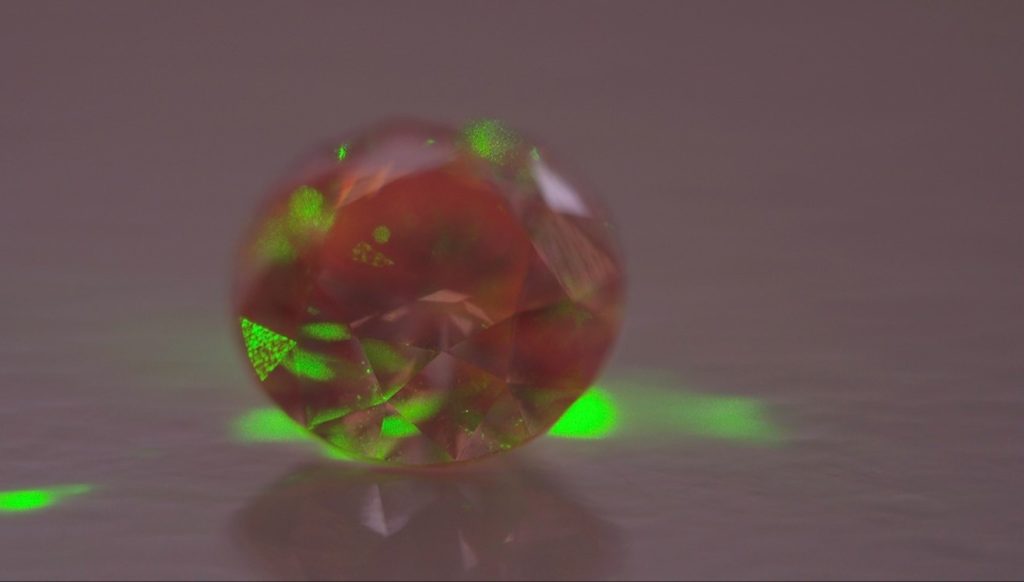
The sensors form the heart of its solution – they are a cutting-edge quantum magnetometer. Exploiting the quantum properties in nitrogen vacancy diamonds, SB Quantum has engineered the various components into a compact form. The sensor enables vector analysis with a high degree of sensitivity while simultaneously remaining durable, highly power efficient and removing the need for careful orientation.

“SBQuantum has developed one of the most advanced quantum magnetometry platforms in the world, one that can be put to many uses. For Quantacet, the time was ripe for investing in this Canadian leader with a field-tested technology now ready to go to market just as we see great appetite for such solutions especially from the public safety and defense markets,” added Chloé Archambault, Partner at Quantacet.
BCG estimates the global market for quantum sensing will reach $3 billion to $5 billion by 2030. The investment will be used to help accelerate execution of SBQuantum’s product roadmap going forward. This includes the continued expansion of the team and fast-tracking the development of its products.
Liftoff for MagQuest program
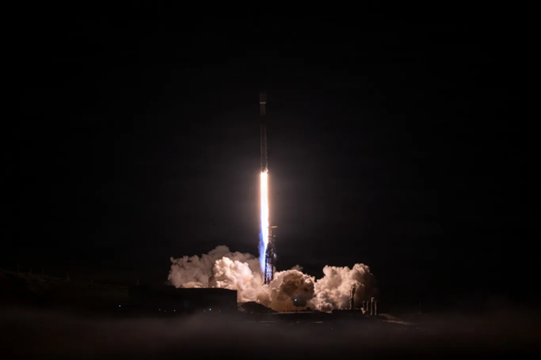
Liftoff was March 30. In the early morning hours, the group of innovators gathered on the California coast near Vandenberg Space Force Base to watch SpaceX’s Falcon 9 rocket liftoff as a part of the Transporter-16 mission. Hitching a ride onboard were their three toaster-sized cube satellites. The launch engaged the first-ever effort to collect reliable magnetic data with nanosatellite technology.
The three MagQuest teams’ cubesats stayed in their launch pods for a few hours before they reached orbit. More than 500 kilometers above Earth’s surface, they were ejected into space. In the months ahead, teams will reach the next major program milestone — delivering initial magnetic data to scientists at NGA, NOAA, and NASA’s Goddard Space Flight Center for evaluation.
Data for WMM2025, the current model, is provided by the European Space Agency’s Swarm mission, a constellation of three satellites that are each larger than a city bus. As these satellites, launched in 2013, approached the end of their operational life, NGA kicked off the MagQuest competition in 2019, searching for new ways to maintain the WMM. Throughout all four phases of the global open innovation challenge, the NGA project team has collaborated with experts from NASA Goddard Space Flight Center (GSFC) and NOAA National Centers for Environmental Information (NCEI), providing monetary and technical support to help teams reach this milestone.
The MagQuest teams’ nanosatellites can be built, launched, and operated for a fraction of the cost of replicating the previous SWARM satellite constellation approach. The other two finalists are:
- Iota Technology whose cubesat features a deployable helical boom, vector fluxgate magnetometer and atomic scalar magnetometer. Iota Technology is working alongside industry-leading partners, combining expertise in sensor technology, deployable structures, and mission design.
- University of Colorado Boulder whose cubesat carries a compact scalar-vector magnetometer designed specifically for CubeSats enables high-quality collection of magnetic field data.
For more info, see www.sbquantum.com, www.magquest.com, www.nga.mil.