Melbourne-based Ionic Rare Earths is rapidly expanding its network of supply chain and technology partners across the USA and Europe. The moves come amidst recognition for the company’s leadership of a groundbreaking collaborative research project in the UK. Its latest efforts to build momentum as a leading miner and recycler of rare earths for magnet production include:
- Agreements made with U.S.-based Advanced Magnet Lab (AML) to supply them with rare earth oxides for magnet production and collaborate in recycling efforts.
- Forged a joint development and licensing agreement with U.S.-based Nth Cycle, Inc., a critical mineral refining technology company, to enhance end-to-end rare earth refining operations.
- Successful conclusion with testing at Ford’s R&D facility in England of a groundbreaking project to demonstrate a circular supply chain for recycled magnets for EV motors.
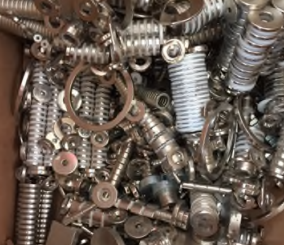
Sales agreements with AML involve neodymium/praseodymium oxide (NdPr2O3) and dysprosium oxide (Dy2O3), under AML’s recently awarded U.S. Defense Logistics Agency contract focused on qualification of domestically produced high-grade sintered NdFeB permanent magnets for defense applications. Additionally, both companies have signed a non-binding memorandum of understanding to collaborate on both the supply of magnet rare earth oxides and recycling of swarf and pre-consumer waste.
Under the program, Ionic will provide feedstock to support AML’s innovative PM-Wire manufacturing platform, designed to enable scalable, traceable and high performance permanent magnet production in the U.S. AML’s DLA-supported initiative includes alloy optimization, advanced manufacturing development and integrated supply chain collaboration across Western-aligned partners.

“IonicRE is excited to form this partnership with AML, working together in the development of innovative permanent magnet solutions, as we build a secure and sustainable supply of rare earth permanent magnets for the United States and other Western nations, commented Tim Harrison, Managing Director. “IonicRE’s patented, made-in-Belfast magnet recycling technology offers an innovative solution for the supply of magnet REOs, and working with several Western magnet manufacturers, and now AML, we are building an integrated, ex-China rare earth supply chain across the Western world and beyond.”
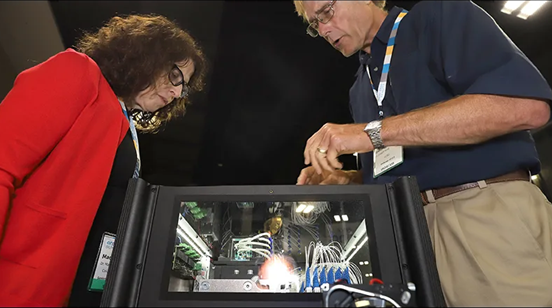
Wade Senti, President of AML, noted: “We are thrilled to bring IonicRE into our downstream demand and support AML’s mission of a fully traceable and sustainable supply chain that can grow with our customer base. This evolving partnership will help ‘close the loop’ on supply for critical inputs to the U.S. industrial base.” (As reported previously in Magnetics Magazine, AML, located in Melbourne, Florida, is collaborating with a number of industry partners in the project.)
Nth Cycle to enhance rare earth refining operations
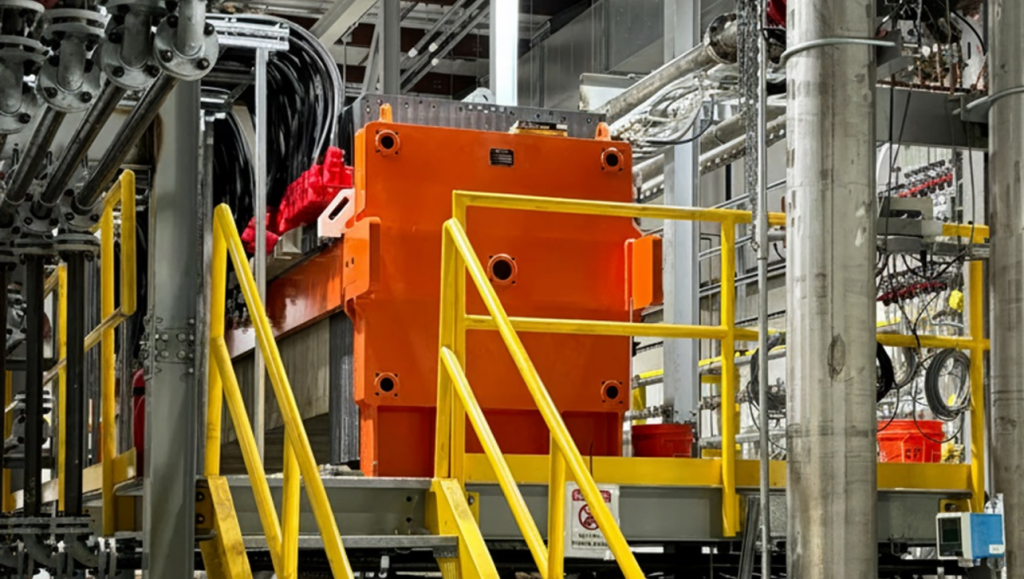
Nth Cycle’s Oyster Platform patented electroextraction process, depicted at top, integrates the industrial processes of electrochemistry, filtration and precipitation in order to bypass the expense, build-out and waste created by a traditional centralized refinery while also eliminating what it calls a hidden dependency on China. The company says that its solution converts end-of-life and mined feedstocks into production-grade materials cheaper, faster and cleaner.
Under the agreement, Nth Cycle will work to develop its technology into IonicRE’s operations, establishing a production pathway that bypasses China for both long-loop recycling to high purity form, and the chemical agents, specifically oxalic acid, they produce to purify rare earth swarf into oxides for new magnet manufacturing. China currently refines 90% of the world’s rare earth elements found in ore and end-of-life materials, with recovery occurring during precipitation, a step reliant on oxalic acid, a reagent they produce. This creates a hidden dependency on China facing all domestic refiners, according to Nth Cycle.
The agreement calls for Nth Cycle’s technology to be integrated into Ionic’s Belfast facility beginning in Q4 2026. Together, the two companies will work to replace the precipitation step in Ionic’s flowsheet with Nth Cycle’s process. It uses electricity to produce the chemicals—rather than oxalic acid—to convert rare earth recycled feedstocks into high-purity oxides, the solid powders used in magnet metal and alloy production. Unlike conventional refining processes for rare earths, where the precipitating oxalic acid agent is consumed and must be continuously resupplied, the companies’ integrated system would eliminate that dependency while regenerating hydrochloric acid for continuous reuse during processing.
“Rare earth refining in the U.S. has made progress, but building a resilient supply chain the West requires solving every point of dependence, not just the most visible ones,” said Megan O’Connor, CEO and co-founder of Nth Cycle, which is based in Burlington, Massachusetts. “Nth Cycle’s technology closes one of the largest remaining links to Chinese chemical supply chains in the rare earth refining process. And because our electroextraction platform works across rare earths, nickel, cobalt, copper, and beyond, every application of our system accelerates the critical mineral supply chains our economy and national security depend on.”
Testing of EV motor at Ford caps research project
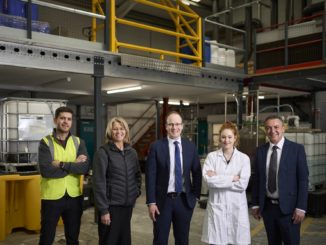
The research effort was led by subsidiary Ionic Technologies and included as project partners Less Common Metals, GKN and Ford. The project has been declared successful in demonstrating full supply chain circularity and functionality for magnets used in Ford electric vehicle motors, following testing conducted by Ford at its R&D facility in Dunton, UK.
Funded by Innovate UK, the project was focused on establishing a wholly domestic operation. Ionic Technologies in Belfast led the project, and produced high purity separated REOs using its magnet recycling and REE separation technology.
Ford provided OEM insight as well as use of manufacturing and test facilities. The recycled material magnets were built into two rotors at Halewood, before one of the rotors was tested on a dyno at Dunton. The rotor produced with the recycled material magnets passed a durability test cycle, with results comparable to rotors manufactured with production magnets.
“Ford is proud to have been part of this groundbreaking project for the UK’s clean energy future. Electric vehicle motors rely on high quality rare earth permanent magnets and by manufacturing these test rotors at Halewood and validating them at Dunton, we proved that recycled magnets can meet our rigorous commercial standards on the first attempt,” said Dennis Witt, UK Innovation, Ford of Britain. “While this is currently a testing project rather than mass production, it confirms that a circular supply chain for rare earth elements is a reality, offering a sustainable path forward without compromising vehicle performance.”
Noted Aaron Riley, General Manager, Less Common Metals: “Producing magnet-specification alloy from one hundred percent recycled rare earth oxides, and seeing it perform identically to material made from mined feedstock, is a real technical milestone. Less Common Metals has spent decades perfecting the metallurgy that makes high-performance magnets possible, and this project shows the bar can also be met with recycled inputs. “We’re proud to have partnered with Ionic Technologies, GKN, and Ford on this circular supply chain demonstration, and we look forward to building on what we’ve achieved as we move into ‘CirculaREEconomy’ and the work ahead.”
Prior to the project’s conclusion, all parties agreed to extend the collaboration in a subsequent project to develop the supply chain further. Also, Ionic Technologies subsequently secured an offer in principle for government-backed funding via a £12 million capital grant to support development of the company’s planned 400 metric tons per annum magnet REO capacity plant in Belfast.
For more info, see www.ionicre.com, AML – Magnets, www.nthcycle.com.