Electro-sinter-forging isn’t a term that comes up often in magnet manufacturing. But at EPoS Technologies, tucked away in the Swiss Alps, it’s the heart of a small revolution in how magnets are made. Founded by Alessandro Fais, materials engineer and PhD in metallurgical engineering, the company has developed a new family of materials that blend the strength of metals with the magnetic punch of rare-earth compounds. The result is something the magnet industry has never really had before — a magnet that can take a hit.

Until now, magnet designers had to pick a side: sintered magnets, which are strong but brittle, or bonded magnets, which are somewhat tougher but magnetically weaker. EPoS is introducing something different: metal-bonded magnets, made by embedding magnetic powders such as Nd₂Fe₁₄B or SmCo inside a metallic matrix. That combination yields both good magnetic performance and mechanical toughness, basically combining the best of both worlds.
“We wanted to make magnets that don’t need to be handled like glass,” says Fais. “A magnet that behaves like a piece of metal, not like a ceramic.” The first of these new materials, Ti-MM4 H, uses titanium as the matrix. Titanium is normally non-magnetic, but it’s strong, corrosion-proof, and doesn’t mind being machined.
EPoS’s process bonds it with neodymium-iron-boron powder to create a composite that’s both magnetic and metallic. The material shows a tensile strength of about 300 MPa (43.5 kpsi), compared to less than 50 MPa, if any at all, of sintered NdFeB, and a coercivity near 1.8 MA/m at room temperature. It also shrugs off salt-water corrosion far better than a coated NdFeB magnet. Engineers at EPoS say they’ve hammered, crushed, and soaked samples for weeks without seeing them chip or lose magnetization. “You can literally hit it with a hammer,” Fais adds. “It won’t break.”
| Before tests | After 30 days in salt water | |
| eForged TiMM-4H, Machined & uncoated | 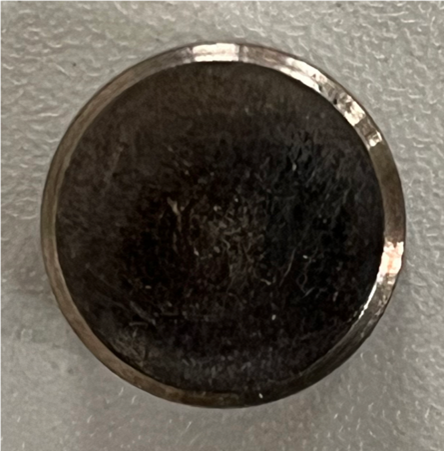 | 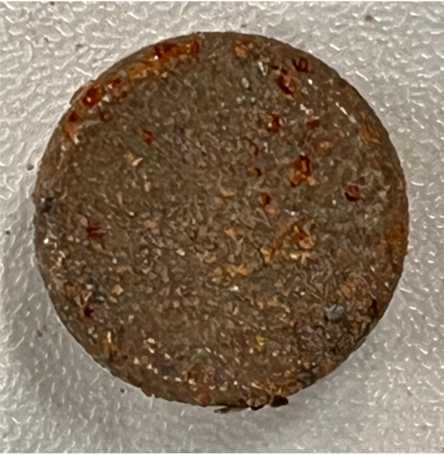 |
| Sintered NdFeB, Ni-Cu-Ni coated | 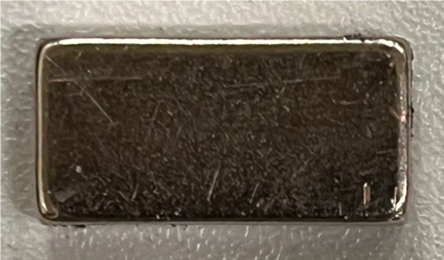 | 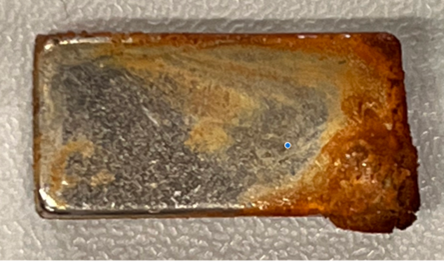 |
New versions, namely Ti-MM 2H, 7H, and 10H, are in development, each tuned for different mixes of strength, toughness, remanence, coercivity, and conductivity. Because these magnets are metal based, they can be machined on standard tools. No EDM, no grinding, no delicate handling. A machinist can turn or mill them directly and press-fit them into parts.
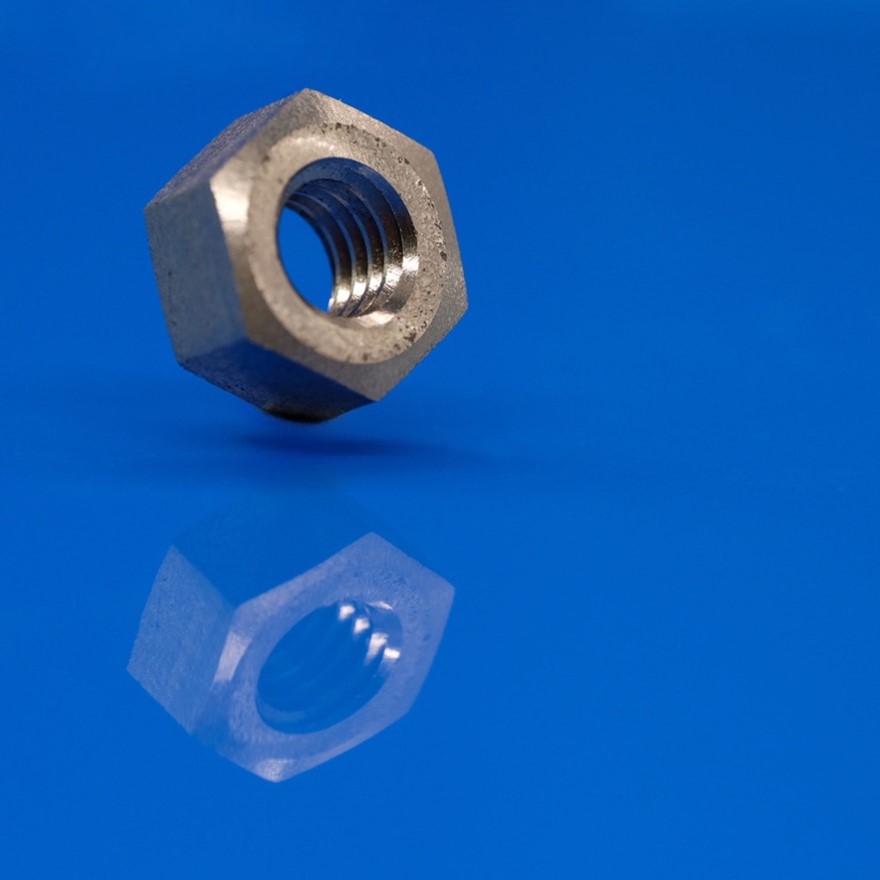
Their magnetic pull is a bit lower than top-grade sintered NdFeB, but that also makes them safer to handle, and easier to assemble. They’re ideal for:
- Axial-flux motors and high-speed spindles, where any imbalance or crack is a deal-breaker.
- Encoders and sensors working under vibration or in corrosive environments.
- Workshop and prototyping uses, where machinability and practical usability can matter as much as ruggedness and field strength.
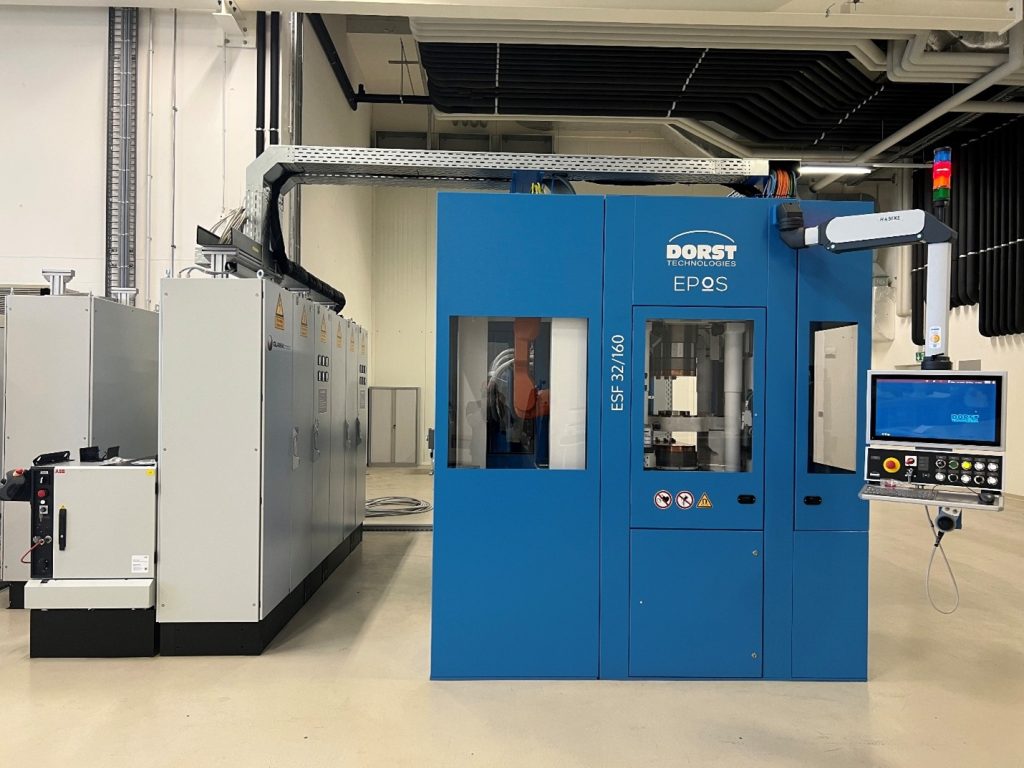
The company’s secret weapon is a technology called Electro-Sinter-Forging (ESF), often shortened to eForging. It compresses and sinters powder in a single violent pulse of current and pressure lasting a few hundreds of milliseconds.
ESF is a relatively new powder metallurgical method to rapidly produce a wide range of materials and components. Loose binder-less powders are inserted in the automatic dosing system. The automatic procedure applies a pre-pressure onto the powders to guarantee electrical contact hence it superimposes an intense electromagnetic pulse with a mechanical pulse. The two pulses last only 30 to 100 milliseconds and, after a brief holding time, the sintered component is extracted by the lower plunger and pushed out by the extractor to leave room for the next sintering.
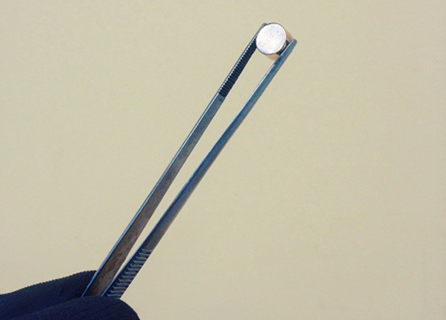
The speed involved is remarkable. The sintering pulse lasts less than 200 milliseconds over the entire machine cycle thus possible exposition to electro-magnetic fields is extremely limited in time. No inert atmosphere or vacuum necessary, even for highly reactive materials (such as titanium and rare earths. Components are extracted and pushed away from the sintering mold at very low temperatures <100°C (<212°F). No polymer binders are used in the powder, so they do not require de-binding/evacuation.
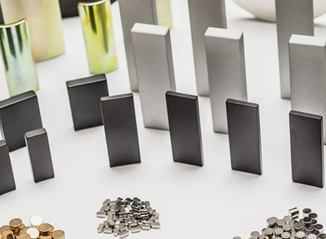
EPoS runs its production and development center in the heart of Switzerland near Fribourg, where it makes electro-sinter-forged components from tungsten-copper, copper-free welding composites, and its new titanium-magnet grades in a range of shapes and sizes including disks, square or rectangular plates and semi-finished machined products. It also licenses its patented ESF process and equipment to other manufacturers, for highly dedicated, delicate or specific applications.

The company credits Ted Tsoulos for playing a pivotal role in optimizing the material through relentless efforts to test and push the limits of it. Drawing upon 15 years of experience in Science and R&D, a BSc in Physics, two MScs in lasers and materials engineering and a PhD in nanotechnology, today he shares his time at Epos between R&D and business development. He gave a presentation on the company’s metal bonded permanent magnet material at the UK Magnetic Society’s LARM 2025 presented by Magnet Applications (Linear and Rotating Machines 2025), held at Newcastle in June.
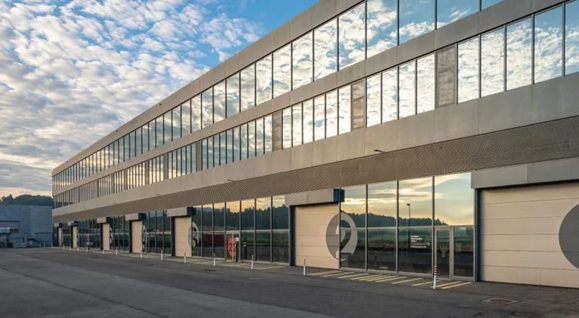
EPoS is a privately funded company dedicated to materials production with its proprietary ESF technology. Begun in Italy, the company is now based in Villaz-St-Pierre at the headquarters of Nivalis Group, its primary financial backer. The entrepreneurial investment and management firm has been the leader in several fund-raisers for EPoS. It provides expertise in product development, product launch and corporate expansion for a portfolio of companies.
Looking Ahead
Metal-bonded magnets aren’t meant to replace every NdFeB on the market. But they could fill a big gap — the need for magnets that can take impact, resist corrosion, and still hold their field. For electric-motor designers, robotics engineers, or anyone tired of chipped magnets and fragile assemblies, EPoS’ technology can point toward a sturdier future. For more info, see www.eposintering.com and www.nivalisgroup.ch.