Planning to build the first industrial-scale heavy rare earths (HREE) separation facility for producing magnetic alloys in the United States, Aclara Resources now has teamed up with Argonne National Laboratory to develop an artificial intelligence–enabled digital twin for its separation process. Under the agreement, Aclara and Argonne will leverage Argonne’s SolventX modeling platform, along with Argonne’s leadership in advanced computing, process modeling and artificial intelligence, while integrating Aclara’s pilot-scale data to develop a high-fidelity digital representation of the process. The resulting digital twin will enable advanced simulation, optimization and predictive control of heavy rare earth solvent extraction operations.
American subsidiary Aclara Technologies has committed to build the plant in Louisiana with an expected secured sustainable feed from two ionic clay deposits that Aclara is developing in Brazil and Chile, as announced by the company in late October. The facility will be the first of its kind in the U.S. with a secure ionic clay feed, sourced from Aclara’s Carina Project in Brazil and Penco Module in Chile.
The project is scheduled for completion in 2027, contingent upon the timely completion of funding and offtake agreements. Aclara says it will invest about $277 million to develop the project on an 82-acre Louisiana Economic Development (LED) certified site at the Port of Vinton. In one offtake agreement, it has partnered with magnet-maker VAC (Vacuumschmelze) to supply alloys to a start-up permanent magnet production facility that VAC is currently building Sumter, South Carolina.
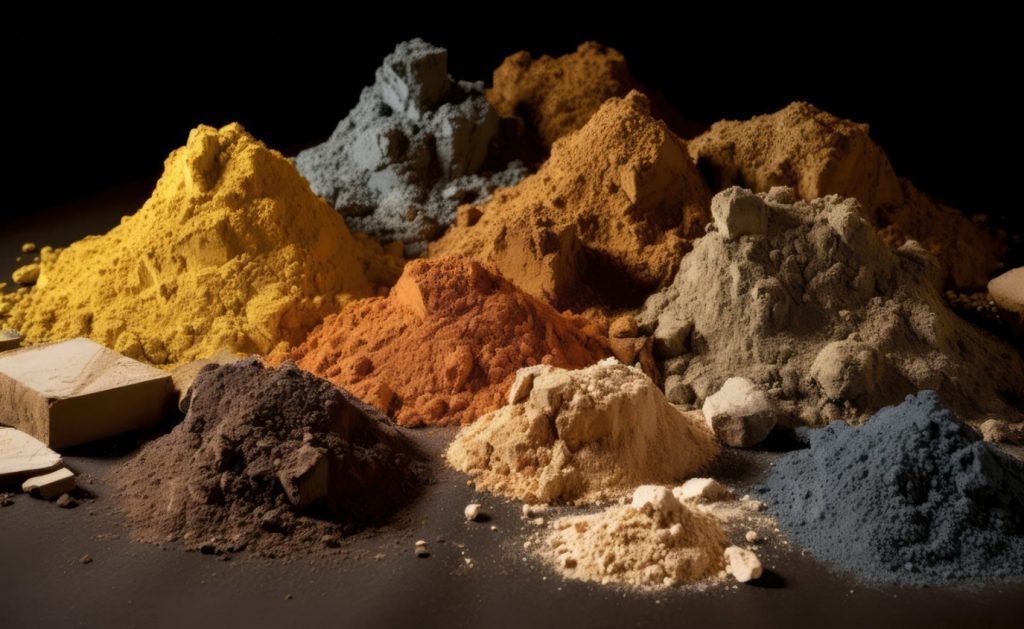
Designed as a comprehensive solution for rare earths, the project is expected to produce high-purity Dysprosium (Dy), Terbium (Tb), and other restricted HREEs and light rare earths (LREEs), essential for advanced technologies using permanent magnets such as electric vehicles, wind turbines, drones and robotics. At full production, Aclara anticipates being able to supply more than 75% of the U.S. requirements of DyTb for electric vehicles by 2028.

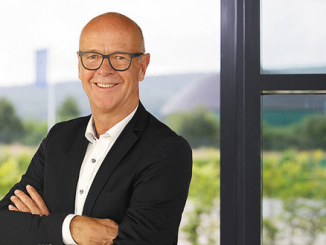
Hugh Broadhurst, Aclara’s Chief Operating Officer, commented: “This collaboration with Argonne represents a significant step forward in our strategy to deploy a world-class, digitally enabled rare earth separation platform in the United States. By combining our proprietary separation process and pilot-scale data with Argonne’s world-class capabilities in advanced computing and artificial intelligence, we expect to accelerate industrial ramp-up, improve efficiency, and further de-risk execution.”

Seth Darling, Chief Science and Technology Officer of Argonne’s Advanced Energy Technologies, commented: “This partnership exemplifies how combining the complementary strengths of industry, academia, and national laboratories can accelerate the development and deployment of advanced technologies. It also reflects Argonne’s role in translating foundational research and unique user facilities into tangible capabilities that support U.S. industrial competitiveness and strengthen domestic supply chains for critical materials.”
The collaboration builds on Aclara’s ongoing development of a Rare Earth Separation Pilot Plant in partnership with Virginia Tech, which is expected to be inaugurated in March 2026. Together, these initiatives are designed to accelerate the transition from pilot-scale validation to industrial deployment of Aclara’s U.S. rare earth separation platform.

“Our Project is unique in the Western world: with direct access to our ionic clay deposits, this will be the only fully integrated heavy rare earth separation operation currently capable of producing material volumes of heavy rare earths at scale,” commented Aclara CEO Ramon Barua. “We are moving at an accelerated pace to bring supply online as quickly as possible, and we are working to have our projects converge and enter production by mid-2028.”
For more info, see previous articles in Magnetics Magazine, and www.aclara-re.com.