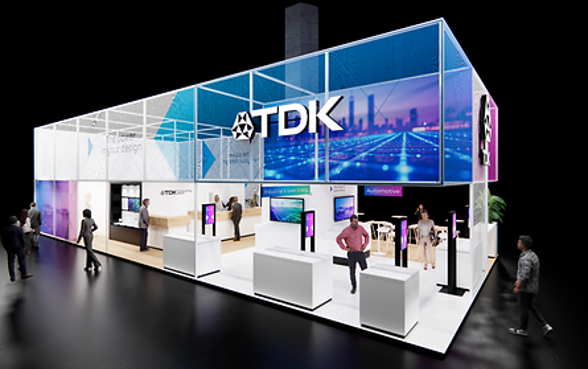
Visitors to PCIM 2026 at Nuremberg in June were able to see a wide array of new products from TDK including developments in passives, sensors and switches, many of which involve advanced magnetic technology. In Regensburg, Germany, the company is nearing completion of construction and outfitting for a new EMC test center.
Under the motto “The power in your design”, TDK highlighted technologies that enable more powerful and energy-efficient systems including its latest passive component and sensor solutions for wind and solar power, industrial drives, railway traction, EV charging, electric mobility and AI data centers.
For automotive power, a state-of-the-art traction motor was used to demonstrate new temperature and pressure sensors alongside embedded motor controllers and Hall- and TMR-based magnetic-field sensors including current sensors. The products support a broad range of e-motor functions such as rotor position sensing, resolver replacement and current measurement. The newly released TMR TAS magnetic sensors deliver zero-latency, high-bandwidth analog sensing in a compact footprint, offering a powerful and cost-effective alternative to inductive and resolver solutions.
Expanding EMC lab in Regensburg
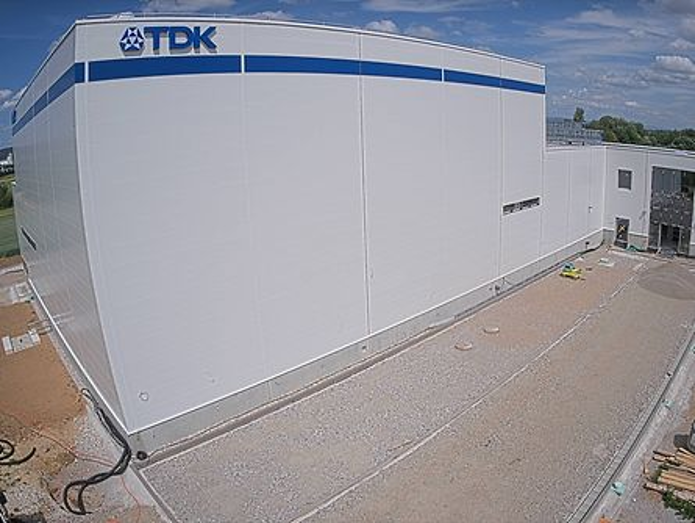
TDK is in the final phase of constructing a significantly larger EMC lab in Regensburg, Germany. The new site will cover almost 1,700 square meters, including 1,100 square meters dedicated to laboratories and measuring stations, also a showroom and a large customer area with meeting rooms.
At a topping-out ceremony in May Dr. Stefan Weber, project manager for the construction of the new EMC laboratory, said the project was proceeding well, “so I am confident that we will be able to officially open the laboratory this fall.” Juergen Roumen, Deputy General Manager of the Magnetics Business Group, to which the laboratory belongs, emphasized that the new facility would serve as a central hub for working with customers to quickly and efficiently resolve any electromagnetic compatibility issues. “The new laboratory will thus serve as a starting point for many innovative projects.”
Dual-output 3D Hall-effect switches by TDK Micronas
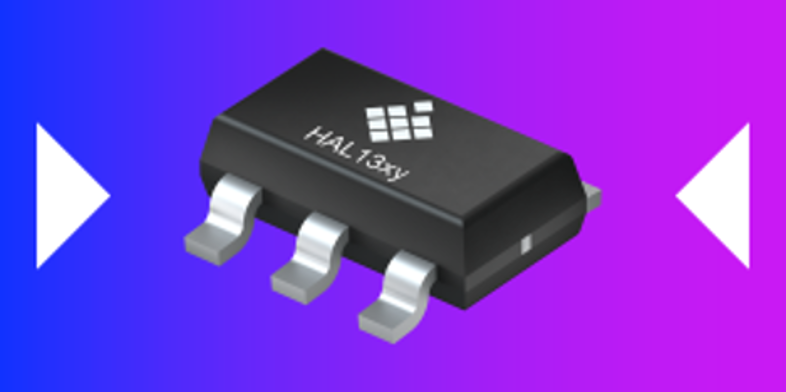
In another recent development, TDK through its Micronas group is launching a dual-output 3D Hall-effect switch family for precise motor speed and direction sensing in automotive and industrial applications. The Micronas HAL 13xy family, a factory-programmable Hall-effect switch sensor, leverages the company’s 3D HAL technology. HAL 13xy features three orthogonal Hall elements (X, Y, Z) arranged in a pixel cell, providing 90° phase separation (quadrature signal) that is inherently independent of magnet pole spacing and air gap. This design enables the simultaneous measurement of two orthogonal magnetic-field components, offering manufacturers maximum flexibility in sensor and magnet placement.
They can be employed in applications such as seat-track motors, sunroof drives, tailgate motors, valve position, steering column motors, steering turn-count sensing, and window lifters with anti-pinch functionality. The sensor operates with both static and dynamic magnetic fields up to 40 kHz and is compatible with a variety of ferrite and rear-earth magnet types, thanks to multiple temperature coefficient options. Start of production is planned for October 2026 while samples are already available. See www.tdk-electronics.tdk.com