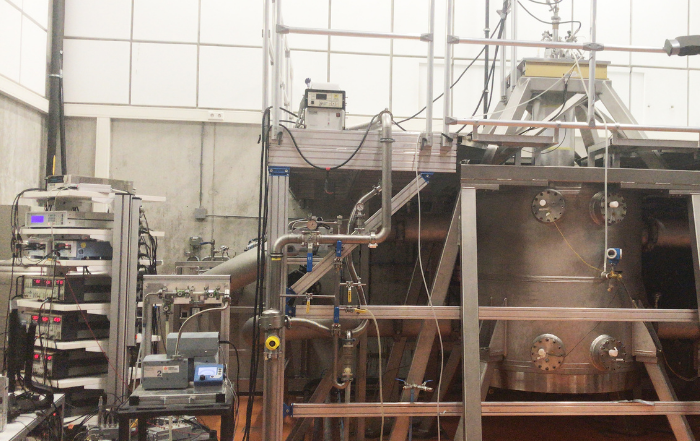
The Wittenstein Group of Germany, a global leader in mechatronics and cybertronic motion technology, has expanded its portfolio with the acquisition of Israel-based STXI Motion. Meanwhile, its subsidiary Attocube continues to forge new paths in nanoscale measurement of magnetic fields.
Completed in April for an undisclosed amount, the acquisition as a majority shareholder in STXI enriches Wittenstein’s ability to serve the rapidly growing mobile robotics sector, particularly in the rise in adoption of decentralized motion control architectures. Tied to the continued rise of automation in intralogistics and warehouse applications as operators invest in flexible, high-throughput technology to meet rising order volumes, the sector is growing about 19% per year. The deal expands Wittenstein’s capabilities in electronics and software for electric motors.
Currently, motion control suppliers are racing to develop solutions which solve drivetrain headaches faced by mobile robot manufacturers. Focusing its R&D efforts on this sector, STXI has developed a suite of products that span integrated motors and drives, wheel hub drives and preconfigured gear motor combinations. With many involving permanent magnet designs, they are designed to reduce mechanical complexity, simplify wiring and shorten design time for mobile robot engineering.
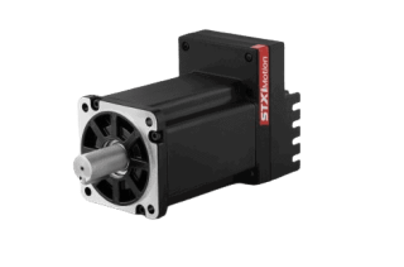
STXI Motion’s integrated motor solutions combine servo control, drive electronics and connectivity in one compact unit. Based on low voltage BLDC servo motor technology, the integrated motors are ideal for decentralized machines: simplifying architecture and wiring, reducing cabinet space and maintenance, while increasing design flexibility. Headquartered in Petach Tikva, Israel, STXI has further sales locations in Viersen in Germany and near Chicago in the USA. The company’s key products are standardized drive systems, fitting well with Wittenstein’s extensive portfolio of customized products.

Challenging the limits in cryogenics and magnetic sensitivity at attocube
Meanwhile, subsidiary attocube continues to pioneer nanotechnology solutions for industry and research. Located in Haar near Munich, it develops and manufactures components and systems for nanoscale applications such as precision motion, cryogenic microscopy and nanoscale analytics. Recent developments are the attoNVM cryogenic microscope with extreme magnetic sensitivity and the attoCFM I rotation confocal microscope.
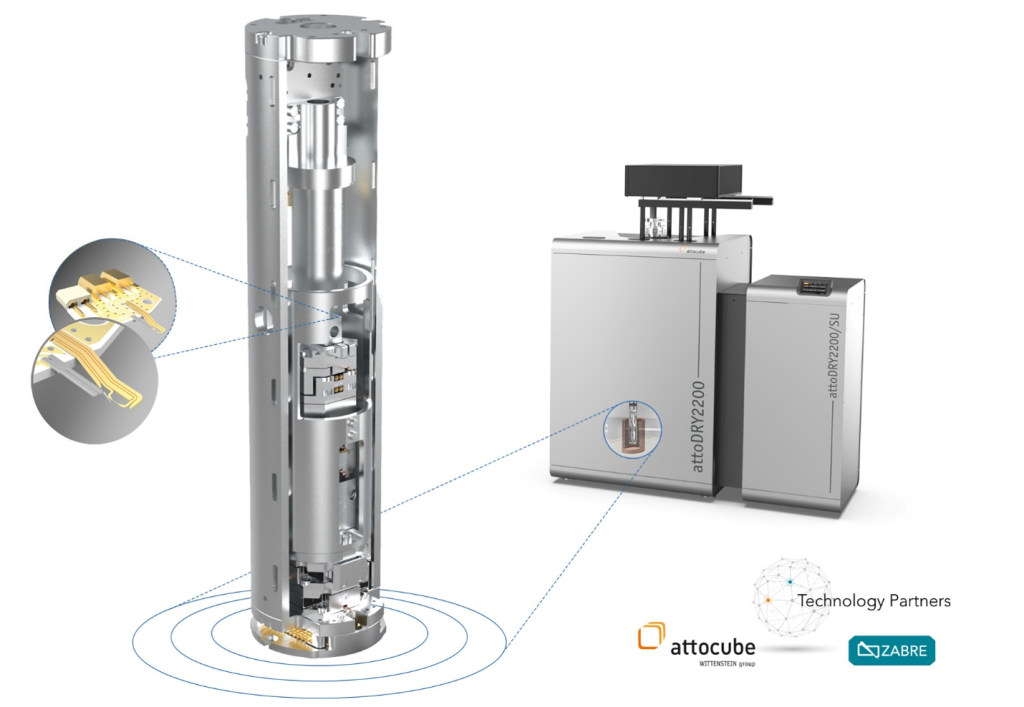
Developed in collaboration with Swiss instrument company Qzabre, attoNVM is billed as the first commercial low-temperature scanning nitrogen vacancy magnetometer built in a closed-cycle cryostat. It was jointly launched by attocube and Qzabre in late 2024, with major market rollouts and showcases throughout 2025.
The microscope operates between 2K and 330K, allowing users to measure nanoscale magnetic fields in cryogenic environments for quantum technologies. The developers say it offers unmatched magnetic field sensitivity, representing a breakthrough in magnetic imaging. The system enables users to efficiently perform magnetic imaging at various temperatures and truly quantitatively.
The ability to measure magnetic fields at nanoscale in cryogenic environment is key for understanding magnetism on the quantum level and for designing materials for novel data storage devices or quantum computers. Nitrogen vacancy magnetometry is a quantum sensing technique particularly suitable for applications where high magnetic field sensitivity is required.
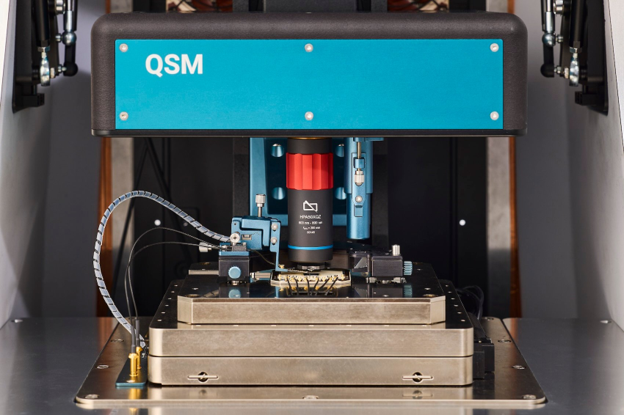
Based in Zurich, Qzabre specializes in developing new instrumentation solutions in scanning NV. From its quantum scanning tips to turnkey scanning microscope, its expertise lies in imaging magnetic fields at the nanometer scale for research applications such as mapping domain walls, tracing current flow in integrated circuits, or exploring magnetic textures in quantum materials.
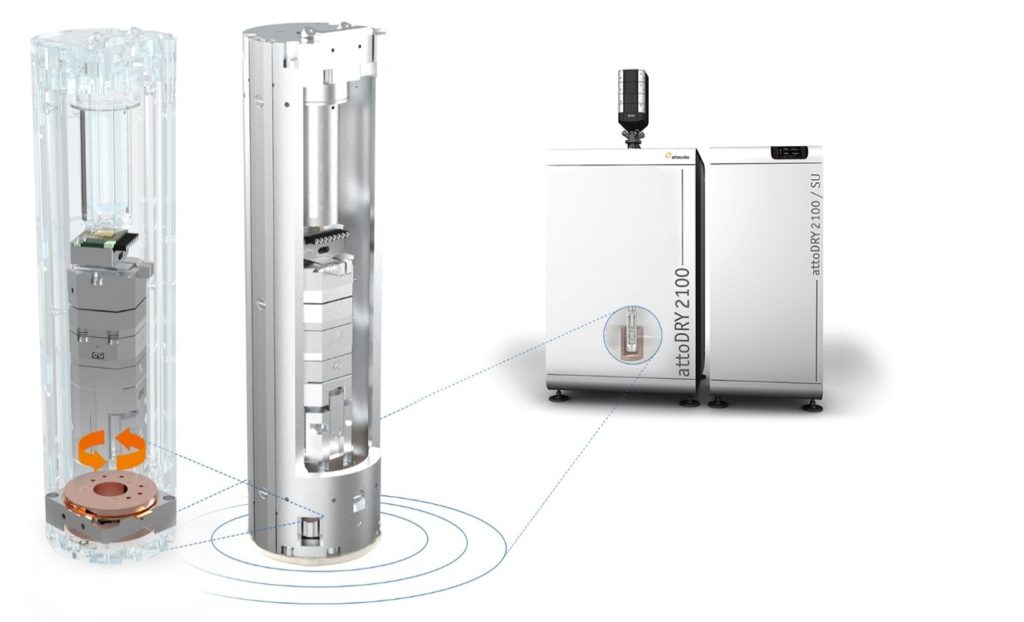
Last year, attocube introduced attoCFM I Rotation, a free-beam rotational confocal microscope, as an expansion to its lineup. It integrates a nanorotator and a 9-3 T vector magnet. Via in-situ sample rotation, with minimal wobble and run-out, a user can get full access to strong in-plane field (3T) in arbitrary direction and at low cost. 2D magnets typically have higher in-plane magnetic field than 3D magnets, and are also cheaper, which comes as a double benefit for users.
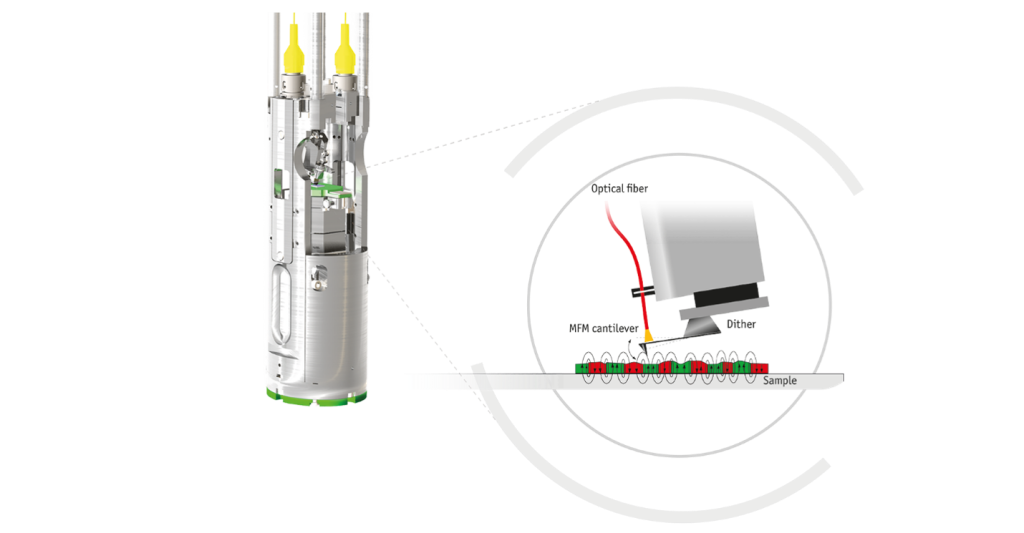
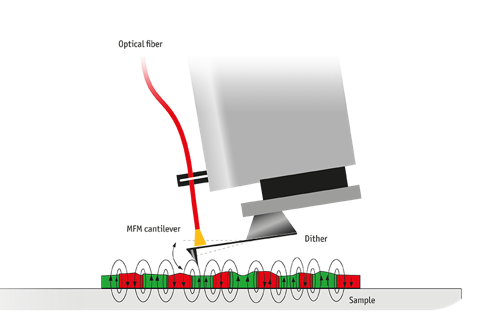
Magnetic force microscopy from attocube

See www.wittenstein-group.com, www.attocube.com, www.qzabre.com, www.stxim.com.