As AI adoption and cloud computing drive rapid expansion of data centers, managing the growing heat load in cavernous buildings stuffed with electronics is driving fresh reliance on the use of magnetic technology for cooling the sensitive equipment. Examples are plainly evident at recent data center events, HVAC shows, new product developments – and recent orders from data center operators. More powerful and reliable HVAC systems are being designed with compressors having oil-free active magnetic bearings, while embedded in the server racks liquid immersion cooling systems using sealless mag-drive pumps are bringing a new paradigm to data center cooling.
The International Energy Agency projects global data center electricity demand could more than double by 2030, increasing pressure on cooling systems to manage higher and more variable loads. At the same time, water use effectiveness remains a key priority, increasing demand for advanced cooling technologies that can manage rising thermal loads while eliminating cooling-related water use.
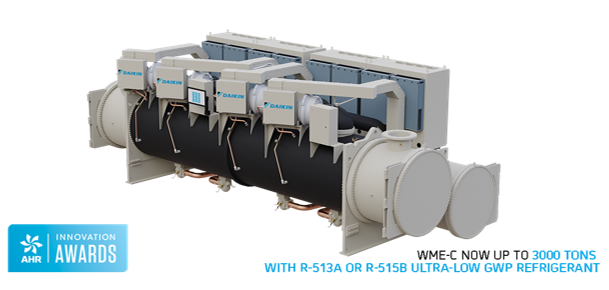
At this year’s AHR Expo, Daikin showcased its latest data center and commercial cooling technologies including its Magnitude WME-C Quad Chiller, shown above, featuring magnetic-bearing technology and a capacity range of 2,000 to 3,000 tons. The chiller is designed for high-density, always-on environments. Another standout is its AWM chiller that delivers premium efficiency in a fully packaged, air‑cooled chiller also engineered with oil‑free magnetic‑bearing compressors.
“Cooling demands are growing increasingly complex, especially in data center environments,” said Yu Nishiwaki, Chief Operating Officer, Daikin Applied. “Operators need solutions that deliver reliability, scalability, and efficiency without compromise.”
Liquid immersion cooling a new paradigm for data center cooling
Traditional air-cooling systems such as chillers are still the most common cooling method. They use air as a heat dissipation medium, blowing cold air into the heat dissipation fins through a fan, performing air circulation, and taking away the heat generated by the server by heat convection. However, the heat dissipation effect of traditional air cooling is limited.
Today’s data centers, though, must process more data at a faster speed, driving the transformation of cooling architecture. Traditional air cooling systems are challenged to cope with the huge heat generated by high-density computing. Liquid-cooled server racks and site systems have emerged in recent years and become an innovative solution. When the server is performing deep learning and data analysis, the extremely large amount of data and complex processes generate huge amounts of heat. A liquid cooling system can quickly and effectively remove this heat to ensure that the server can maintain stable operation.
Compared with traditional air cooling systems, liquid cooling can improve heat dissipation efficiency. This is because liquid has better heat conductivity than air and can absorb and take away heat from the server more quickly. Liquid cooling systems usually use fluorinated liquid as the cooling medium, and a sealless magnetic drive pump circulates the coolant in the server racks.
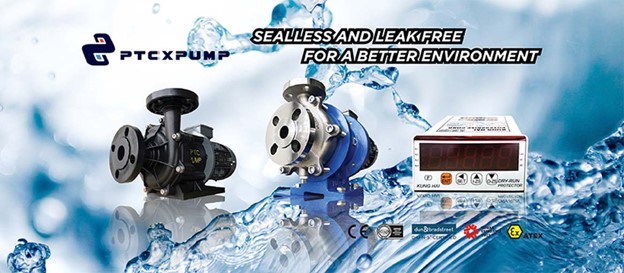
One company serving the market for in-rack liquid immersion cooling is PTCX Pump. Based in Taiwan, it has applied its more than 40 years of experience in chemical fluid transfer systems to the manufacture of sealless magnetic drive pumps. The pumps are crucial in liquid immersion cooling, it explains. Driven by magnetic force to transfer rotational power from the motor to the impeller, they eliminate the need for traditional mechanical shafts and seals, reducing the risk of liquid leakage thus improving system reliability and safety.
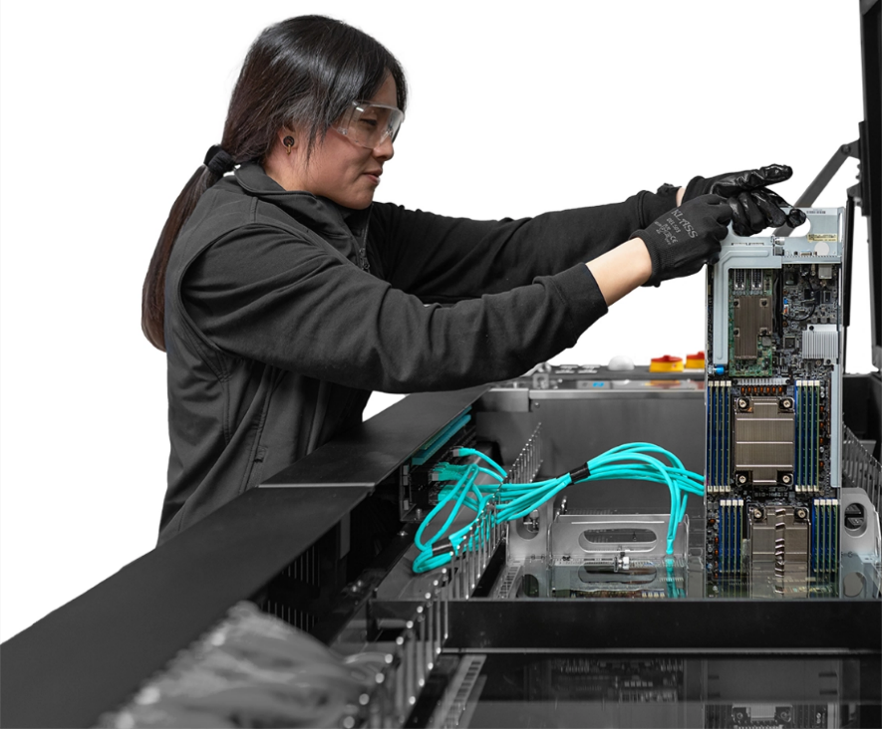
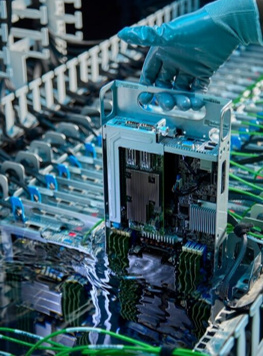
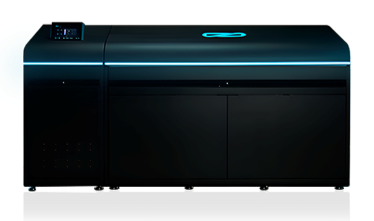
Another provider of liquid immersion cooling systems for data center racks is Submer, located in Barcelona. The SmartPod EVO is the latest evolution of Submer’s flagship product for immersion cooling, able to provide plug & play immersion at scale. Packing 140 kW+ of heat dissipation capacity, it can be configured with either single or dual coolant distribution units (CDU) for optimal performance.
OEMs design new generations of chillers with sealless oil-free magnetic bearings
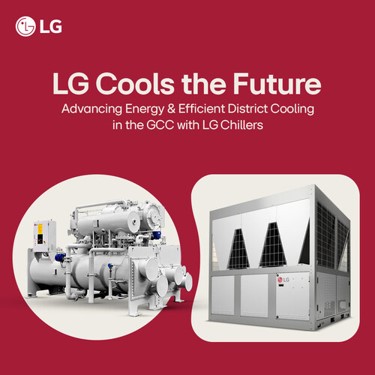
As the demand for efficient and sustainable district cooling intensifies across the Middle East, LG Electronics has been showcasing there its district cooling systems with advanced chiller technologies designed to enhance energy efficiency and operational performance.
Munters systems continue to evolve
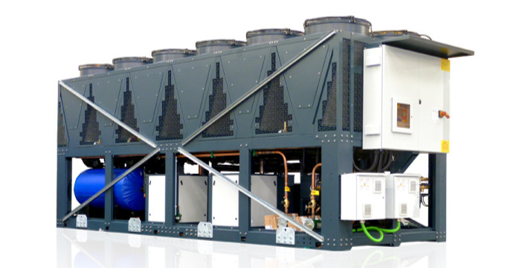
At a recent DatacenterDynamics Connect in Virginia, Keith Dunnavant, VP of Offer Strategy & Portfolio Management for Sweden-based Munters, shared how the company is driving innovation to meet the rapidly evolving needs of modern data centers. He highlighted Munter’s acquisition of Geoclima, an Italian manufacturer of air and water-cooled chillers, considered a leader in systems employing magnetic bearing compressor technology, as a key step in expanding the Munters portfolio. He also announced the upcoming launch of a new factory in Cork, Ireland which will support the growing global demand for data center cooling products. “These developments keep us ahead of the market’s demand for reliable and efficient cooling systems,” he explained.
New orders pour in
Among Geoclima’s line-up of chillers for data centers are six chiller ranges. Bookings for the company’s systems have been pouring in. In April, a colocation data center provider in the U.S. signed on for custom-designed high capacity CDUs and over-the-rack computer room air handlers with deliveries expected to start in early 2027 and extend through the first quarter of 2028. The order value is about BSEK 2.0. In December, it received orders for chilled water computer room air handlers, CDUs and chillers with a total value of about 2.1 BSEK. The customer is a colocation data center company in the U.S. Deliveries are scheduled to begin in Q4 2026 and continue through Q1 2028.
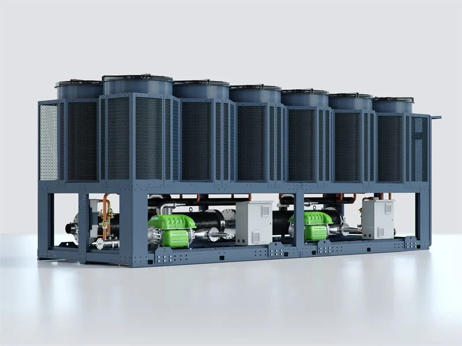
Also in December, it booked an order for Circlemiser chillers with a value of 82 MUSD (appr. 775 MSEK). The customer is a data center colocation provider in the U.S., centered around high-performance computing for AI. The chillers will be deployed at a large AI facility for a hyperscale tenant, with deliveries during 2026. The business growth is creating a need for greater manufacturing capacity at Munters, now at work on expanding its facility in Daleville, Virginia with a 200,000 sq ft addition including a new test laboratory for chillers.
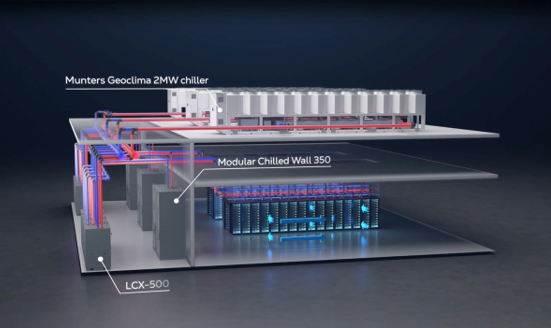
As high-density applications are driving the shift toward liquid-cooled data centers, Munters has developed the LCX family of liquid-to-liquid CDUs to supplement its existing liquid-to-refrigerant product. Engineered for large-scale liquid cooling applications, it controls the technology coolant flow and temperature while also providing particulate removal down to 25 microns at 99.98% efficiency.
Danfoss Turbocor a leader in magnetic technology for oil-free compressors.
At the core of Geoclima’s data center cooling strategy are chillers equipped with Turbocor compressors from Danfoss. The oil-free, magnetic levitation compressors boast exceptional energy efficiency, ensuring optimal performance while minimizing environmental impact, it notes. Danfoss Turbocor compressors pioneered the use of magnetic bearings in compressors, suspending the rotors entirely without physical contact as permanent magnet motors and variable speed drives provide both full and part load efficiency.
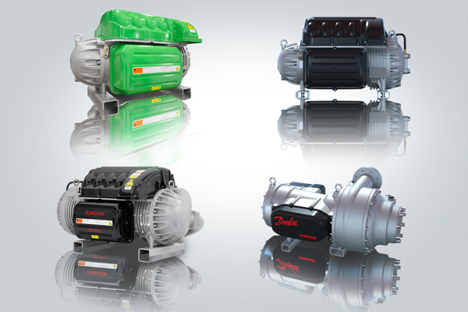
Turbocor compressors designed into new waterless chillers from ThermalWorks
The compressors have lately been applied to waterless rooftop chillers for data centers located at sites where water conservation is a major concern. Many operators rely on evaporative systems that consume millions of gallons of water daily. While evaporative cooling can offer good energy efficiency, its water footprint makes it increasingly unsustainable for communities facing drought, regulation and competition for shared resources.
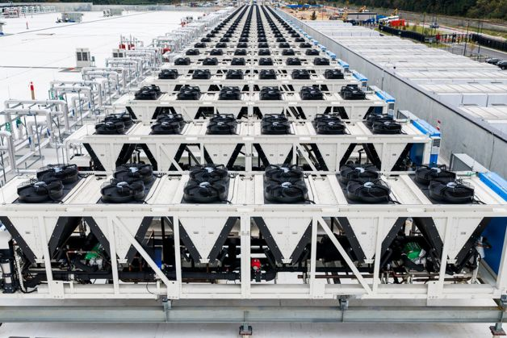
ThermalWorks, a New York–based manufacturer of ultra-efficient, modular cooling systems, set out to solve this challenge head-on: deliver the performance modern data centers demand without using water. Their goal was to engineer a chiller that maximized heat-transfer efficiency, adapted intelligently to changing weather and load conditions, and operated with the agility and reliability hyperscale facilities require. With a long history of co-development and engineering collaboration, ThermalWorks partnered with Danfoss to integrate advanced Danfoss components into the product.
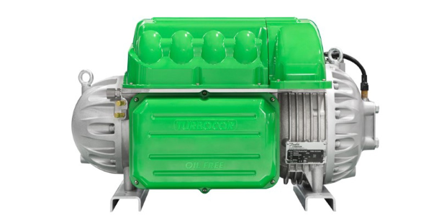
The TGS380 compressors and other Danfoss components enabled the air-cooled chiller system to save energy, even in high ambient conditions, without using any water, due to their ability to operate at a high delta-T. “Our goal was to match the energy efficiency of an adiabatic system but with an ultra-efficient, waterless design, which had yet to be done in the industry,” said John Costakis, CEO of ThermalWorks.“

Johnson Controls/York
At recent Data Center World events including in London and at Data Center World 2026 held in April in Washington, DC, Johnson Controls, another major OEM in the HVAC industry, has been highlighting its YORK range of magnetic bearing chillers.
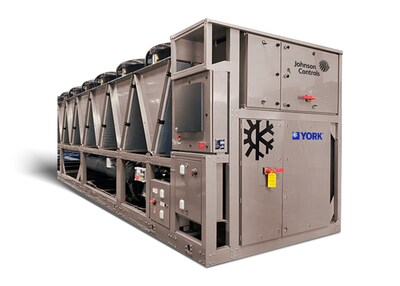
In February, it launched its latest innovation for data center thermal management, the YDAM air-cooled magnetic bearing chiller which delivers 3.5 MW of cooling for a 20% capacity density increase in a compact footprint. Purpose-built to overcome the complex space and site challenges in high-density, multistory data centers, it is designed around the company’s YVAM magnetic-bearing chiller technology, helping data centers scale faster and more efficiently without consuming water.
Due to increasing land constraints, multistory data centers and AI factories are becoming more common, increasing the density of the white space (where the racks live) by up to 10 times. Data center leaders therefore need higher density thermal management solutions to fit a shrinking roofline. With 3.5MW of cooling, YDAM delivers up to 20% increased capacity density in a more compact footprint than competing solutions. It fits on a 53-foot, standard flatbed trailer, making it easy to ship and minimizing transportation, rigging and lifting costs. Shipments are planned to begin in late 2026.
“AI and high-performance computing are pushing data centers beyond traditional limits. Vertical sites can unlock new growth opportunities, but they demand thermal management solutions that deliver maximum cooling outputs in minimum space,” said Austin Domenici, vice president and general manager, Johnson Controls Global Data Center Solutions. “The impressive capacity and reduced footprint of YDAM could allow operators to cut the number of chillers on site by up to half, accelerating deployments and helping meet skilled onsite labor needs.”
The chillers utilize YORK magnetic bearing compressors, deriving from Johnson Control’s acquisition in 2019 of Synchrony, a developer of advanced magnetic bearings and high-speed motors and generators which use permanent magnet rotors supported on magnetic bearings for increased efficiency and high torque density. The chillers are developed in the state-of-the-art Johnson Controls Advanced Development and Engineering Center in Pennsylvania, one of the world’s largest and most advanced HVAC research, development and testing facilities. JADEC spans seven acres and includes more than 20 specialized labs, supporting over 1,000 test runs each month under real world operating conditions.
For more info, see www.daikinapplied.com, www.ptcxpump.com, www.submer.com, www.lg.com, www.munters.com, www.geoclima.com, www.danfoss.com, www.johnsoncontrols.com, www.thermalworks.com.