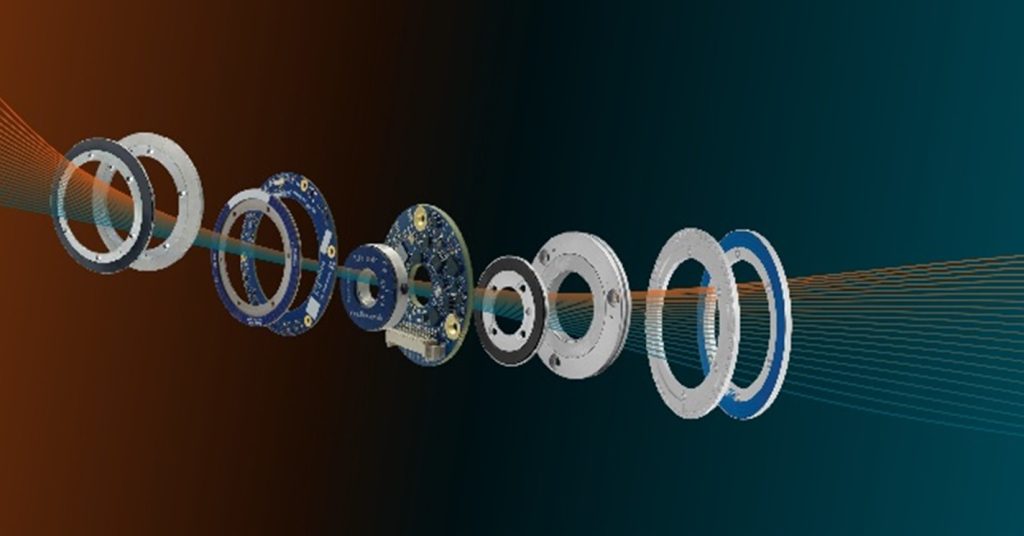
Having spent decades designing and manufacturing position encoders utilizing magnetic, inductive, and optical technologies, the founders of FLUX GmbH realized that a better technology was required for rotary and linear motion measurement. In 2017, the company was founded in Braunau am Inn, Austria as a specialist in encoder technology that has focused on continuously developing new capabilities in the field.

Magnetics Magazine: What makes your inductive rotary encoders so accurate?
Paul Tutzu: Our inductive rotary encoders achieve high accuracy because of the way we process the inductive signals. Unlike optical encoders, they are not sensitive to dust or contamination, and unlike magnetic encoders, they are unaffected by external magnetic fields. This results in a very clean, stable signal. On top of that, the low axial profile reduces mechanical tolerances and alignment errors. In practice, this means engineers get reliable resolution even in demanding environments.
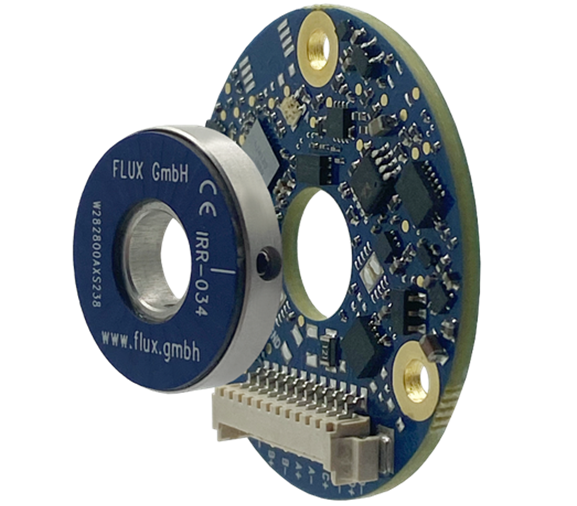
But we didn’t stop there. With our patented GMI® (Giant Magneto Impedance) technology, we can reach performance levels comparable to the best optical encoders while retaining the robustness of inductive ones. In other words, FLUX encoders combine the best of all worlds: precision, robustness, and compactness.
Magnetics Magazine: How does GMI technology come into play?
Paul Tutzu: GMI® is the real game-changer for encoder technology. It fundamentally changes how position signals are generated and read. By exploiting the drastic change in impedance of certain materials under magnetic fields, and applying an alternating current to our GMI® foils, we achieve a position signal that is extremely sensitive, fast, and noise-resistant. Unlike many conventional measuring principles, our GMI® encoders work without hysteresis, meaning the current position is always available in real time without lag or uncertainty.
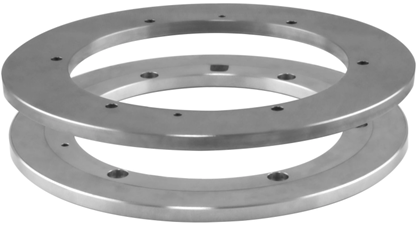
For engineers, this means that our encoders can deliver real-time position feedback without jitter, tolerate larger assembly misalignments, and remain stable even in environments with electromagnetic interference. In practice, GMI® technology allows us to build ultra-flat and lightweight encoders that still match or exceed the accuracy of optical designs, while keeping the robustness of inductive ones.
Magnetics Magazine: How long have you been making these encoders?
Paul Tutzu: While FLUX as a company is relatively young, our team is built on more than 40 years of experience in the field of position feedback encoder systems. Our engineers have spent decades designing and manufacturing encoders based on magnetic, inductive, and optical technologies. That history gave us a deep understanding of both the strengths and the limitations of conventional approaches – and also the motivation to create something better.
All of our product lines were released around the same time in 2020, but we never stop refining them. Every project with our customers across robotics, aerospace, medical, and industrial fields helps us to further enhance performance and usability of our products. We see our work as a constant journey always pushing the boundaries of what is possible, challenging conventions, and striving for progress in every new application.
Magnetics Magazine: Please describe, in brief, one or two applications which demonstrate the effectiveness of the encoders.
Paul Tutzu: A strong example is collaborative robotics. Cobots require encoders that are extremely slim and lightweight but still deliver high accuracy. Our frameless, compact encoders can be integrated directly into robot joints, eliminating additional friction and enabling smooth, precise motion – even in very tight spaces thanks to their miniaturized design. Because they are inherently insensitive to electrical and electromagnetic interference, they continue to perform reliably even when mounted directly in motor systems.
Another area where this advantage is essential is aerospace. Actuators in aircraft operate in environments where electromagnetic interference is a constant challenge. Traditional magnetic or optical encoders often struggle under these conditions, but our inductive and GMI® solutions remain stable, lightweight, and reliable. This combination of robustness and precision is critical for both safety and performance in demanding aerospace applications.
Magnetics Magazine: Is there anything that you particularly wish to emphasize?
Paul Tutzu: What’s important is that we are not offering a “one-size-fits-all” solution. Instead, we provide engineers with a toolkit: inductive encoders when compact, robust feedback is needed, and GMI encoders when ultimate precision and tolerance are required.
New Whitepaper

Now the company has released a new whitepaper that examines the benefits of inductive technology in enabling next-generation performance across robotics, medical, aerospace, and defense applications. The paper outlines six compelling reasons to choose FLUX inductive encoders and two scenarios where they may not be the best fit. Download 6 Reasons You Should & 2 Reasons You Shouldn’t Use a FLUX Inductive Rotary Encoder.
“As the demand for higher precision and reliability grows, it’s critical for engineers to understand both the advantages and the limits of encoder technologies.” says Tutzu. “With this whitepaper, we wanted to provide a clear view of when FLUX’s Inductive Rotary Encoders can deliver unmatched performance and a transparent view of where other technologies might be more suited.”
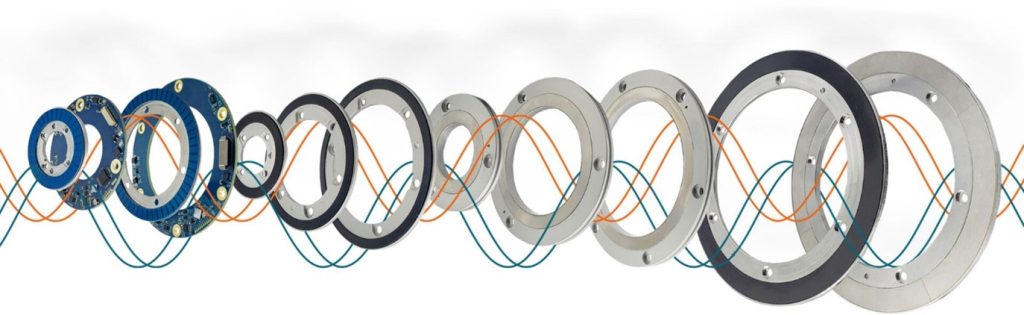
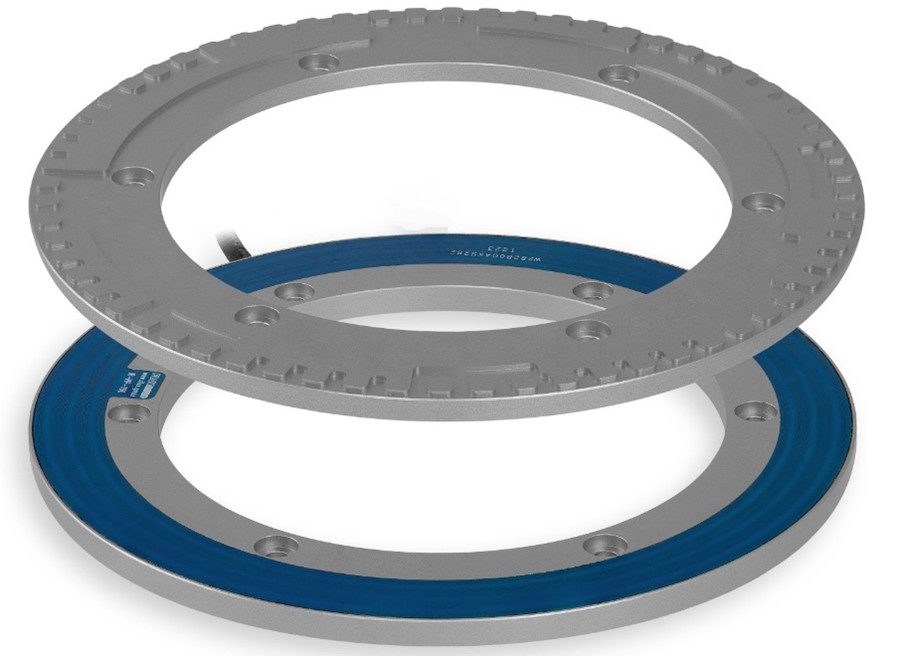
“Our inductive encoder technology, also used within our IND-MAX encoders, provides a revolutionary solution in the field of inductive absolute encoders and enables the creation of the smallest inductive absolute encoder without sacrificing any performance capabilities. Exceptional immunity to magnetic and electromagnetic interference allows direct integration into all types of motors whereas the ultra-light, modular design offers a high degree of customization and scalability.”
“Also, we’ve taken an honest approach. In our white paper, we highlight both six strong reasons why engineers should use our encoders and, also, two cases where they may not be the right choice. We believe that kind of transparency helps engineers make the right design decision and builds trust in FLUX as a long-term partner.” For more info, see www.flux.gmbh.