e-Power Technology

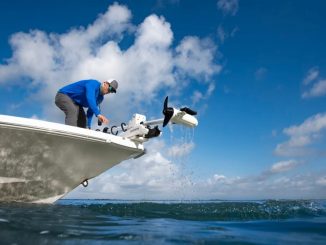
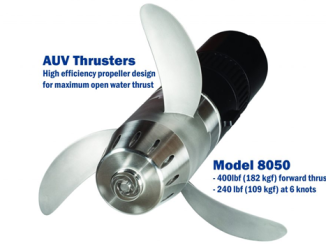
Tecnadyne AUV Thruster Line & Positioner System Designed for Subsea Vehicle Market 

Featuring magnetically coupled propeller drives and permanent-magnet brushless DC motors, Tecnadyne engineers have designed a new line of subsea thrusters that bring higher levels of propulsion efficiency to autonomous underwater vehicles.  Dedicated to highly reliable systems for the subsea […]
e-Power Technology

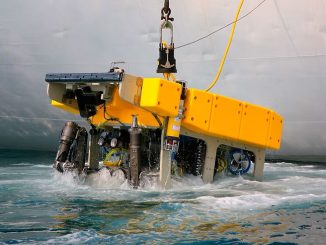
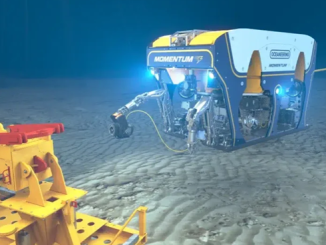
Electric Propulsion for New Underwater Work ROV from Oceaneering 

Showcasing a sophisticated foray into electric propulsion and system electrification, Oceaneering unveiled its latest development in remotely operated vehicles for marine work projects at the Subsea Tieback Forum held in March at New Orleans.   Named Momentum, the electric ROV was developed using a reliabilitydriven, datainformed design approach […]

e-Power Technology

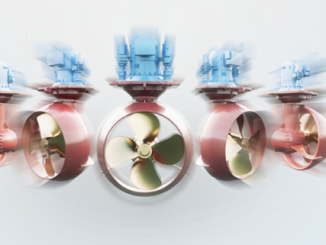
Kongsberg Maritime Expands Range of Azimuth Thrusters, Goes Electric with Shipboard Towing Winches

Azimuth thrusters, typically employing powerful neodymium permanent-magnet motors, have become a major tool for electrifying maritime propulsion. Kongsberg Maritime, a pioneering leader in the technology, has recently extended the range of its underwater mountable, permanent magnet azimuth […]

Electromagnetics

Defense Contractors Textron & thyssenkrupp Marine Systems Build on Autonomous Mine Countermeasure Packages for Navies 

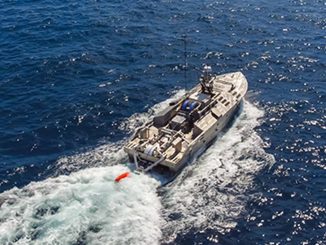
Textron Systems Corporation continues to build out its mine countermeasure packages for marine defense programs that employ magnetic and acoustics technology to find and destroy underwater mines. Recent awards from the U.S. Navy include a $106 million contract for mine sweeping payload delivery systems plus a $100 million contract for software updates. Across the pond, thyssenkrupp Marine Systems, re-branded now to TKMS, continues to advance its systems under contracts with the Royal Navy. […]

e-Power Technology

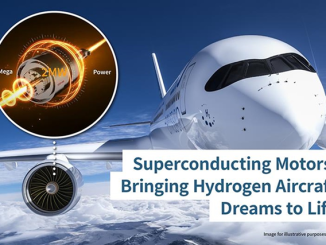
Breakthrough Superconducting Motor from Toshiba Being Applied to Hydrogen Flight with Airbus; Ships & Space Envisioned Next 

As the aviation industry works toward the ambitious goal of net-zero CO2 emissions by 2050, the shift to sustainable aviation fuel such as hydrogen is gaining momentum. However, truly effective reductions in the environmental impacts of aviation likely require innovation that goes beyond fuel to embrace the entire aircraft system.  […]