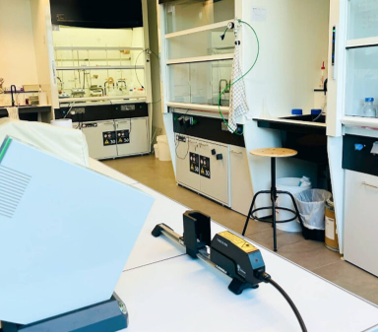
In the heart of France’s Alsace region, in the town of Selestat, a new production site for manufacturing advanced magnetic nanoparticles dedicated to cancer diagnosis and treatment is coming together. Effecting the transition to industrialization for French biotech company Superbranche, it will begin as a pilot site to produce the company’s flagship SUPERSPIO20 nanoparticles with an R&D or GMP grade depending on the applications and needs of customers.
Superbranche is a chemical company developing an innovative platform based on dendronized iron oxide nanoparticles for healthcare. Connecting technologies to transform the treatment and monitoring of solid cancers, the platform combines diagnostic properties with targeted therapy capabilities. Last year, the company completed a €13 million fundraising round to accelerate the development of its technology.
After production tests and the qualification phase taking place this year, the facility will be able to produce between 1 and 4 kg of nanoparticles per year. Production of the first batches is foreseen for early 2027 and to gradually increase in coming years. The new facility signifies the beginning of the company’s industrialization phase for the synthesis of its nanoparticles and marks a strategic advancement in preparation for the launch of clinical trials of its SPB-20X1 product for the treatment of solid cancers.
Their innovative magnetic nanoparticles are designed to serve theranostic purposes based on hyperthermia. Theranostics is a cutting-edge field of precision medicine that combines targeted medical imaging with targeted therapy. Hyperthermia stimulates the body’s immune system against tumors. The heat used in the treatment increases the ability of T cells to identify and attack cancerous cells and also prevents cancer cells from self-repairing by irreparably damaging their DNA structure. The heat generated by hyperthermia treatments creates a fever-like atmosphere around the tumor and within it, which catalyzes the body’s immune system to attack. This gives the body another layer of defense along with chemotherapy and radiation therapy.
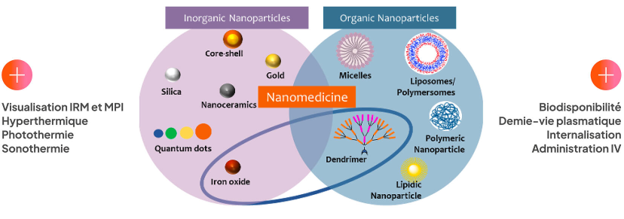
SUPERSPIO is an iron oxide nanoparticle technology platform with differentiating factors in line with the needs of addressable markets for therapy monitoring applications and theranostics. The goal was to achieve an object design small enough, around 20 nanometers, so they could be injected into the bloodstream, but also for better internalization into cells or exosomes. Since blood irrigates the entire body, they can potentially reach any cancer cell or metastasis very early on. The superparamagnetic iron oxide (SPIO) nanoparticles have an outer coating of dendrimers, for increased stability and performance.
The platform is currently produced in research grade and has been demonstrated in industrial applications with customers and partners, including four preclinical proofs of concept at hospitals in France, Canada and the United States.
Insights from the CEO
Delphine Felder-Flesch, CEO of Superbranche explained to Magnetics Magazine these insights about the company and its technology.

“Superbranche’s technology combines two capabilities that are typically developed separately: non-invasive monitoring of cell therapies and targeted treatment of solid tumors. By leveraging magnetic nanoparticles as both imaging agents and therapeutic mediators, the platform offers a differentiated theranostic approach that can support treatment monitoring while simultaneously enhancing therapeutic efficacy.
The company’s competitive advantage lies in the ‘secret sauce’ of making such nanoparticles at R&D and industrial scale (a GMP pilot plant will be launched in September 2026) thus enabling the usage to different purposes, enabling Superbranche to address multiple unmet needs across oncology with a versatile and scalable technology platform. Furthermore, the platform is designed to be complementary to existing therapeutic modalities, Iing immunotherapies, cell therapies, chemotherapy and radiotherapy, creating opportunities for broad clinical applicability and strategic partnerships.
By bridging diagnostics and therapy, Superbranche aims to enable a more precise and personalized approach to cancer treatment, with the potential to improve clinical decision-making, treatment efficacy and patient outcomes.”