With recent acquisitions and the innovative design of a permanent-magnet motor with external rotor, Italian motion control specialist Umbragroup is building its capabilities in propulsion for electric aviation, especially in systems for unmanned aerial vehicles. The moves are part of a broad corporate strategy to stimulate growth in advanced technology and electrification markets while also transitioning in the development and manufacture of fully integrated electromechanical systems.
Acquisition of General Defence for entry into UAV market
On July 23, Umbragroup announced it has signed an agreement to acquire a majority controlling stake in General Defence, one of Italy’s most innovative companies in the field of unmanned aerial systems and integrated defense solutions. The transaction marks another important step in the group’s growth strategy and further strengthens its position in the aerospace and defense markets by expanding its technology portfolio with entry into the unmanned systems sector.
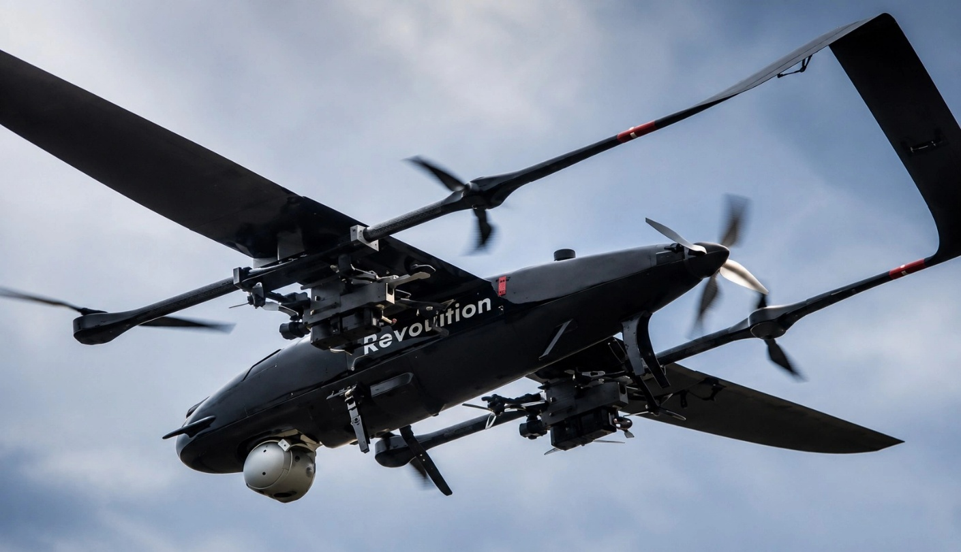
General Defence is recognized for its expertise in the development and integration of advanced unmanned platforms, both aerial and underwater, including solutions such as the VTOL REVOLUTION, shown above, also the MULTI-MD multirotor drone, unmanned underwater vehicles, as well as related command and control capabilities, datalinks and mission systems. General Defence will continue to operate from its headquarters in Rome under the leadership of its current CEO, Francesco Colandrea.
External rotor and direct drive design for the evolution of electric propulsion

What does it really take today to make electric aviation take off? Increasing power alone is not enough, what’s required is a complete rethinking of propulsion systems, making them more compact, efficient, and reliable, asserts Umbragroup. The growing adoption of eVTOL (electric Vertical Take-Off and Landing) aircraft represents one of the most compelling developments of recent years, it notes, as these platforms are designed around fully electric architectures and are setting new standards in terms of power density, integration and safety.
To address these challenges, Umbragroup has developed an advanced study on a permanent magnet synchronous motor with an external rotor, specifically designed for high-performance aerospace applications. This solution introduces a new approach to propulsion system design: the external rotor configuration increases torque density and optimizes inertia distribution, while enabling direct propeller integration and simpler, more efficient direct-drive architectures.
The project also stands out for its focus on operational continuity. Thanks to a multiphase architecture, the motor can maintain operation even in the event of a fault, improving system resilience and meeting the highest safety requirements in the aerospace sector. One of the most critical aspects of the project is unit, which simplifies thermal management, now a key enabler for the electrification of flight. Umbragroup has developed a solution based on forced air cooling and passive physical principles, capable of efficiently dissipating heat while reducing weight, complexity and the need for active components. The motor is part of a fully integrated electromechanical onboard architecture, optimizes space and enhances overall system performance.
The transition toward more sustainable aviation also relies, now more than ever, on propulsion systems. In this context, eVTOL (electric Vertical Take-Off and Landing) aircraft represent one of the most compelling technological developments of recent years: platforms designed to combine high performance, reliability and reduced weight within fully electric architectures.
It is within this scenario that the study of a permanent magnet synchronous electric motor with an external rotor was developed, specifically designed for high-torque-density aerospace applications such as propulsion and propeller pitch control. Compared to traditional internal rotor configurations, this architecture delivers clear advantages such as increased torque density, improved inertia distribution and the ability to directly integrate the propeller onto the rotor, enabling a simplified system design while enhancing overall efficiency and reliability.
The motor is designed as a 6-phase brushless AC machine with concentrated windings and surface-mounted permanent magnets. The choice of a multiphase configuration is not only performance-driven, but also safety-oriented: in the event of a fault in one phase, the system can continue operating under controlled conditions, ensuring the electrical stability required in aerospace applications.
While the electromagnetic structure represents the core of the system, the real challenge lies elsewhere: thermal management. Increasing power density inevitably requires handling higher levels of heat, and in the aerospace sector this directly impacts weight, complexity, and reliability.
For this reason, the engineering team at Umbragroup set an ambitious goal: maximize performance without relying on centralized liquid cooling systems. The solution combines forced air cooling, an internally optimized heat exchanger designed through CFD simulations, and the integration of heat pipes within the stator slots. Heat pipes are passive devices with extremely high thermal conductivity, capable of transferring heat very efficiently through the evaporation and condensation of an internal fluid. This allows the system to operate without power supply or moving components.
The motor is not a standalone component, but part of a compact and fully integrated electromechanical system that includes propulsion, a Trim Pitch EMA (electromechanical actuator for propeller pitch control), and thermal management. This integrated approach reduces size and weight, simplifies the overall architecture, and facilitates onboard integration.
From a performance standpoint, the design achieves significant results including power up to 116 kW, torque exceeding 1000 Nm, efficiency above 93% in cruise conditions, active material weight below 35 kg. The analyses performed also confirm stable behavior from both electromagnetic and thermal perspectives, even under the most demanding operating conditions.
Acquires Electro Motor Solutions
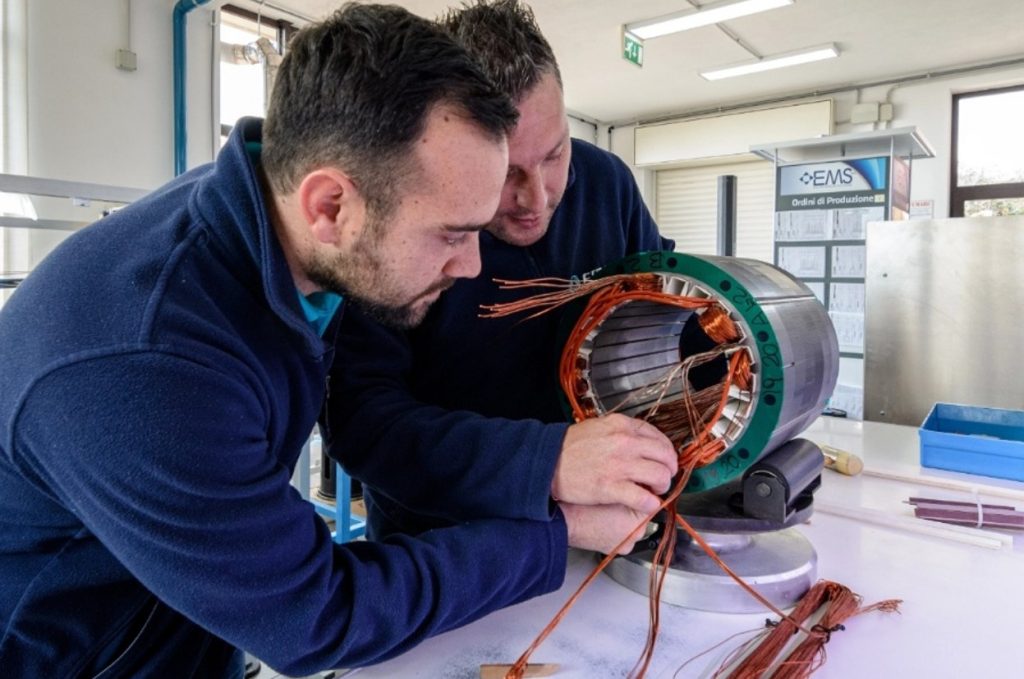
Another key acquisition came last year by acquiring a majority stake in E.M.S. – Electro Motor Solutions Srl which specializes in the design and production of high-performance electric motors and electromagnetic brakes. EMS is based in Albanella, a town located in southwestern Italy about 50 km south of Salerno.
“The entry of EMS into the Umbragroup, besides being a strategic move, is also the result of a long collaboration and a relationship of mutual esteem. It is a decisive step toward building a complete mechatronic ecosystem capable of facing global challenges with expertise and vision,” said Reno Ortolani, Group Chairman.
About Umbragroup

From headquarters in Foligno in central Italy, Umbragroup operates a global enterprise that produces ball screws, high precision mechanical and mechatronic components for aerospace and industrial markets. Key products include electromechanical actuators, electric motors, gyroscopes, electronic systems and precision motion solutions. Annual turnover is about €245 million.
As CEO Matteo Notarangelo stated at the company’s recent celebration of its 54th anniversary: “We want to continue our evolution as an integrated technology group, built on best-in-class products and manufacturing technologies, while expanding our presence into markets that have so far been only partially explored, such as energy, marine, and robotics. Attention is also being directed toward expansion into new segments and adjacent markets, with a particular focus on the United States, which continues to offer more favorable growth dynamics than many other international industrial markets.” See www.umbragroup.com.