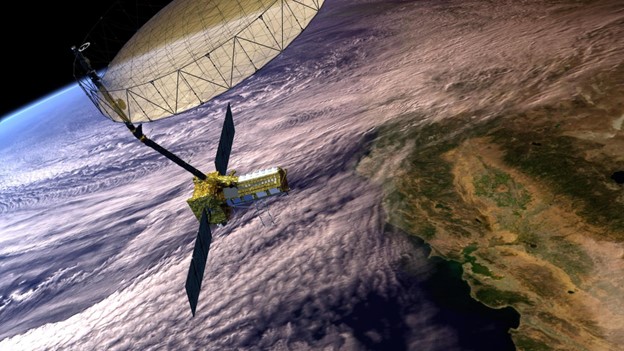
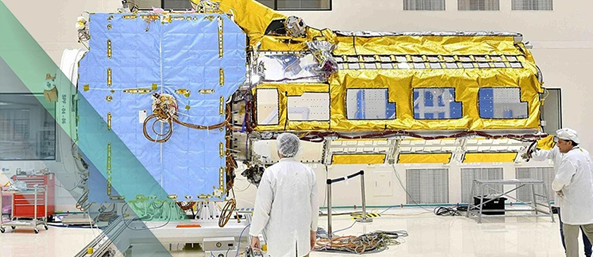
A collaboration between NASA and the Indian Space Research Organization, NISAR will use synthetic aperture radar to monitor nearly all the planet’s land- and ice-covered surfaces twice every 12 days. The satellite was launched July 30 from Satish Dhawan Space Centre on India’s southeastern coast. Onboard are sophisticated magnetic inductors from Exxxelia that have critical function for the mission’s success.
The satellite is equipped to track Earth’s most subtle changes, from shifting tectonic plates to melting ice caps, with unprecedented precision. It marks the first such collaboration between ISRO and American space agency NASA. This first-of-its-kind satellite is a game-changer for Earth science.
Using a sophisticated dual-frequency L- and S-band Synthetic Aperture Radar (SAR), NISAR will provide a unified, comprehensive view of our planet’s surfaces. It’s designed to measure changes in ecosystems, ice mass, and land, providing critical data for understanding and responding to climate change and natural hazards like earthquakes, tsunamis, and volcanic eruptions. Essentially, NISAR will give us a global, high-resolution “motion picture” of our planet’s most dynamic processes.
The parts from Exxelia, a specialist in designing and manufacturing high-reliability components for demanding applications, were chosen for their exceptional performance, stability, and durability—qualities that are non-negotiable for a mission of this magnitude, notes the company.
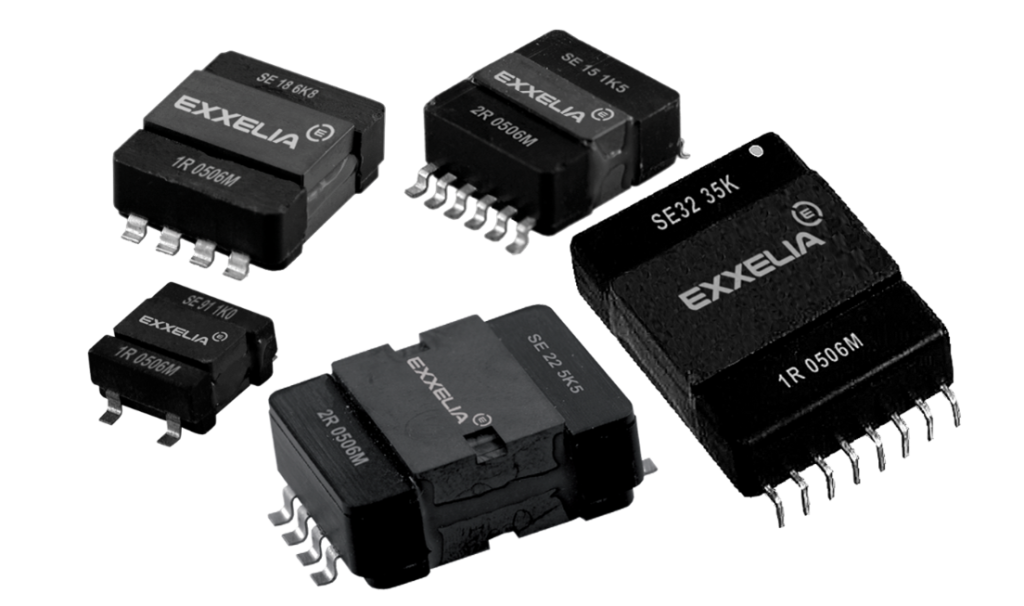
Specifically, its SESI series magnetics play a crucial role within the satellite’s Data Acquisition & Digital Beam Former units. The components are essential for the precise control and handling of electrical signals, ensuring that the radar data collected is accurate and reliable.
The units employed in this application are designed to operate at frequencies up to 1 MHz and can handle significant power levels while maintaining high efficiency. Their robust construction ensures they can withstand the extreme temperature variations (−55∘C to +125∘C) and high-radiation environments of space without performance degradation.
CTC21E capacitors from Exxelia are also onboard, supporting the satellite’s payloads and DC-DC converters. These components are responsible for power management, ensuring a stable and efficient energy supply to the sensitive instruments and systems. For more info, see www.exxelia.com, www.nasa.gov.