Many chefs have a favored secret sauce. The same principle occurs in metallurgy. For metallurgists and design engineers involved in magnetic performance for electrification, however, only a few of them have Niobium in their toolkit– yet. CBMM (Companhia Brasileira de Metalurgia e Mineração) located in central Brazil at Córrego da Mata, is working on changing this as It seeks to expand and diversify applications for Niobium. One target is applying the versatile metal to enable nanocrystalline soft magnetic materials technology.
The ductile, shiny metal is mined and processed almost exclusively in Brazil accounting for more than 90& of global reserves and production. CBMM is the elephant in the room, producing more than 80% of the world’s supply and constantly researching new applications and refinements. Presently, Niobium is mostly used in steelmaking. Another, albeit lesser, application is for making superconducting magnets.
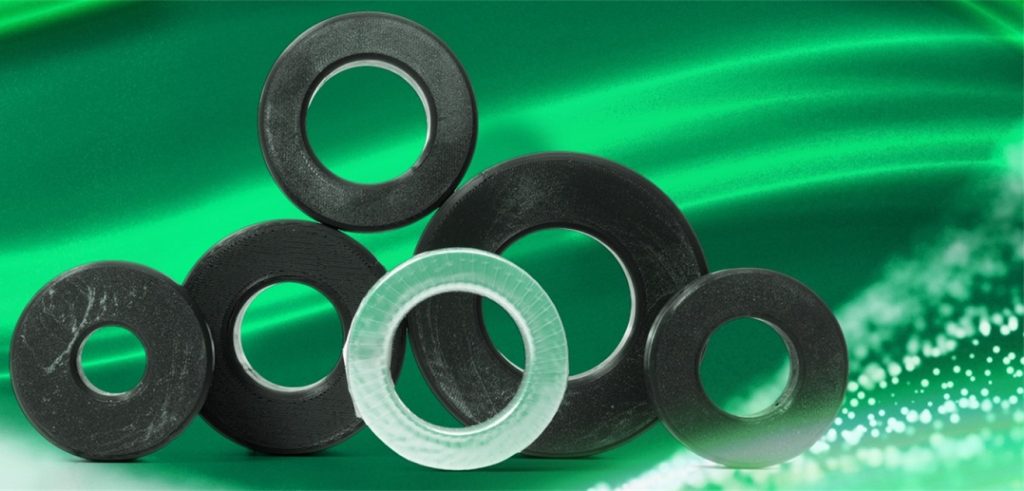
Nanocrystalline materials can provide greater energy efficiency, reduced energy losses and enhanced performance in key segments such as electric mobility, power supply and industrial systems. They enable miniaturized and lightweight components while increasing energy efficiency, performance, and safety of applications across many sectors. Characteristics include high energy efficiency, thermal stability, thus able to operate effectively at high temperatures, smaller and lightweight design, and lower electromagnetic interference. They can require less copper windings than other soft magnetic materials and can enable smaller, highly efficient magnetic components.


Niobium-titanium and niobium-tin alloys are crucial for creating superconducting magnets in magnetic resonance imaging scanners and particle accelerators. At very low temperatures, Niobium becomes a superconductor. When alloyed with titanium (NbTi) or tin (Nb3Sn), it produces the superconducting magnets used in MRI scanners, nuclear magnetic resonance equipment and particle accelerators such as the Large Hadron Collider at CERN.
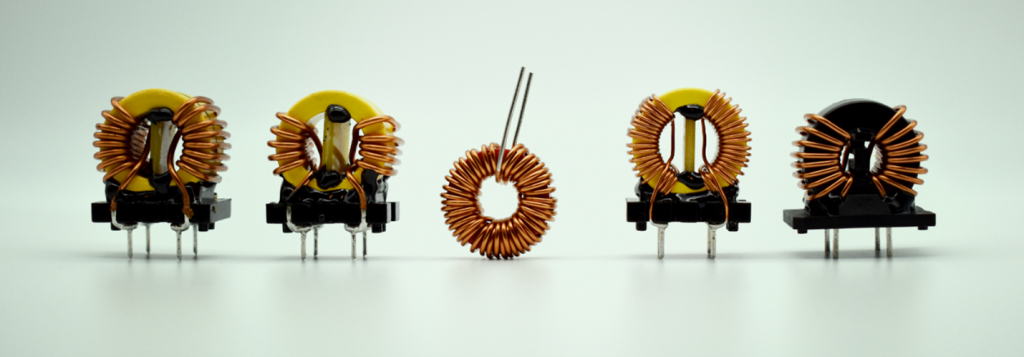
Nanocrystalline filters offer higher permeability and higher saturation flux density supporting higher noise attenuation in smaller volumetric components than materials traditionally used in power electronics. Soft magnetic materials play an evolving and growing role in many modern-day applications, including electric vehicles and renewable energy. Their role in power electronics is to address the issue of electromagnetic noise, a common occurrence that can cause interference in circuit operations.
The development of filters that contain a nanocrystalline core can offer higher permeability and lower losses than traditional filters with ferrite-based material cores. These characteristics enable the manufacture of more compact and lightweight components with a higher-density design. Recent development programs show their potential to enable smaller, highly efficient magnetic components for applications like EV charging. This new generation of magnetic alloys containing Niobium offer high permeability, low coercivity, low magnetostriction, and a Curie temperature up to 570°C. With high saturation flux density across various frequencies and conditions, they can surpass ferrites in power density and simplify wiring and cooling system design.
For more info, see www.cbmm.com.