Recent initiatives by Neo Performance Materials demonstrate how artificial intelligence and recycling are becoming two key elements in the modern magnetics industry. A global leader in rare earths and magnetic materials, and long considered an industry bellwether, Toronto-based Neo is pursuing new programs in both areas aimed at technical and supply chain advancements.
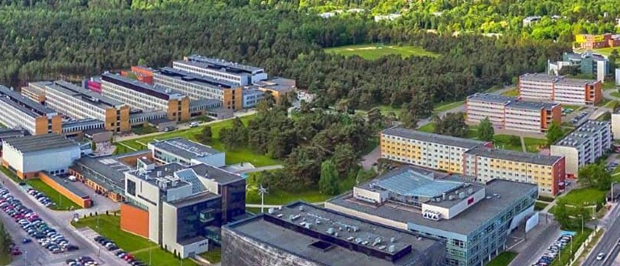
In Estonia, where it recently opened a major new magnet manufacturing plant, Neo has forged a multi-year research partnership with Tallinn University of Technology, further advancing its initiative to embed AI and machine learning across its product development and manufacturing operations. Backed by 30 years of leadership in magnetics and advanced industrial materials, a deep proprietary operations dataset, and an established in-house data science team, Neo’s AI implementation is translating process expertise into measurable improvements in end products and manufacturing processes.

“Neo has extensive meaningful magnet and rare earth separation operating data, and a dedicated in-house data science team, which gives us a foundation few in our industry can match,” said Rahim Suleman, President and Chief Executive Officer of Neo Performance Materials. “By embedding AI across our product development and manufacturing operations, and partnering with research institutions such as TalTech, we are translating decades of rare-earth expertise and real-world data into tangible outcomes, primarily in permanent-magnet manufacturing and rare-earth separation. These advances support more efficient processing and a stronger, more resilient rare earth supply chain.”
Neo’s core success factors for AI include a defined opportunity to deploy it; deep historical production and quality data; industry-leading domain expertise in rare earth chemistry, physics and magnetics; in-house data scientists; integrated infrastructure that enables AI systems to learn and create live feedback loops to fully operationalize AI within the manufacturing process.
Partnering with TalTech and leveraging their AI capabilities will drive enhancements to Neo’s existing AI and ML models across its value chain. These include applications that will optimize processes, improve yield, reduce consumption of reagents, energy, and water, and enhance consistency and capability in finished materials and magnetic performance. It will also provide opportunities to further develop and operationalize new grades of magnets. Beyond the technical scope, the partnership will integrate joint curricula, internships and student engagement initiatives designed to attract the sector’s next generation of talent.
“At TalTech, we focus on turning cutting-edge research into real industrial impact,” said Krister Kalda, Head of Industry Cooperation for the university. “Through our Centre for Intelligent Systems, we work with AI and machine learning in a practical way, from handling complex industrial data to improving and optimizing processes in real time. Working with Neo Performance Materials gives us a strong opportunity to apply this in a high-value manufacturing setting, where improvements in efficiency, yield, and resource-use translate directly into competitive advantage and more resilient supply chains.”
Neo and Cyclic Seek to Build Trans-Atlantic Circular RE Supply Chain
In March, Neo announced the signing of a non‑binding memorandum of understanding with Cyclic Materials, also based in Toronto, to collaborate on the development of a circular, resilient and traceable rare earth value chain for magnetic materials. The collaboration is focused on establishing a closed-loop, trans-Atlantic supply chain that enables Cyclic’s recycling of magnet production scrap and end-of-life magnet-bearing materials, with Cyclic’s recovered rare earth elements reintegrated into Neo’s alloy and magnet manufacturing. The arrangement supports Neo’s production sites in Europe, aligning with the EU Critical Raw Materials Act objectives to increase rare earth processing and recycling capacity for rare earth magnetics.
Neo intends to supply magnet production scrap from its European operations to Cyclic to be recycled into mixed rare earth oxides. Cyclic also intends to supply mixed rare earth oxides and related products that have been recycled from a combination of end-of-life and third-party magnet manufacturing scrap to Neo. The recycled products from Cyclic will have full traceability contributing and will serve as raw material inputs for Neo’s downstream processing and magnet manufacturing operations.
“This MOU brings together complementary capabilities to advance circularity in rare earth magnet supply,” said Suleman. “By combining Neo’s advanced magnet manufacturing platform with Cyclic’s innovative recycling technology, we aim to help deliver secure, traceable, and sustainable supply chains for our customers.”

“This collaboration reflects a shared commitment to advance circularity and resilience of trans-Atlantic rare earth supply chains,” said Ahmad Ghahreman, CEO and founder of Cyclic. “By integrating Cyclic’s innovative recycling with Neo’s established magnet manufacturing capabilities, we will enable a secure and traceable source of rare earth materials for North America and Europe.”
The two companies also intend to explore joint closed‑loop opportunities with OEM and Tier‑1 partners, enabling improved traceability from end‑of‑life products through to new electric motor and clean technology applications.
Just earlier, at the end of January, Cyclic announced it is investing more than USD $82M to establish a rare earth recycling campus in McBee, South Carolina. The new site will host Cyclic Materials’ second U.S. Spoke facility and the company’s largest Hub facility to date, capable of processing 2,000 tons of magnet material with a planned expansion to 6,000 tons per year. The combined Spoke and Hub facility will utilize Cyclic’s proprietary MagCycle and REEPure processes to separate and recover mixed rare earth oxides from end-of-life products that are typically not recycled today. It will initially have the capacity to produce 600 tons of magnetic rare earth oxides per year, with a planned expansion to triple that capacity to produce 1,800 tons to meet growing demand.
For more info, see www.neomaterials.com, www.taitech.ee, www.cyclicmaterials.earth.