Discover how collaboration between CBMM, the Brazilian miner and technology developer of Niobium alloys, and electronics components manufacturer Yageo Group translates advanced Niobium-based nanocrystalline materials into application-ready EMI components engineered for next-gen data centers and e-mobility systems. Their work constitutes a rethinking of EMI filtering in high-current systems through the use of specialized nanocrystalline cores rather than traditional ferrite cores.
As power architectures become more compact and switching frequencies continue to rise, traditional approaches to EMI mitigation can be pushed to their limits. In high-current environments, simply increasing core size may no longer be a sustainable strategy. Saturation behavior, thermal stability, and attenuation density now directly influence system footprint, efficiency, and compliance. The challenge is not only to suppress noise, it is also to maintain stable performance under electrical and thermal stress without scaling volume.
The mineral Niobium, mined by CBMM in Brazil and explored for technology advantages in its laboratories, can play a decisive role in stabilizing the microstructure of advanced iron-based nanocrystalline alloys. Niobium-bearing nanocrystalline soft magnetic materials are being evaluated as an alternative to ferrite in high-frequency power electronics using SiC and GaN.
Research at CBMM labs has found that the structural refinement directly influences magnetic permeability, saturation behavior and overall performance under electrical stress. Instead of compensating through larger cores or additional filtering stages, engineers can enhance attenuation density at the material level.
From alloy development to qualified EMI components
A whitepaper reflects the collaboration between CMBB and Yageo Group, whose companies include power electronics developers Kemet and Pulse, that combines advanced Niobium-based material engineering with real-world EMI component design and qualification.
By aligning alloy development with application requirements, the partnership bridges material science and system-level performance. The result is not only improved magnetic properties, but practical implementation within demanding power architectures.
The document presents a comparative evaluation of nanocrystalline and conventional ferrite cores, examining magnetic behavior under DC bias and elevated temperature conditions. It also discusses design implications for compact common-mode choke architectures, with application-focused analysis for data centers and e-mobility systems operating under evolving EMC frameworks.
In modern data centers, for example, High-density AC/DC and DC/DC conversion stages demand efficient EMI suppression without increasing rack footprint. The analysis explores how attenuation density and magnetic stability influence compact power architectures. In applications for e-mobility and EV charging, traction inverters, onboard chargers, and fast-charging infrastructure operate under high current and elevated temperature conditions.
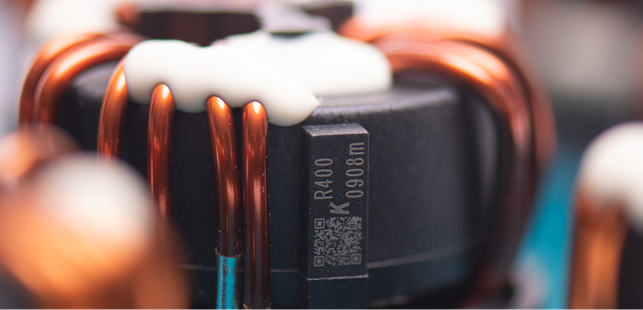
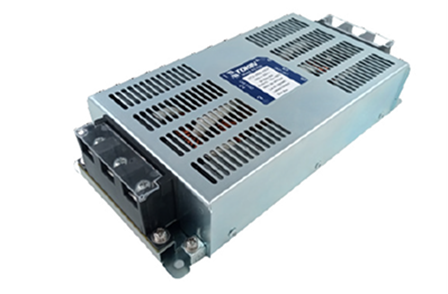
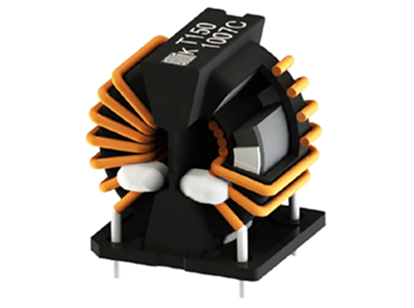
The paper explains how a nanocrystalline common-mode choke can provide stable magnetic behavior, high current capability and wide-band suppression, often replacing larger or multi-stage ferrite-based solutions. Several product examples from Yageo provide examples.
The white paper is available at www.niobium.tech. Also see www.yageo.com and www.cbmm.com. For an earlier report in Magnetics Magazine, query for “niobium” or “cbmm”.