Showcasing a sophisticated foray into electric propulsion and system electrification, Oceaneering unveiled its latest development in remotely operated vehicles for marine work projects at the Subsea Tieback Forum held in March at New Orleans.
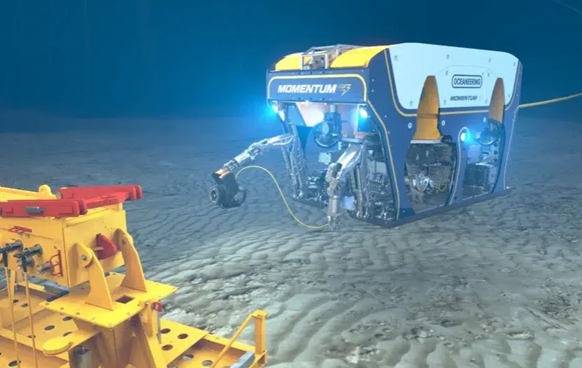
Named Momentum, the electric ROV was developed using a reliabilitydriven, datainformed design approach that reengineered the workclass platform around electric propulsion to improve efficiency and simplify system architecture. The newest addition to its portfolio of ROVs, the vehicle is designed for 30-day continuous subsea operations enabling extended support for drilling, inspection, maintenance and repair surveys, and construction work projects.
“We focused on what matters most to customers: availability and capabilities that deliver confidence during critical offshore work,” said Martin McDonald, Senior Vice President of Subsea Robotics at Oceaneering,. “By applying electrification through a disciplined, datadriven approach, we’ve reduced vehicle maintenance while improving efficiency and operational availability. This allows customers to execute longer, more predictable subsea campaigns while strengthening Oceaneering’s ability to deliver scalable, differentiated solutions that create longterm value.”
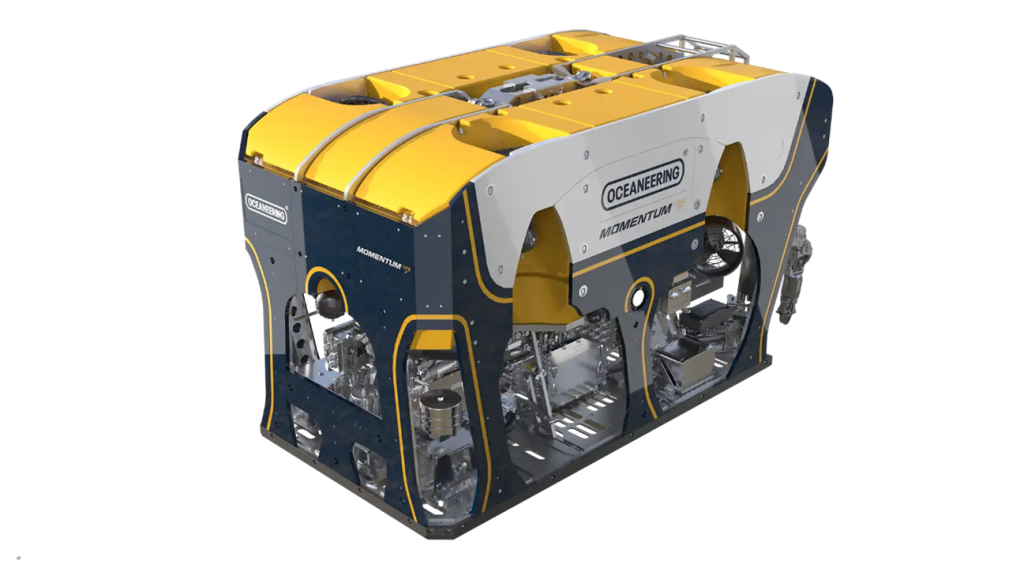
Lower power Consumption is a key advancement. The company’s design team has reduced overall energy demand by up to 45% through electric propulsion, the company reports. The Momentum integrates a smart power system built on a simplified electric propulsion architecture, eliminating hydraulics at the vehicle level to increase uptime and enable long-term subsea deployment. A pair of 65 kW transformers deliver the system’s power. Propulsion is provided by four vectored horizontal and four vertical 15 kW thrusters. The thrusters rely upon highly efficient permanent-magnet motor technology to provide the high torque and power for demanding offshore operations while minimizing required maintenance.
Headquartered in Houston and with activities worldwide, Oceaneering operates what it bills as the world’s premier fleet of work class ROVs while also providing offshore oilfield maintenance services, umbilicals, subsea hardware, and tooling. It also serves the aerospace, defense and theme park industries. Regional offices are located at coastal centers in the Americas, Asia, Africa, Europe, and the Middle East. More than 12,000 employees are based at 70 operation centers in some 20 countries. See www.oceaneering.com.