Institut Dr. Foerster GmbH & Co., manufacturer of products for non-destructive material testing and magnetic field measurement, has made important expansions. It has acquired Pruftechnik NDT GmbH, based in Ismaning, formerly a company of Fluke Corporation. Pruftechnik is known for its advanced testing methods and systems for industrial quality control, some which employ sophisticated eddy current technology for alignment of bearings and rotating machinery. The move comes only a few months after Foerster established its 17th subsidiary, this one in Turkey.
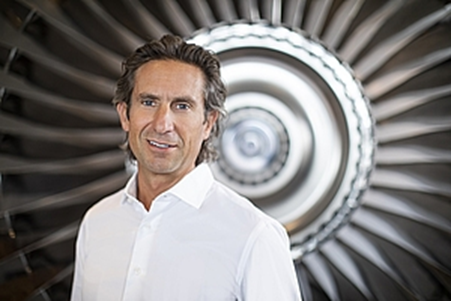
“Acquiring Pruftechnik NDT GmbH is an important step in our long-term growth strategy,” says Managing Partner, Felix Foerster. “This enables us to offer our customers an even broader range of customized solutions and services.” The merger creates an expanded product range in non-destructive material testing for both companies, a larger network of technical experts worldwide and brings synergies in research and development.
“Our goal is to leverage the strengths of both companies to provide our customers worldwide with high-quality solutions, ensuring long-term collaboration.” With this acquisition, we at Foerster are marking another milestone in our global expansion, strengthening our position as an innovation leader and provider of comprehensive solutions in the field of non-destructive testing.”
New subsidiary in Turkey
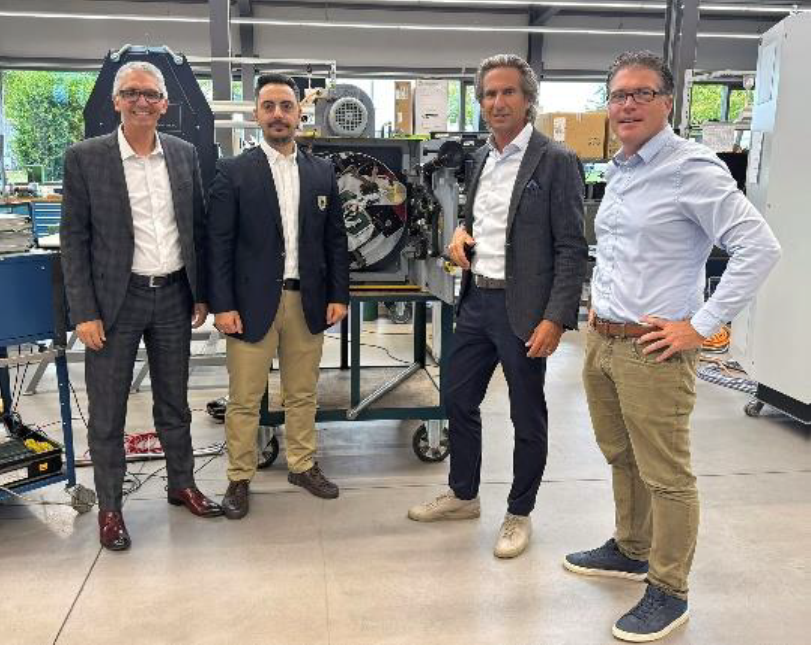
A few months earlier, it established Foerster Turkey Test Cihazlari Ltd. Sti. The expansion strengthens international customer support and extends the presence in key markets such as oil & gas, steel, metalworking, automotive, aerospace and defense. Located on the Asian side of Istanbul, the new branch provides more direct access to the company’s solutions and services.
Pruftechnik acquisition brings together portfolios with discrete magnetic induction technologies
Pruftechnik provides a broad range of products, services and training tailored to the needs of maintenance professionals globally in the areas of shaft alignment, vibration analysis, condition monitoring and nondestructive testing. It specializes in shaft and machine alignment systems, manufacturing alignment equipment for fluid couplings – including induction heaters for mounting bearings.
With fluid couplings, conventional shaft alignment equipment based on chain-type and magnetic brackets have limited to no functionality. Induction heating tools, however, are the safest and most effective method for mounting bearings onto shafts, ensuring even and controlled heating of the bearing and work pieces, says the company.
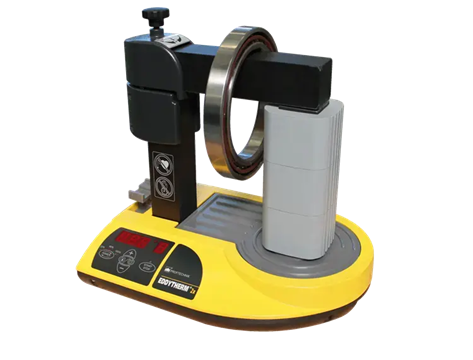

The bearing heating process changes the physical properties of the metal and allows the material or work piece to harden, soften, or bond metals of gears, shafts and axles. Bearing induction heating lets users properly fit bearings onto a shaft. The tool creates an oscillating electrical current that causes the bearing or metal to heat when placed in the device’s magnetic field. Eddy currents make the bearing heat up and expand. Once the induction bearing heater reaches the correct temperature, the operator removes the hot bearing with safety gloves and places it on the shaft. As it cools down, the bearing shrinks to fit it.
Bearing induction heaters let users precisely control the process of mounting bearings onto a shaft or dismounting them. Other methods, like torching or heating bearing in a hot oil bath, don’t offer the safety and control of an induction bearing heater. Most manufacturing industries use bearing induction heating to carry out specific manufacturing processes such as mounting or dismounting shaft bearings.
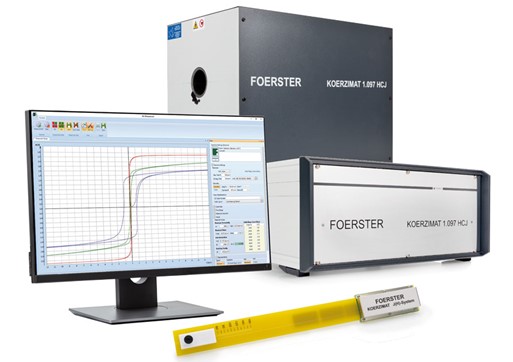
MagnaTest and Koerzimat product families from Foerster
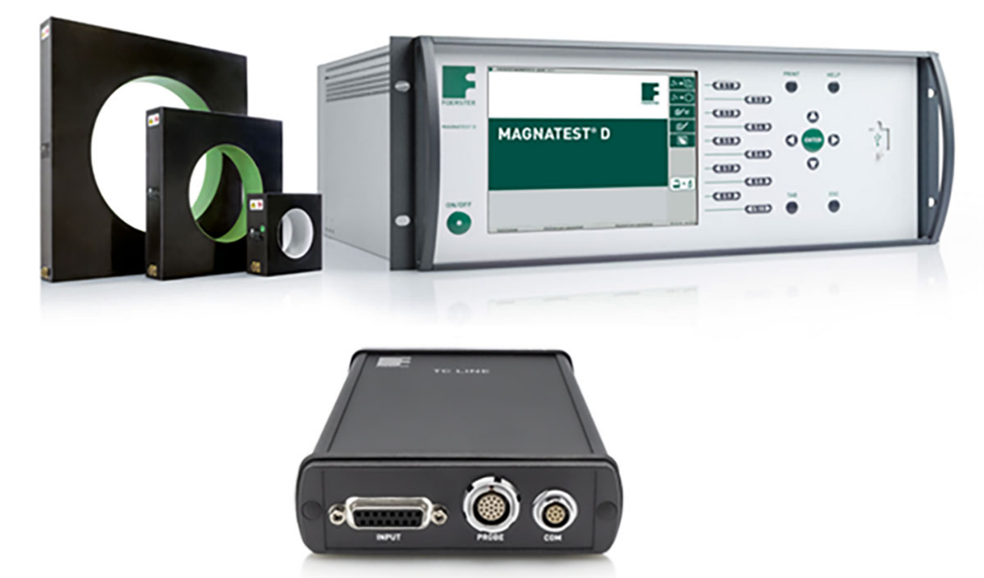
Magnetic-inductive testing is a key technology at Foerster. Among its extensive product portfolio, the Magnatest product family is used for the non-destructive testing of metallic materials for magnetic and/or electrical properties. The instruments are used in the automotive and aviation sectors as well as in the production of semi-finished products.
The focus is on testing components relevant to safety such as brake discs, or ball pins and functional components such as camshafts and drive shafts, pivots and piston pins. Typical test tasks include hardness checks, material differentiation and sorting. Associated products include a comprehensive range of standard testing coils with round and rectangular cross sections, as well as standard testing probes.
At the top of the line is Magnatest D-HZP with numerous analysis options for testing the materials of semi-finished products and considered by Foerster as the ultimate magneto-inductive test instrument. The fully automatic system operates in single coil absolute mode, making a comparator coil unnecessary. The combination of high excitation currents and complex evaluation electronic equipment detects even very small structural discrepancies.
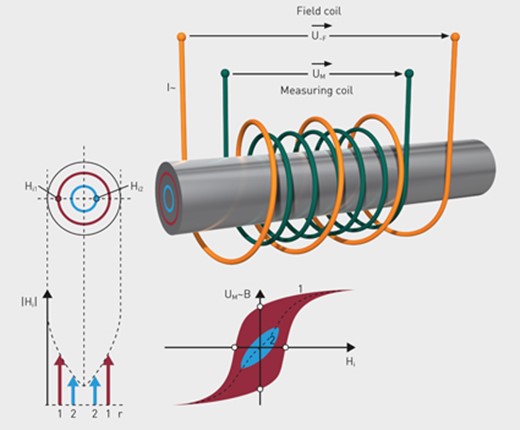
In magnetic induction testing, explains the company, the part whose material properties are to be tested is led through a test coil with an exciter coil and a measuring coil. An impressed alternating current is applied to the exciter coil, and the resulting magnetic alternating field induces eddy currents in the testing material.
In the reception winding of the measuring coil, a voltage is generated depending on the conductivity of the tested material (electric parameter) as well as on the shape and size of the hysteresis curve (magnetic parameter). The evaluation of this voltage allows the testing of ferromagnetic and austenitic steels as well as non-ferric metals.
Since the hysteresis curve in particular is strongly influenced by technological parameters such as hardness, alloy components, and microstructures, these parameters can be determined especially well via the magnetic properties.
By varying the exciter field strength, it is possible to select the specific dynamic range of the hysteresis curve where the magnetic parameter is especially influenced by the desired technology parameter. The choice of exciter frequency also allows selective observation of the core and surface properties.
For more info, see www.foerstergroup.de and www.pruftechnik.com.