Research & Development

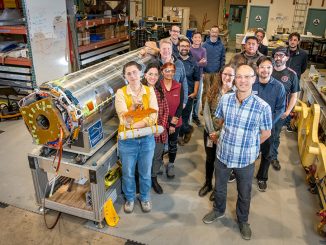
The Final Magnet for the High-Luminosity Upgrade of the Large Hadron Collider Leaves Berkeley Lab

The last of 21 new superconducting quadrupole magnets for the High-Luminosity Large Hadron Collider Accelerator Upgrade Project, or HL-LHC AUP, has left the U.S. Department of Energy (DOE)’s Lawrence Berkeley National Laboratory (Berkeley Lab) for testing before shipment to CERN in Switzerland for installation in the LHC, the world’s most powerful particle collider. […]

News

Magbead Innovators Target Breakthroughs in Diagnostics & Treatment of Cancer and Genetic Disease 

Innovators in the development of magnetic particle tools for biotech and medical applications are opening fresh paths to battle cancer and to perform automated biotech diagnostics on a grand scale. This article highlights three companies who unveiled their latest advancements at the recent BIO International Convention where biotech leaders and venture capitalists explore what’s coming next:
[…]

News

Quantum Design Acquires Oxford NanoScience Joining Two Leading Cryogenic Companies  

Quantum Design has acquired the Oxford NanoScience division of Oxford Instruments. Priced at £60m cash which is equivalent to about one year of Oxford Nano’s revenue, the acquisition unites the portfolios and expertise of two industry leaders with a combined legacy of more than 100 years of experience and innovation in cryogenics, materials science, and microscopy. The shared product catalog provides automated materials characterization with automated field and temperature control, ultra-low temperature sub-kelvin cryostats and dilution refrigerators, high-field superconducting magnets and a full range of optical cryostats.
[…]

Research & Development

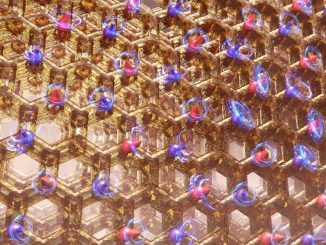
Laser Draws Made-to-Order Magnetic Landscapes

Researchers at the Paul Scherrer Institute PSI, in collaboration with the National Institute of Standards and Technology (NIST) in Boulder, Colorado, have for the first time succeeded in using existing laser technology to continuously vary the magnetic properties of two-dimensional materials. This simple and fast method should make a large number of applications possible, including techniques for data storage and processing. […]