Magnets are often made of iron materials that are prone to rusting or corrosion. Generally, when cleaning magnets, use an ambient temperature 1% Alconox Powdered Precision Cleaner solution (10 g/L or 1.25 oz/gal). Clean by soak, manual scrub or ultrasonic methods. Rinse thoroughly and rapidly with ambient (same as wash) temperature water to avoid breaking any emulsions and redepositing what you have removed.
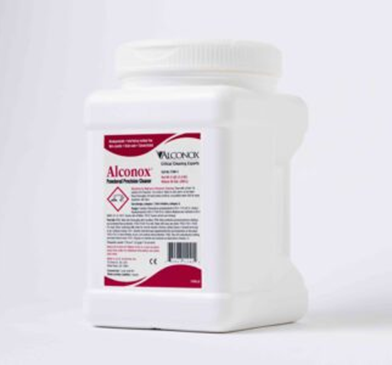
It is very critical to dry immediately by a water removing method such as wiping, blowing, dipping in isopropyl alcohol, centrifuging, or any method that does not allow rinse water to sit or evaporate on the magnet – do not use heated oven drying. During cleaning, the chelating agents in Alconox powder protect the magnet from rust and corrosion, but once the detergent is rinsed away it is important to minimize the contact time with rinse water in order to avoid corrosion.
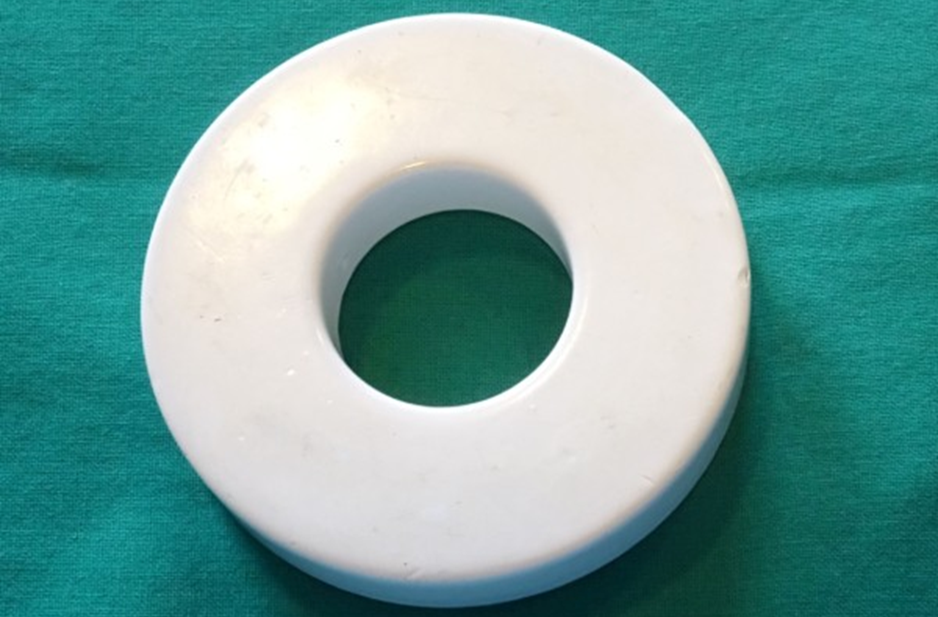
Epoxy coated neodymium magnets
Different magnetic materials and products, however, can require different procedures and cleaning methods. Neodymium processes can be challenging. For example, for epoxy coated neodymium magnets as represented in the donut-shaped magnet, depicted at top, we would recommend an acidic detergent. The key to the cleaning is going to be very specific to which stage of the process we are concerned with. Typically, the first cleaning step should be done after forming and machining.
Generally speaking, you want 2% Citranox® Liquid Acid Cleaner and Detergent in a short cleaning cycle at room temperature or only slightly elevated temperature. This will help prevent oxidation. Follow this with an immediate rinse in RO water, as it is less acidic than DI water (due to carbon dioxide absorption from the air).
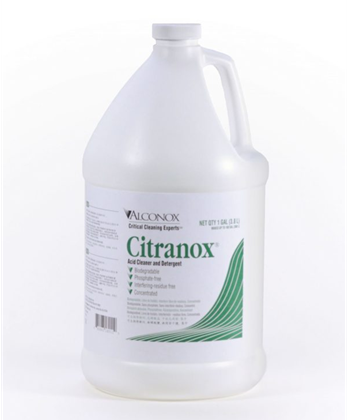
Then clean again with Citranox taking note of the orientation of parts; cleaning fixture traits like material, construction and drainage; and type of cleaning cycle such as manual wash, ultrasonic, conveyor wash, agitation wash, etc. This will all affect the cleaning times and temperatures. After coating and magnetization, do a final cleaning with Citranox and a final rinse, which should be quite simple as compared to the previous clean.
Alconox, located in White Plains, New York, has been a developer and provider of laboratory detergents since 1946. They are used extensively in the pharmaceutical, biotech, medical device, healthcare, electronics, and the cosmetics industries as well as solar, food, nuclear and optics industries worldwide. For more info, see www.alconox.com.