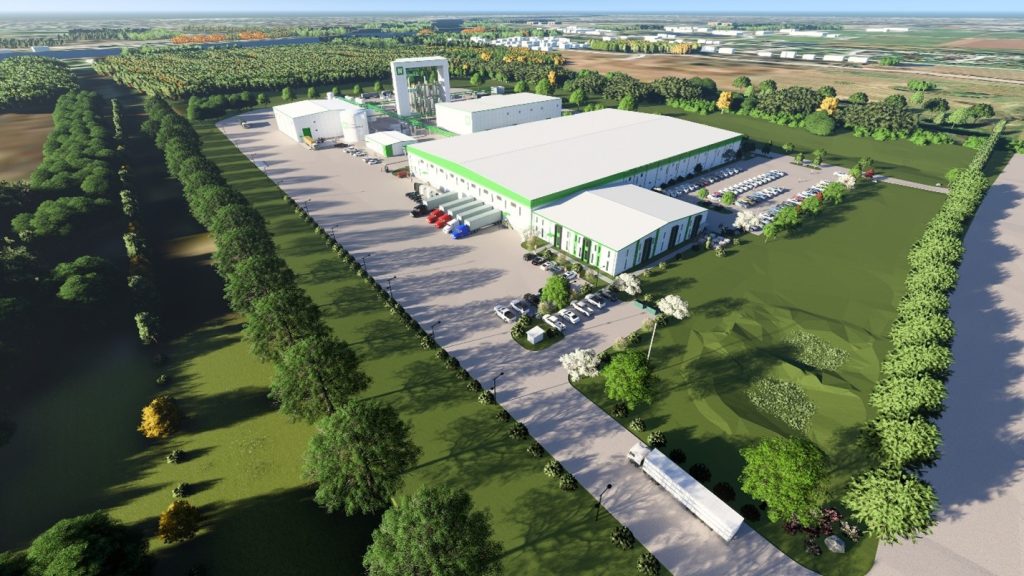
Planning to be operational in 2027 at a 190,000-square-foot manufacturing plant now under construction in Minnesota, Niron Magnetics is striding forward on several fronts aimed at establishing commercial-level production of its rare earth-free magnets. It has plans for a second facility producing 10,000 tons annually in 2029. The company has attracted over $300 million in investments from commercial partners including Stellantis, General Motors, and Samsung.
The undertaking marks a dramatic turnaround from decades ago when production crumbled in North America as China producers took hold of global magnet manufacturing using their dominant supply of rare earth minerals. In other recent actions by the company:
- Congressional testimony on November 20 seeks government recognition and support.
- Licensing of patents on variable frequency motors aims to unlock adoption in multiple applications.
Niron broke ground on the new state-of-the-art 1,500-ton-per-year manufacturing facility in Sartell, located about 75 miles northwest of Minneapolis, in late September. After nearly a decade of research and development in partnership with the U.S. Department of Energy and the University of Minnesota, the company has created one of the first commercially viable new magnet materials in decades, capable of producing high-performance permanent magnets.
The groundbreaking marks a major milestone in the company’s ability to scale manufacturing of permanent magnets made from iron nitride, which exhibits exceptionally high magnetization and removes the need for rare-earth elements. The product does not contain any rare-earth elements, and is made from abundant elements such as iron and nitrogen, enabling a resilient domestic supply chain, which makes it an attractive choice for manufacturers seeking supply chain security and high-performance alternatives to conventional rare-earth magnets.
The plant builds on the success of a commercial pilot plant that Niron opened in Minneapolis in 2024, with investors and commercial partners including Stellantis, Samsung, Allison Transmission, Magna, and many others already sampling products from the pilot facility.
“Permanent magnets are an essential part of modern vehicles, the heart of the performance for everything from powertrains and cooling systems to seat motors and speakers. We are committed to offering the freedom of choice to our customers and the integration of these magnets is critical to that mission,” said Sinisa Jurkovic, vice president of propulsion systems engineering and head of electric drive systems for Stellantis. “Stellantis is proud to partner with Niron Magnetics to pioneer emerging magnet technology. We’ve been working with Niron since 2023 to unlock next-generation motor performance, and Iron Nitride technology is helping us engineer and deliver vehicles with best-in-class capabilities.”
Niron Magnetics CEO testifies before U.S. Congress
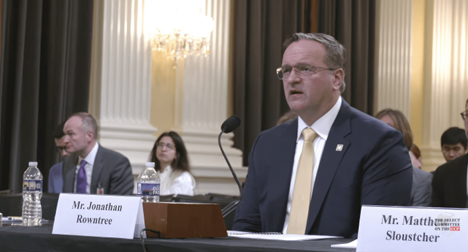
Jonathan Rowntree, CEO, testified on November 20 before the U.S. House Select Committee on Strategic Competition between the U.S. and the Chinese Communist Party, presenting the company’s breakthrough iron nitride magnet technology as a solution to reducing America’s critical dependence on rare earth materials, emphasizing that at scale it can eliminate foreign rare earth dependencies that have plagued American manufacturers for decades.
“Iron Nitride is a new magnet for a new century that no foreign power can monopolize or restrict,” Rowntree told the Committee. “A single, vertically integrated facility transforms commodity iron ore and atmospheric nitrogen into finished magnets. This entire pipeline exists within America’s borders.”
U.S. industries currently consume approximately 50,000 tons of permanent magnets annually, with demand projected to double by 2040 as electric vehicle production accelerates, data center construction increases, and defense systems modernize. Despite this enormous and growing demand, Rowntree told the committee, current U.S. magnet manufacturing output is less than 10,000 tons.”
In his testimony, Rowntree urged Congress to support technology-neutral policies for federal procurement preferences of domestically manufactured magnets, extend the Defense Production Act and similar authorities to alternative magnet technologies, and create tax incentives for domestic producers.
Partnering with Stellantis
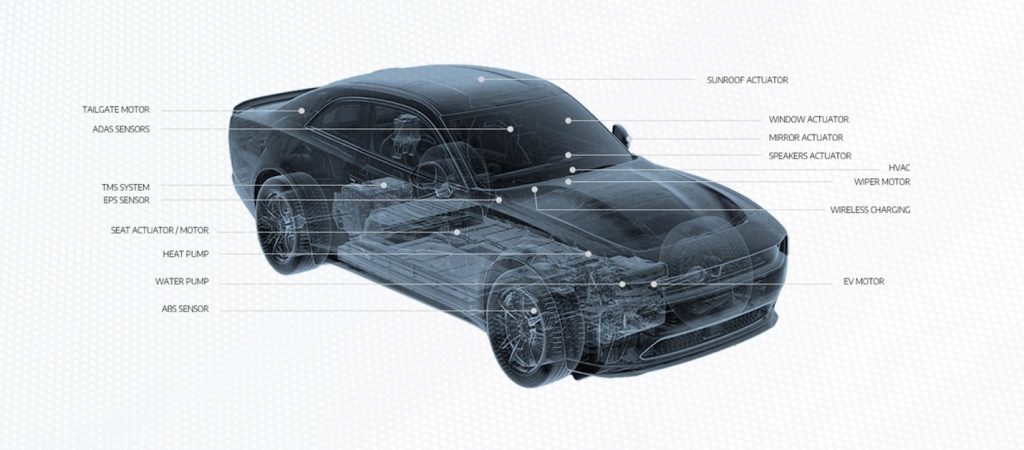
On October 25, Niron announced a project in collaboration with Stellantis to develop a new generation of electric motor designs for automotive use, building upon Stellantis Ventures’ strategic investment in Niron Magnetics in 2023. It features additional support from the U.S. Department of Energy’s Advanced Materials and Manufacturing Technologies Office (AMMTO), which contributed $2.7 million to the project as part of its strategy to strengthen American energy independence and secure critical materials.
“Collaborating with the Niron Magnetics team allows us to explore the possibilities of this innovative magnet technology,” said Micky Bly, senior vice president, head of propulsion systems engineering for Stellantis. “As part of our broader research into advanced propulsion solutions, we’re continually evaluating emerging technologies that could support future mobility options and enhance customer choice.”
Titled “Variable Flux Field Intensifying Motors Using Iron Nitride Permanent Magnets,” the joint project builds on Stellantis’ investment and ongoing collaboration with Niron Magnetics in areas such as traction motors, automotive audio, and other magnet-driven systems.
Licensing patents for design of variable flux motors
On September 18, Niron announced it has licensed a comprehensive portfolio of foundational patents on variable flux motor (VFM) technology, unlocking decades of motor research. The portfolio covers motor design technologies that, when combined with Niron’s magnets, enable efficiency and performance improvements across diverse applications including HVAC systems, data center cooling, robotics, pumps, compressors, appliances and automotive traction.
Unlike conventional electric motors, VFMs eliminate the fundamental tradeoff between low-speed and high-speed efficiency. This enables benefits ranging from lower power consumption for data center cooling to greater range and smaller battery pack size in vehicle applications. As a result, VFMs represent an important approach to electric machine design that has remained significantly untapped due to the demanding magnetic material requirements, until now, says Niron.
“This licensing agreement is the result of decades of world-class motor research meeting the best of material science ingenuity to bring next-generation motor performance to commercial reality,” said Rowntree. “Our iron nitride technology provides the missing piece that accelerates this achievement into industrial scalability, enabling multiple ongoing customer projects that are focused on commercializing breakthrough technology.”

Industry leaders acknowledge this can represent an important shift in motor design. “Variable Flux Motors have been built and proven before,” said Daniel Hervén, CEO at global engineering and design firm Alvier Mechatronics. “What’s held these motors back is the lack of an ideal material. Rare earth magnets are not well-suited for this motor type. Until now, most VFM work was done with AlNiCo, but VFMs with AlNiCo magnets fall short of the performance needed for commercial use, and cobalt faces supply chain challenges. Iron Nitride presents the opportunity to unlock VFM for mainstream commercial use.”
Founded in Germany, Alvier today is a Hoganas company headquartered in Sweden with a global footprint spanning Europe, Asia and America. It was founded in 2018 by Hoganas Group of Sweden, a metal powders company, as a strategic startup focused on providing engineering services for electrified propulsion. For more info, see www.nironmagnetics.com, www.alviermechatronics.com.