Innovators in the development of magnetic particle tools for biotech and medical applications are opening fresh paths to battle cancer and to perform automated biotech diagnostics on a grand scale. This article highlights three companies who unveiled their latest advancements at the recent BIO International Convention where biotech leaders and venture capitalists explore what’s coming next:
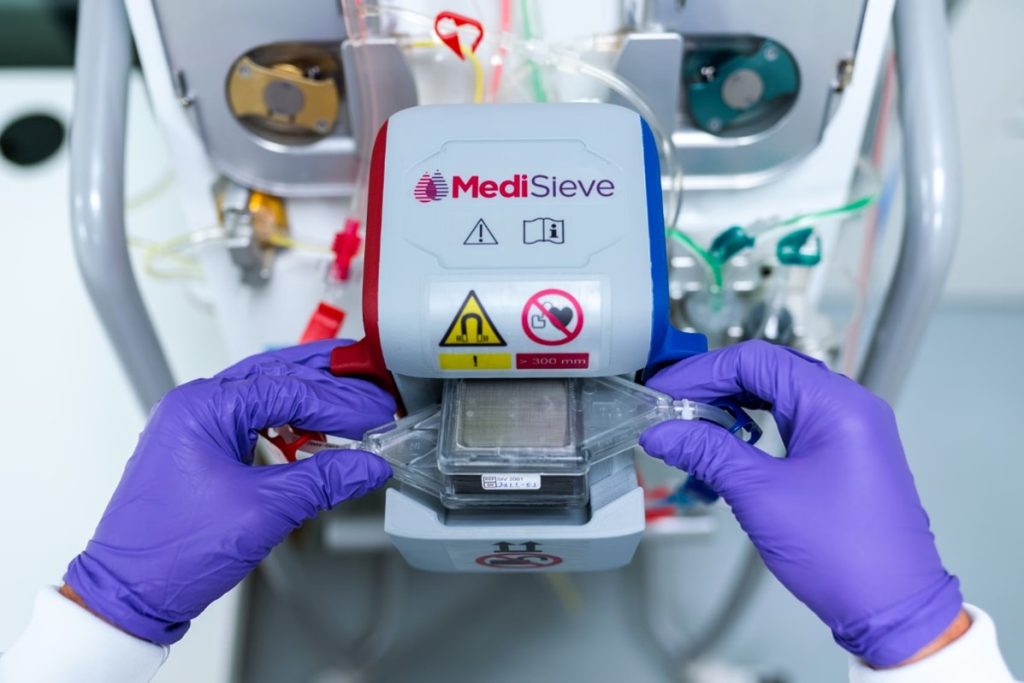
- MediSieve is a London-based start-up that has developed magnetic blood filtration, a revolutionary platform therapy that enables the physical removal of specific substances from the bloodstream of patients.
- Galenvys Sciences in Montreal, a specialist in genomic nanotechnologies, engineers precision magnetic nanoparticles and DNA/RNA for advanced diagnostics and therapeutics using a process called magnetofection. Their magbeads are molecularly barcoded.
- Glycanostics in Slovakia has developed an early-stage, highly accurate and unique cancer diagnostic test based on antibody-coated magnetic particles to selectively extract biomarkers from serum.
Magnetic blood filtration by MediSieve
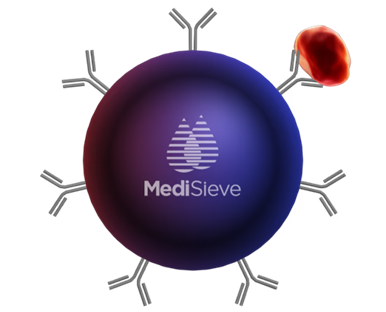
MediSieve’s magnetic blood filtration platform is intended to enable the rapid and specific depletion of specific agents from the bloodstream of patients. The extracorporeal therapy uses therapeutic magnetic beads that are designed to bind specifically to the clinical target. The beads are introduced into the extracorporeal circuit during the therapy, mixing with the patient’s blood and binding to the clinical targets. A capture system captures all the beads and bound targets, preventing their return to the patient.
The company is a spin-off from University College London and is developing its products at the White City Innovation District in West London. It has concluded Phase I clinical studies of the capture system and is making swift progress in its bead programs. First clinical studies with beads are expected in 2026.
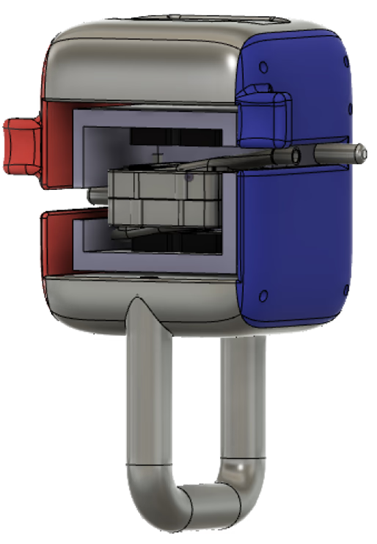
Basically, MediSieve scientists nanoengineer magnetic particles and have developed associated filtration hardware to game-change blood filtration, enabling unprecedented levels of selectivity and efficacy, thus revolutionizing the treatment landscape for a wide range of currently underserved patients. Their system purifies blood by targeting harmful substances with magnetic beads.
Adeno-associated virus (AAV) vector-based therapies have revolutionized the field of gene therapy by utilising AAV capsids for targeted in vivo delivery of therapeutic genes. Notably, AAV gene therapies have gained approval as the only in vivo gene therapy treatments in the United States and Europe. While six AAV-based therapies have already been approved, several more are expected to receive approval in the near future. With a staggering 210 ongoing clinical trials, 94 of which have been completed, and 51 of them reaching the efficacy end point, the potential of AAV-based therapies is evident.
These groundbreaking therapies primarily focus on addressing rare genetic disorders. Key indications that have been targeted include Haemophilia A, Haemophilia B, Chloridaemia, Retinitis pigmentosa, Fabry disease, Pompe disease, Hunter Syndrome, Parkinson’s disease, Batten Disease, Duchenne Muscular Dystrophy (DMD), and Spinal Muscular Atrophy (SMA). Among the late-stage trials, particular attention is being given to Haemophilia A, Haemophilia B, Retinitis Pigmentosa, and Spinal Muscular Atrophy. The progress in these areas holds immense promise for patients suffering from these debilitating conditions.
However, a significant challenge in utilizing AAV-based therapies arises from the prevalence of wild-type AAV infection among individuals. It is estimated that 30-60% of the population possesses AAV neutralising antibodies, which render AAV therapies ineffective. Consequently, nearly half of the patients are ineligible for AAV treatment due to this issue. Moreover, the administration of an AAV therapy triggers the production of AAV-neutralising antibodies, effectively obstructing any future AAV treatments. This problem is not limited to a specific AAV serotype but affects all AAV variants.
Fortunately, MediSieve offers a potential solution to this predicament with its innovative system. AAV neutralizing antibodies can be selectively removed from patients, effectively reducing their titer to a level below the critical threshold at which therapies become effective. This breakthrough offers a valuable window of opportunity during which AAV therapies can be successfully performed, enabling patients to benefit from these life-changing treatments.
Magnetofection at Galenvys Sciences
Pioneering the development of functional genomic nanomaterials, Galenvys scientists craft precision magnetic nanoparticles with high monodispersity that exhibit uniform size and shape for consistent, predictable interactions with biological molecules for advanced diagnostics and therapeutics. Tunable in size and shape, their magbeads are molecularly barcoded. Applications include magnetic separation, drug delivery and magnetic resonance imaging.
From core to shell, surface to functionality, the company’s proprietary predictive models enable a leap from bench to scale-up like never before. The magnetic nanoparticles and microbeads function as tools that can revolutionize diagnostics, therapeutics and research.
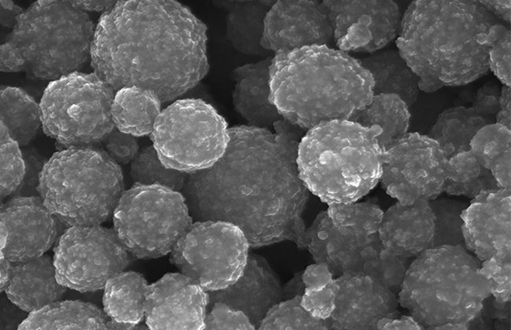
Biological organisms are complex systems composed of a variety of cell and tissue types, notes the company. To elucidate the physiological and pathophysiological processes that occur in biological systems, researchers must take into consideration their complexity. However, many traditional experimental paradigms either do not allow the proper evaluation of this biological complexity or do not enable a fast and scalable assessment. Molecularly barcoded magnetic microparticles (magbeads) are one of the avenues to advance research on biological complexity.
Molecularly barcoded beads and their applications
Molecularly barcoded beads crafted by Galenvys scientists are tagged with unique barcodes (molecules) that enable single-cell evaluation. The number of codes varies depending on the assay and may include fluorescent, chemical, electronic or graphic tagging.
The coded beads facilitate the identification of reads originating from individual cells. In the context of microfluidic systems, they enable flexibility, sensitivity, and high-throughput analysis. Therefore, barcoded beads have found applications in multiplex biological assays in the fields of molecular diagnostics, biomarker development, analysis of tumor heterogeneity, pharmacogenomics, understanding of tissue complexity and gene mutational analysis.
Magnetofection: delivering nucleic acids into eukaryotic cells
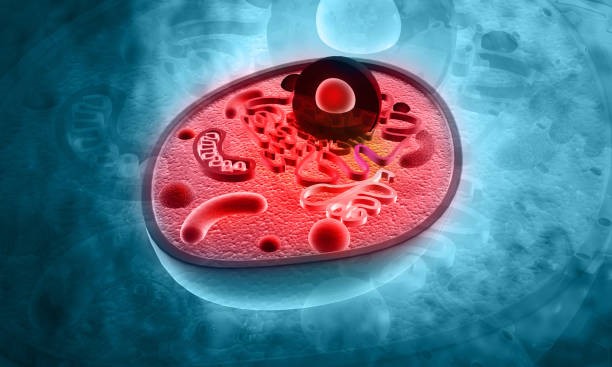
Magnetofection, also known as magnetic transfection, is a procedure in which nucleic acid is bound to magbeads followed by their delivery into eukaryotic cells through applying magnetic force. Distinguished by the presence of a nucleus, eukaryotic cells form the foundation of complex, multicellular life including apple trees, mushrooms, fish and humans. The beads are usually made up of iron oxide and degrade within living cells, thus posing no hazard to cells. This technique has broader applications in molecular, cellular biology research and potential therapeutic applications.
In practice, nucleic acids are first bound to the magnetic particles, followed by their delivery into eukaryotic cells with the help of a magnetic field. Magnetofection has been recognized as one of the most powerful tools for delivering intact, functional nucleic acids and vectors containing specific genetic material being, thus having the potential for correcting dysfunctional genes.
Purity, Efficiency, and Versatility
Nucleic acid isolation is an essential step in molecular biology and genetic research. It involves extracting and purifying DNA or RNA from a sample of interest. Traditional nucleic acid isolation methods rely on spin-column technology which uses silica-based columns to bind and purify nucleic acids. However, magnetic bead-based nucleic acid isolation methods have gained popularity in recent years due to their advantages over spin column methods.
Magnetic bead-based nucleic acid isolation methods are faster and more efficient than traditional spin column methods, says Galenvys. Magnetic beads have a larger surface area than silica-based columns, which allows for faster binding and elution of nucleic acids. Additionally, using magnetic beads allows for automation and high-throughput processing, making it ideal for laboratories that process large numbers of samples.
The use of automated magnetic bead-based systems ensures that each sample is processed in the same way, reducing the risk of experimental errors. Additionally, using standardized protocols and magnetic bead-based kits ensures that the results are consistent and reproducible.
Magnetic bead-based nucleic acid isolation methods are cost-effective in the long run, notes the company. While the initial investment in magnetic bead-based systems may be higher than spin column methods, the use of magnetic beads allows for higher throughput and reduced processing time.
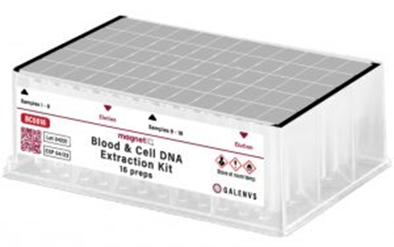
Galenvs also produces extraction kits such as the magnetiQ Blood & Cell DNA Extraction Kit which enables a rapid and efficient method of nucleic acid isolation from whole blood samples. Both manual and automated versions, shown here, are produced.
Glycanostics cancer detection using antibody-coated magbeads
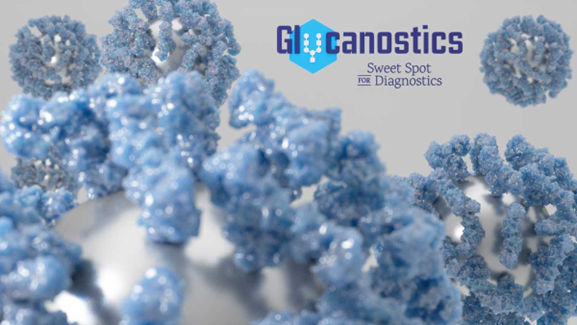
The scientists at startup company Glycanostics have developed an early-stage, highly accurate and unique cancer diagnostic test based on antibody-coated magnetic particles. Their patented technology for screening cancers detects changes in a glycan, a complex carbohydrate, attached to a protein in the blood and covers possible diagnostics of numerous types of cancer.
Cancer cells release increased levels of glycoproteins into the bloodstream. These glycoproteins, so-called biomarkers, are cancer antigens and are used in the detection of cancer from human blood. Minute amounts of serum are needed for testing. The The magbead particles are used to selectively extract the desired biomarker from the serum. An optical signal is generated in the event that the sample contains a biomarker produced by cancer cells.

Glycanostics scientists focus on identifying glycan-based biomarkers applicable in cancer management since cancer cells produce typical glycan changes, which are different from glycans produced by healthy cells. Thus, their system can validate glycan-based biomarkers for early cancer diagnostics, cancer staging and therapy monitoring.
Their technology detects glycan changes attached to a protein in the blood. It is highly scalable and has several distinguishing characteristics: detects early-stage cancers and small tumors that can be missed with imaging techniques; gives quantitative and qualitative data for monitoring the disease progress; is fast, easy, minimally invasive & accessible; reduces false-positive results leading to unnecessary imaging, re-imaging and biopsies. The process is fully compatible with automatic machines already on the market, helping to make it scalable and affordable.
What’s coming next? Well, likely there will be such examples at Bio International 2026 in San Diego on June 22-25. For more info, see www.bio.org, www.medisieve.co.uk, www.galenvs.com, www.glycanostics.com.