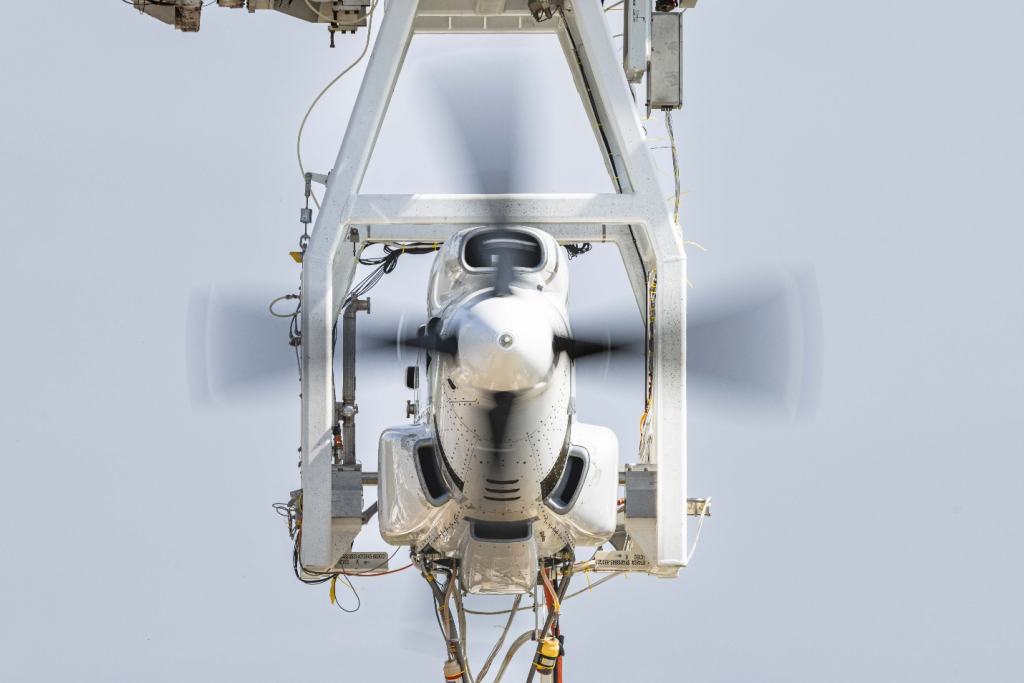
GE Aerospace has completed testing of a megawatt-class hybrid electric engine system developed through NASA’s Electrified Powertrain Flight Demonstration (EPFD) project, paving the way for flight tests. The recently announced ground test was the company’s first to validate the full integrated system including GE Aerospace-developed motor/generators, power converters and inverters, controllers and other components.
“Step by step, we’re proving hybrid electric engine technology for next-generation commercial aircraft,” said Arjan Hegeman, vice president for future of flight at GE Aerospace. “This latest ground test of a complete hybrid electric powertrain positions GE Aerospace to have the technologies ready to meet customer needs for greater durability, efficiency and range in future propulsion systems.”
Throughout the test campaign at Peebles Test Operation in Ohio, teams simulated various flight phases such as taxi, takeoff, climb and cruise. The electric powertrain helped successfully power the propeller and generated power to the battery. Flightworthy components that meet higher safety and reliability requirements than typical test hardware were used as part of GE Aerospace’s efforts to mature a commercial-grade hybrid electric engine system.
This milestone follows more than a decade of testing and maturing individual components and modules.
“The ground test is a major turning point in our understanding of hybrid electric powertrains for aviation and a fundamental building block for the future,” Hegeman said.
The hybrid electric engine system combines an electric powertrain with a traditional gas turbine to optimize power management during different phases of operation. Hybrid electric systems are highly compatible with different fuel types and advanced aircraft engine architectures like Open Fan.
Co-developing hybrid electric turbogenerator with BETA Technologies
A strategic partnership and equity investment announced in 2025 with BETA Technologies to accelerate hybrid electric aviation includes plans to co-develop a hybrid electric turbogenerator for Advanced Air Mobility (AAM) applications.
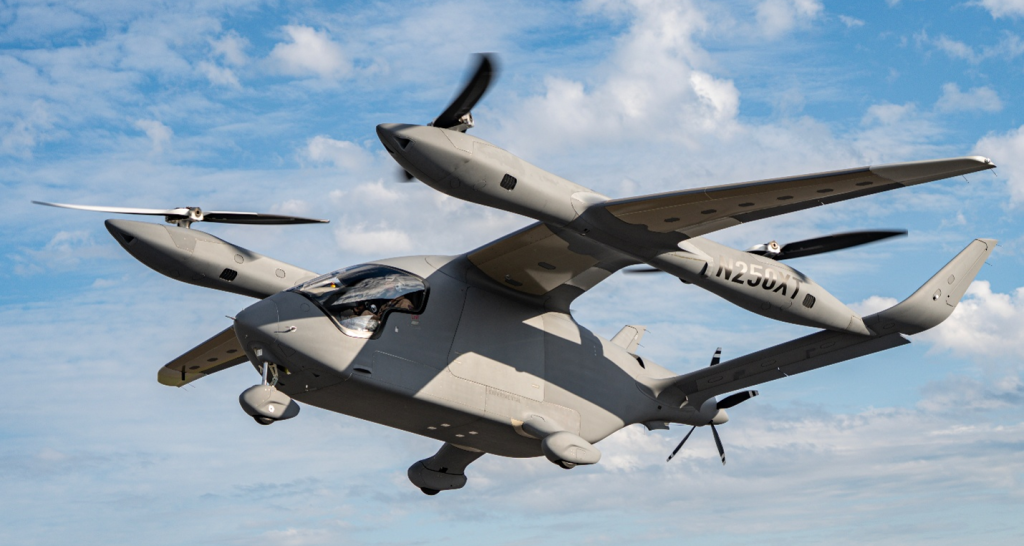
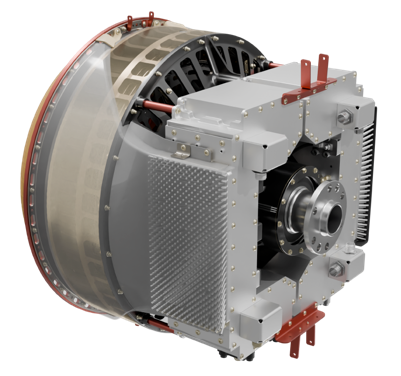
Under the agreement, the two companies plan to develop a hybrid electric turbogenerator for AAM applications, including long-range vertical takeoff and landing (VTOL) aircraft, future BETA aircraft, and other potential applications. The collaboration brings BETA’s expertise in high-performance, permanent magnet electric generators together with GE Aerospace’s tested turbine, certification and safety expertise for large-scale manufacturing and electrical power systems expertise. Part of the deal involves GE Aerospace making an equity investment of $300 million in BETA.
Kyle Clark, BETA Technologies’ Founder and CEO, said “This partnership brings together two teams deeply committed to and guided by aerospace engineering excellence and building the future of flight. We believe the industry is on the precipice of a real step change, and we’re humbled that GE Aerospace has the confidence in our team, technology, and iterative approach to innovation to partner with us. We look forward to partnering to co-develop products that will unlock the potential of hybrid electric flight, and to do it with the rigor, reliability, and safety that aviation demands.”
BETA Technologies, Inc. is an aerospace company designing, manufacturing and selling electric aircraft, advanced electric propulsion systems, components and charging systems. Its aircraft platform, ALIA, consists of two variants — a conventional fixed-wing electric airplane and an electric vertical takeoff and landing aircraft.
For more info, see www.geaerospace.com, www.beta.team.