Magnetism Recharged: A New Method for Restoring Magnetism in Thin Films
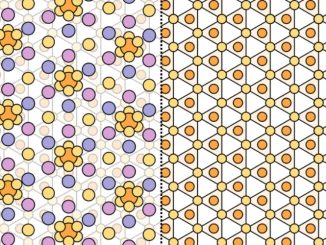
The degradation of magnetization in next-generation memory devices can be reversed using a novel processing technique developed by The University of Osaka […]
NETL researchers developed a new process for extracting economically and strategically vital rare earth elements (REE) and critical minerals (CM) from America’s coal fly ash at high quantities and offers several advantages over other available technologies. […]
Universities use ElectroStatic Separators from Bunting Magnetics as one stage of separation in a recycling process. Presently, many research projects focus on the recovery and recycling of metals and materials present in lithium and other batteries as used in electric cars and a wide range of other technologies […]
Siemens Healthineers has received Food and Drug Administration clearance for the Magnetom Flow.Ace, its first 1.5 tesla (T) platform for magnetic resonance (MR) imaging with a closed helium circuit and no quench pipe, significantly reducing reliance on helium. The system, which has a 60 cm bore, is also the first Siemens Healthineers MR scanner to be marketed to the veterinary radiology community as well as for general radiology. […]
Approximately 41,000 years ago, Earth’s magnetic field briefly reversed during what is known as the Laschamp event. During this time, Earth’s magnetic field weakened significantly—dropping to a minimum of 5% of its current strength—which allowed more cosmic rays to reach Earth’s atmosphere. […]
Magstim Horizon Inspire and 3.0 Transcranial Magnetic Stimulation Systems have received FDA clearance for the treatment of major depressive disorder (MDD) in adolescent patients, ages 15-21. Announced in March, the approval adds to other recent […]
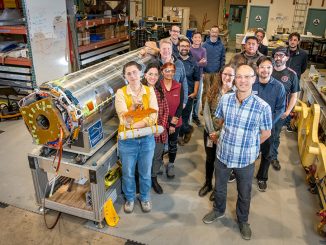
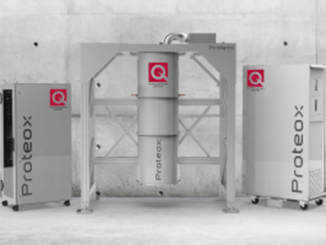
The National High Magnetic Field Laboratory is developing new magnet technology aimed at enabling the next generation of groundbreaking biomedical research. With a new $2.4 million grant from the National Institutes of Health, the lab’s Applied Superconductivity Center will demonstrate that a cutting-edge high-temperature superconducting material can be used to build a nuclear magnetic resonance (NMR) magnet. […]
Copyright © 2026 | MH Magazine WordPress Theme by MH Themes