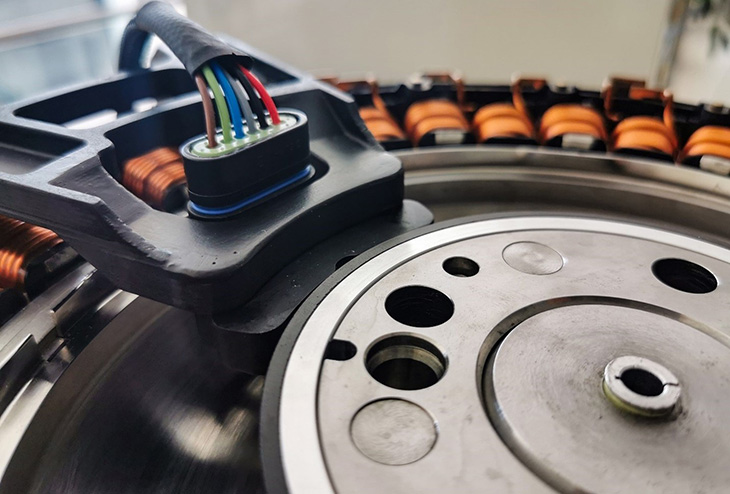
French transportation company Alstom has signed contracts worth €1.2 billion with TransPennine Express for the supply and long-term maintenance of a new fleet of battery-electric trains that utilize some of Alstom’s latest railway advancements. Engineered around permanent magnet synchronous motors and silicon carbide rectifier technology, the British-designed and built trains will transform rail travel across northern England where the TransPennine route is being upgraded.
The agreements combine a rolling stock contract worth approximately €930 million for 29 five-car battery-electric multiple units with maintenance contracts valued at around €230 million. The fleet will be delivered from 2032 and will support the ongoing decarbonization of one of Britain’s most important rail corridors.

“This agreement is a landmark moment for Britain’s railway, and we couldn’t be prouder that the country’s first mainline battery-electric trains will be designed and built in Britain. The fleet will transform journeys across northern England while showcasing the very best of British engineering, innovation and advanced manufacturing,” said Rob Whyte Managing Director UK at Alstom.
The order represents the first deployment of Alstom’s Adessia Stream platform in the UK and will deliver Britain’s first mainline battery-electric train fleet. Devised specifically for the needs of long-distance regional travel, the 121-meter-long trains will operate at speeds of up to 110 mph and provide around 300 seats per train. A three-year research program and a £35 million investment culminated in the development of Adessia for the UK, representing the next evolution of Alstom’s Aventra train platform.
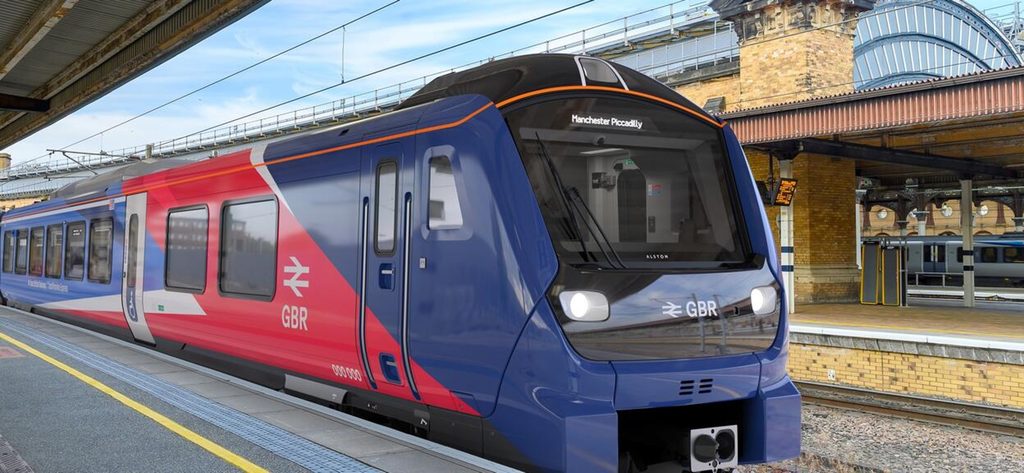
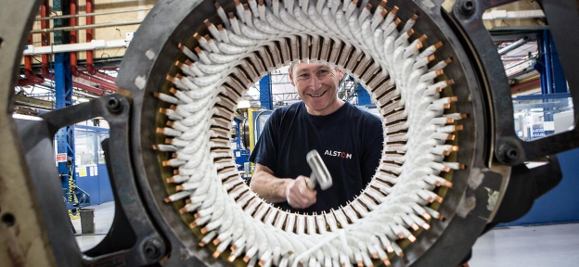
Alstom’s newest trains—including those built on the Adessia Stream platform—generally are engineered around permanent magnet synchronous motors combined with silicon carbide inverter technology. For a battery-powered train like the TransPennine Express fleet, shifting from older asynchronous motors to permanent magnet motors is beneficial for several engineering reasons. The motors have a significantly higher power-to-weight ratio, offsetting the substantial physical weight of the onboard high-capacity batteries. When Alstom pairs permanent magnet motors with silicon-carbide traction converters, overall powertrain energy consumption drops by up to 30%, contributing to the train’s battery range. Another important factor is that permanent magnet motors act as highly efficient generators when the train slows down, allowing recaptured energy to be pumped back into the traction batteries.
Having deep experience in energy storage technology, in multiple formats of motor technology and in power electronics, Alstom is a pioneer in sustainable rail mobility. Alstom was the first rail manufacturer to have both hydrogen and battery trains in commercial operation and continues to expand its portfolio of battery-powered solutions worldwide. A key milestone was reached in February 2026, when the first Coradia Continental battery-electric train entered commercial service for the operator VMS in Germany, followed by the entry into service in July 2026 of France’s first battery-powered trains – all accelerating the replacement of diesel trains. See www.alstom.com.