Magnetic technology looms large in two recent developments at Austrian international technology group Andritz. One involves a major expansion to its production of turbo generators, the other is acquisition of a majority stake in induction heating specialist company Sanzheng in China whose equipment is used particularly in the production of electrical steel.
On January 30, the power and industrial equipment manufacturer announced that it is responding to the growing global demand for turbo generators and will invest a higher double-digit million amount by 2028 to expand its production sites in Linz and Weiz.
Operating via electromagnetic induction, turbo generators serve as a bridging technology, playing an essential role in decentralized power generation and grid stability. Typically, they are directly connected to a high-speed turbine to convert mechanical energy into electricity, used primarily in power plants to generate the majority of the world’s electricity.
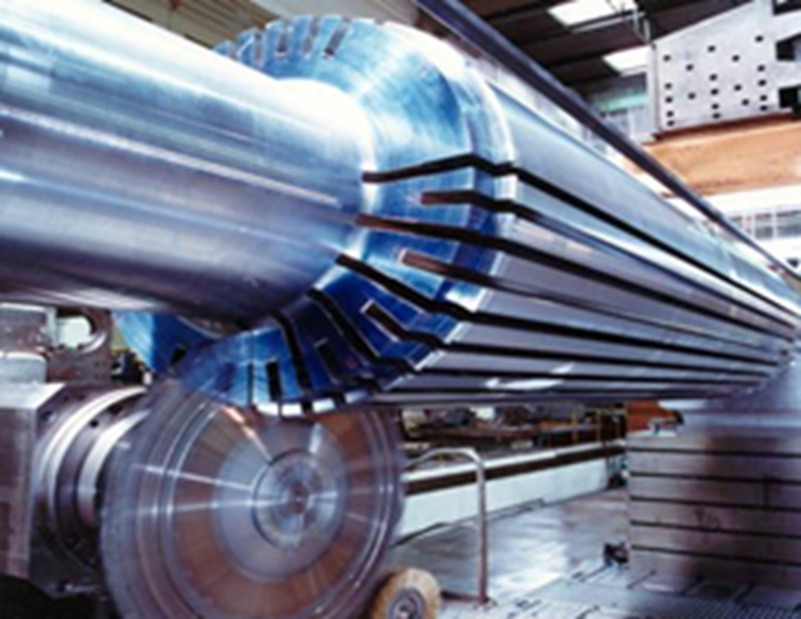
Turbo generators are essential components of today’s energy infrastructure: they can be flexibly connected to the grid, compensate for frequency fluctuations and help increase overall supply security and stability of power networks. Many plants are still operated with gas, but Andritz turbo generators are designed so they can be combined with hydrogen-compatible turbines and thus actively support the transition to low-CO₂ power plants. Market growth is currently strongest in the United States and the Middle East, with Europe expected to follow soon.
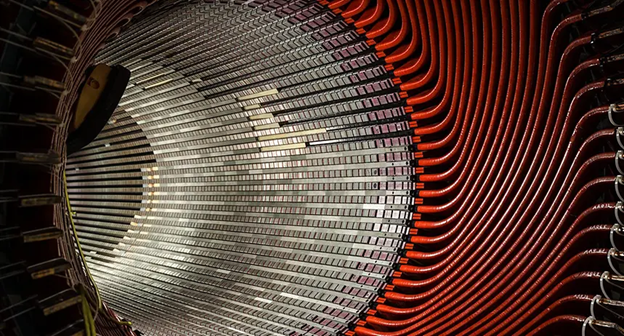
Large-scale utility generators (steam or gas turbines) use electromagnetic windings on the rotor to produce a strong, controllable magnetic field that induces electricity in the stator. The rotor is covered with coils of wire (electromagnets) that create a rotating magnetic field when energized, allowing for control over the output voltage.
Some smaller or specialized turbo generators, like wind turbines or compact units, may use high-strength, rare-earth permanent magnets to simplify construction and eliminate the need for an external excitation system. Some advanced, alternative systems may use superconducting magnets or magnetic bearings for improved efficiency and reduced maintenance. Regardless of the type, all turbo generators operate on Faraday’s principle of electromagnetic induction, rotating a magnetic field within a stator to generate electricity.
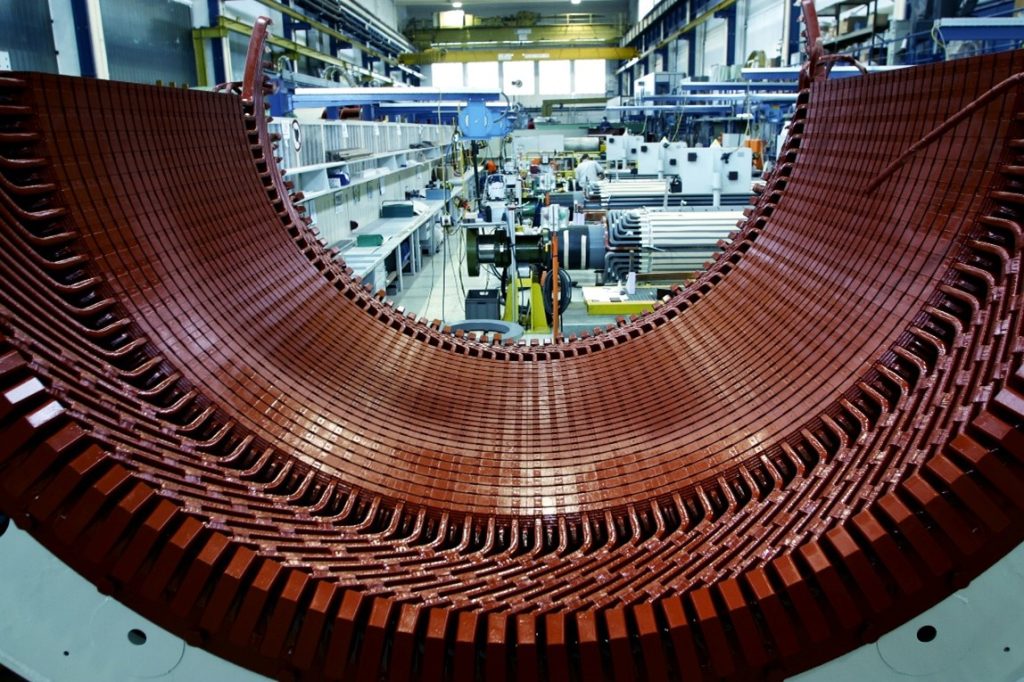
Andritz has manufactured turbo generators at its plant in Weiz for over 70 years. To meet rising demand, the company is now also expanding capacity at its Linz location, where it has been active in the hydropower sector for nearly 80 years, particularly in the production of turbines and hydraulic steelworks.
The production facility in Linz will be expanded and modernized by approximately 3,700 square meters. The focus will be on assembling and testing hydrogen-cooled turbo generators. Due to the site’s direct access to the Danube River, machines weighing up to 300 tons can be shipped especially efficiently and in an environmentally friendly way. At the Weiz site, new production halls and facilities for generator manufacturing will be completed by 2027. In the future, air-cooled turbo generators and key components for hydrogen-cooled types, including rotors and stator, will be manufactured there.
“We are making targeted investments in the future of energy supply and creating secure, high-quality jobs in Austria,” says Markus Schneeberger, CTO at Andritz Hydropower. “The expansion of our sites strengthens our position as a technology provider and reinforces our role in a market that is essential for the stability of modern energy systems.”
Shanzheng acquisition
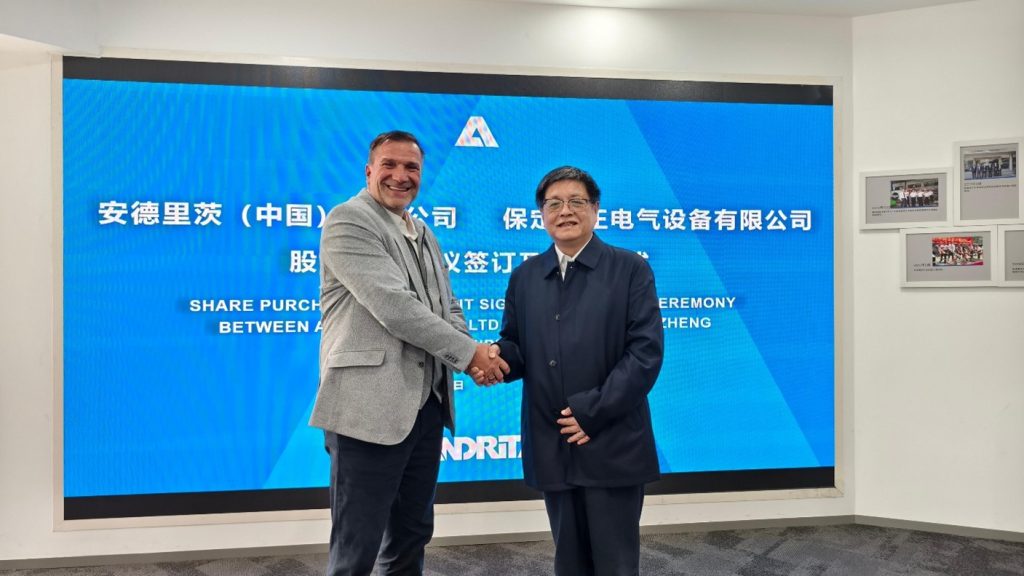
In December, Andritz acquired a 51% stake in Baoding Sanzheng Electrical Equipment Co., Ltd., a China-based manufacturer of advanced industrial induction heating systems. The acquisition further strengthens Andritz’s position as a comprehensive solutions provider for steel processing, in particular, electrical steel. The deal expands its capabilities to offer a complete suite of induction heating technologies, now able to deliver full-line solutions for electrical steel processing, galvanizing, annealing and forging.
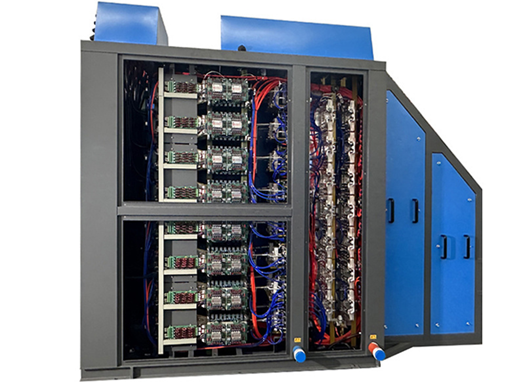
“This acquisition perfectly supports our goal of being the leading solution provider for the downstream steel industry,” says Guido Burgel, Senior Vice President, Metals Processing at Andritz. “Combining Sanzheng’s proven induction technology with our global reach, process know-how and service capabilities allows us to deliver more comprehensive, efficient, and sustainable solutions – induction heating offers significant potential to reduce mills’ carbon footprint.”
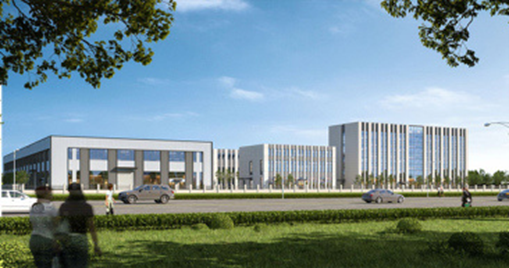
Employing more than 130 specialists in research and development, product design and manufacturing, Sanzheng generates annual revenues of around 30 million euros. The company’s induction strip heating, wire heating, and high-frequency welding technologies are widely used in the metal industry as well as in other industries such as papermaking, automotive, machinery and building materials. The deal closed in December 2025. Plans call for it to continue to operate under its existing name and management structure.
The Andritz group provides advanced plants, equipment, services and digital solutions for a wide range of industries including pulp and paper, metals, hydropower, environmental. Founded in 1852 and headquartered in Graz, the publicly listed group employs about 30,000 people at 280 locations in over 80 countries. See www.andritz.com.