Quantum Design has acquired the Oxford NanoScience division of Oxford Instruments. Priced at £60m cash which is equivalent to about one year of Oxford Nano’s revenue, the acquisition unites the portfolios and expertise of two industry leaders with a combined legacy of more than 100 years of experience and innovation in cryogenics, materials science, and microscopy. The shared product catalog provides automated materials characterization with automated field and temperature control, ultra-low temperature sub-kelvin cryostats and dilution refrigerators, high-field superconducting magnets and a full range of optical cryostats.

“I am excited by the potential this acquisition brings to the future of these great companies. Our product lines are complementary, and the synergy of what we can accomplish by combining our two strengths bringing new products to the market will be transformative,” remarked Stuart Schoenmann, CEO of Quantum Design. “QD’s wide range of measurement options combined with Oxford’s dilution refrigerators and other cryostats has R&D teams of both companies excited and keen to begin our collaboration in earnest. We strongly believe these innovations will advance research in many communities and industries.”
Oxford NanoScience was the original, founding division of Oxford Instruments. Its research and manufacture of sub-kelvin cryostats and large-field magnets made it a driving force in the world of physics research. Their wide range of dilution refrigerators are important tools in the new world of quantum information and science.
“We are thrilled to become part of the Quantum Design team,” said Mathew Martin, Managing Director of the new Quantum Design Oxford. “We have a long history of the development and manufacture of low-temperature cryostats, sub-kelvin dilution refrigerators and high-field superconducting magnets. QD’s extensive global office network will provide us and our customers with the support they deserve, so that they can concentrate more fully on their research. The combination of the Oxford NanoScience and QD’s product lines enables the company to offer a more complete package of products to suit our many customers’ needs.”

“The sale of our NanoScience quantum business is in line with our strategy to focus and invest in the best areas of opportunity to grow the Group and create value for shareholders, and supports progress towards our medium-term margin targets,” commented Richard Tyson, CEO of Oxford Instruments. “II is also consistent with our focus on our three core markets: materials analysis, semiconductor, and healthcare and life science.”
Magnet technologies
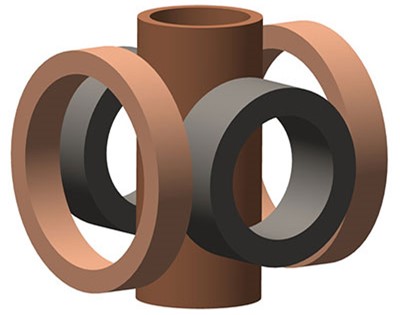
OEM magnet Technologies from Quantum Design Oxford encompass Cryofree and liquid-helium-cooled solenoid, split pair, and vector rotation coil configurations to meet a broad range of experimental needs. Its standard magnet designs are a core feature of its leading cryogenic platforms.
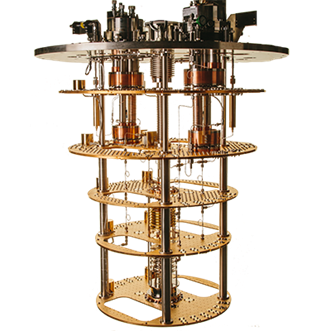
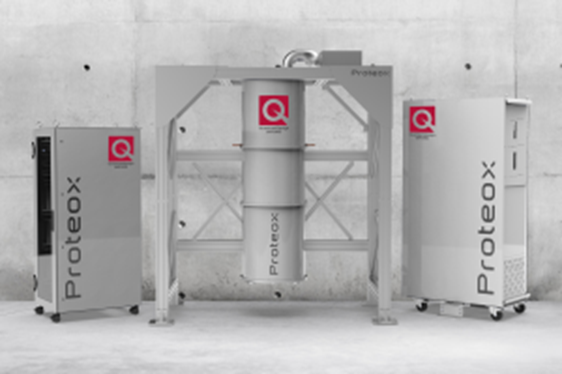
One of its Cryofree dilution refrigerators, the ProteoxLX, was recently selected to form part of Oxford Quantum Circuits’ newly launched Quantum-AI Data Centre in New York. As the industry’s first facility designed specifically to co-locate quantum computing and classical AI infrastructure at scale, the center will leverage the refrigerator’s advanced cryogenic performance to support OQC’s next-generation quantum processors, accelerating the development and deployment of quantum-enabled AI applications. The system will enable breakthroughs across finance, security and data-driven industries, from accelerating financial modelling and mission-critical optimization, to powering next-generation AI and quantum machine learning.
OptiCool line from Quantum Design
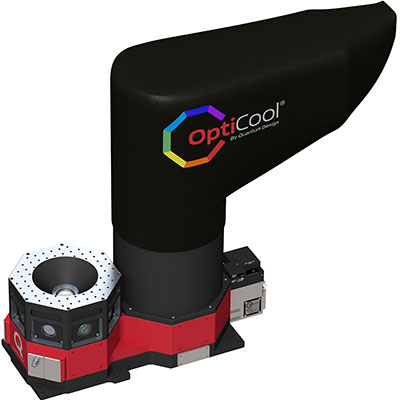
From Quantum Design, a recent product development is the new OptiCool Vector, a 4-1-1 vector magnet version of its magneto-optical cryostat, which it introduced at the 2025 APS March Meeting. The standard OptiCool features a 7-tesla split-conical magnet with field perpendicular to the table and large volume of field uniformity, ±0.3% over a 3 cm diameter spherical volume. Its 7 side windows allow for unprecedented optical axis to a large experimental volume with uniform field.
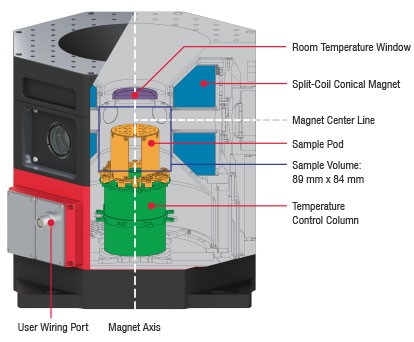
The OptiCool Vector provides a magnetic field up to ±4 T perpendicular to the optical table and ±1 T in the plane parallel to the optical table. The four side windows in the X and Y axes of the magnet allow for transmission and reflection experiments in-plane parallel to the table. The top and optional bottom window in the Z direction allow for reflection or transmission experiments perpendicular to the optical table. The magnet power supplies in the OptiCool Vector allow users to precisely set the magnetic field direction relative to their sample and optical systems.
Quantum is headquartered in San Diego, California and has a well established Quantum Europe subsidiary based in Pfungstadt, Germany near Darmstadt. Quantum Design Oxford is located in Abingdon near Oxford in the UK. For more info, see www.qdusa.com, www.qd-oxford.com and www.oxinst.com.