“We often work with design engineers, managers and business owners who are not sure how to make their applications comply with electromagnetic compatibility (EMC) regulations,” says Holger Urban, product marketing manager with Schaffner, which is a recognized leader in EMC technology and now a part of TE Connectivity.
It is a familiar dilemma as our modern society increasingly becomes digitalized and electrified, all the while bringing in the potential for new sources of electromagnetic interferences that design engineers must mitigate, often with EMI filter technology. In general, EMI filter components often incorporate magnetic materials to create a magnetic field for storing energy and impeding high-frequency noise. Commonly used, depending on the application, are ferrites, nanocrystalline materials and amorphous iron, typically selected for their specific properties such as permeability and resistivity.
In this brief, Urban lays out six best-practice tips for minimizing electromagnetic interference (EMI) issues when designing electronic systems. Highlighted here, it is a handy, straightforward treatment of the subject with more detailed information available on their website (see below).
Component Placement
Where components are placed on a printed circuit board (PCB) or in any kind of product can have a significant impact on the degree that signal coupling is minimized and how much EMI is reduced. Components need to be arranged to minimize trace lengths and it is important to keep high-speed signal paths away from sensitive components. Also, avoid the creation of loops that could act as antennas. Make sure that EMI filters are always placed close to the source, that distances are kept as short as possible everywhere on the circuit board or free wiring, and that there is a good impedance to ground so that disturbances can be fed back.
Power Distribution
Power distribution networks should be designed to keep voltage drops, noise and ripple as low as possible. If decoupling capacitors are strategically placed near power pins of integrated circuits, this can help to filter out high-frequency noise and provide stable power delivery. If distribution of power is limited to certain areas, this will prevent it from spreading out over the rest of the circuit.
Signal Integrity
Maintaining signal integrity is essential and can be achieved by controlling impedance, minimizing signal reflections and using proper termination techniques for high-speed signals. Matching trace lengths for differential signals will help to prevent skewing and ensure reliable data transmission. Always remember that the two input and output cables must never run alongside each other, they should always be crossed in orthogonal way. Of course, this is the case for all electronic applications, not just PCBs.
Routing
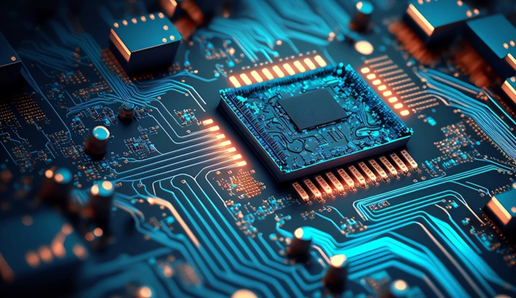
This comes under the areas of power distribution and signal integrity and requires design engineers to follow best practices when routing high-speed signals, including differential pairs, clock signals and high-frequency traces. Not only do designers need to look at minimizing trace lengths, but they should also avoid sharp bends and maintain consistent trace widths to minimize signal degradation and EMI.
Stack-Up Design
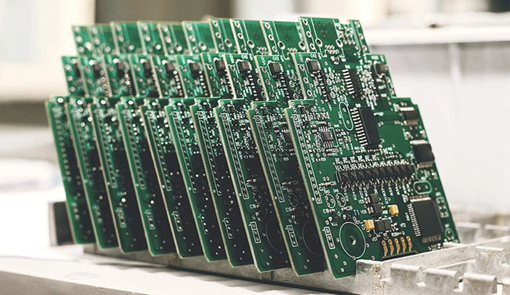
This also relates to power distribution and requires engineers to optimize PCB stack-up to keep down crosstalk, impedance mismatches and EMI. Factors they need to consider include layer count, signal layer placement and using dielectric materials to achieve optimal levels of signal integrity and EMC performance.
Ground Isolation
This is important because isolating sensitive analogue or digital circuitry on separate ground regions can prevent coupling of noise between different circuit blocks. Star grounding or partitioning techniques are ideal for segregating noisy and sensitive circuitry.
By following these best practice tips, design engineers will go a long way towards mitigating most EMC issues, says Urban.
About Schaffner: A noted specialist in solutions to combat electromagnetic interference, Schaffner is a prolific developer of EMI filters and chokes. Headquartered in Luterbach, Switzerland, the company is now part of TE Connectivity, having been acquired by it in 2023. See more at www.schaffner.com, including the full presentation, “Best Practice Tips for EMC Compliance When Designing”.
About TE Connectivity: TE Connectivity plc is a global industrial technology company with a broad range of connectivity and sensor solutions that enable the distribution of power, signal and data to advance next-generation transportation, energy networks, automated factories, data centers, medical technology and more. It has more than 85,000 employees, including 9,000 engineers. See www.te.com.