
News
New Research Enhances Oxygen Production for Space Missions
Professor Álvaro Romero-Calvo and collaborators have created a simpler, more sustainable system to make oxygen in space — using magnets. […]

Professor Álvaro Romero-Calvo and collaborators have created a simpler, more sustainable system to make oxygen in space — using magnets. […]
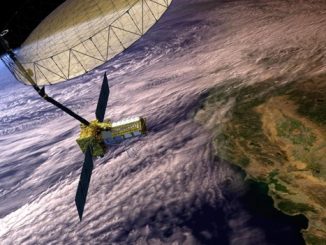
A collaboration between NASA and the Indian Space Research Organization, NISAR will use synthetic aperture radar to monitor nearly all the planet’s land- and ice-covered surfaces twice every 12 days. The satellite was launched July 30 from Satish Dhawan Space Centre on India’s southeastern coast. Onboard are sophisticated magnetic inductors from Exxxelia that have critical function for the mission’s success. […]
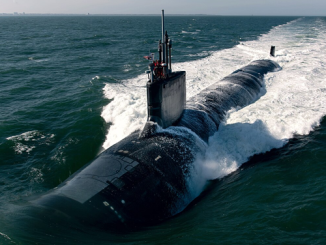
Since the 1960s, academic, commercial and military researchers have attempted to realize a novel form of maritime propulsion involving no moving parts – no propeller, no drive shaft, no seals – just magnets and an electric current that silently propel a boat or submarine through water. It has been an elusive goal but tests are being conducted at Navy facilities this summer with an aim toward developing a practical, workable system. […]

Researchers at the FAMU-FSU College of Engineering have designed a cryogenic liquid hydrogen storage and delivery system that could help make zero-emission aviation a reality. Their work outlines a scalable, integrated system that addresses several engineering challenges at once by enabling hydrogen to be used as a clean fuel and also as a built-in cooling medium for critical power systems aboard electric-powered aircraft. The research was conducted at the National High Magnetic Field Laboratory which is headquartered at FSU in Tallahasee.
[…]

Long Beach, CA / May 22, 2025 / Space Tech Expo USA, the West Coast’s premier exhibition and conference for space technology and innovation, returns June 3-4, 2025, to Long Beach, California, marking its 13th […]
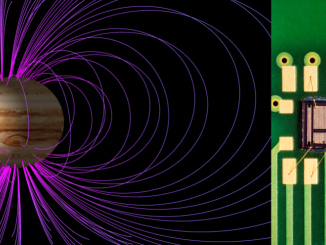
Magnetic fields are everywhere in our solar system. They originate from the Sun, planets, and moons, and are carried throughout interplanetary space by solar wind. This is precisely why magnetometers—devices used to measure magnetic fields—are flown on almost all missions in space to benefit the Earth, Planetary, and Heliophysics science communities, and ultimately enrich knowledge for all humankind. […]

Engaged in diverse areas of research and development, Cambridge, Massachusetts-based Draper has a way of touching cutting-edge magnetic technologies in many of its activities, dating back to its founder who was a pioneer in inertial navigation. Recent activities include: […]
Copyright © 2026 | MH Magazine WordPress Theme by MH Themes