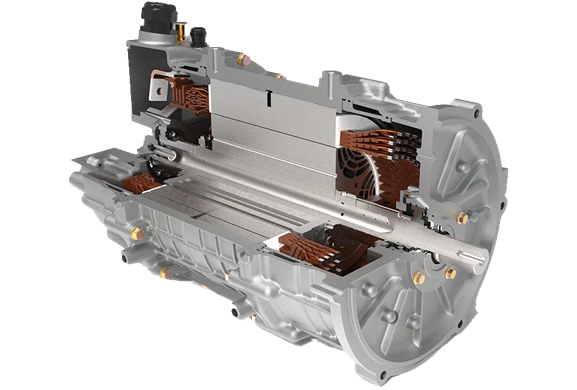
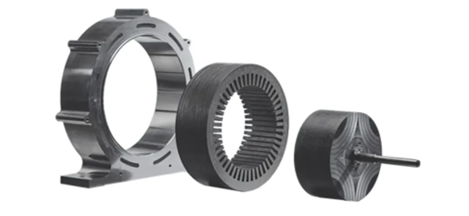
Engineering company Ricardo has developed a prototype electric propulsion module, called Alumotor, that is an innovative rare earth metal free synchronous reluctance motor. The motor was delivered within a consortium project it led that was funded by Innovate UK. Seeking to support sustainable mobility, the project addresses issues related to the environmental impact of materials for electric motors.
Designed, developed and tested by Ricardo, Alumotor offers a low cost, robust, sustainable alternative to conventional copper wound permanent magnet machines. The synchronous reluctance motor is free from rare earth metals and critical raw materials, such as cobalt and neodymium.
Made using aluminum hairpin windings, it is oil cooled to generate a power output of 214kW and maximum efficiency greater than 92%, making it suitable for light commercial vehicles and off-highway applications with full scalability to suit other applications. A synchronous reluctance motor can be similarly robust as an induction motor but comes at a lower cost and is free from permanent magnets. The difference is that it operates using reluctance i.e. magnetic resistance where the rotor aligns to the stator magnetic field.
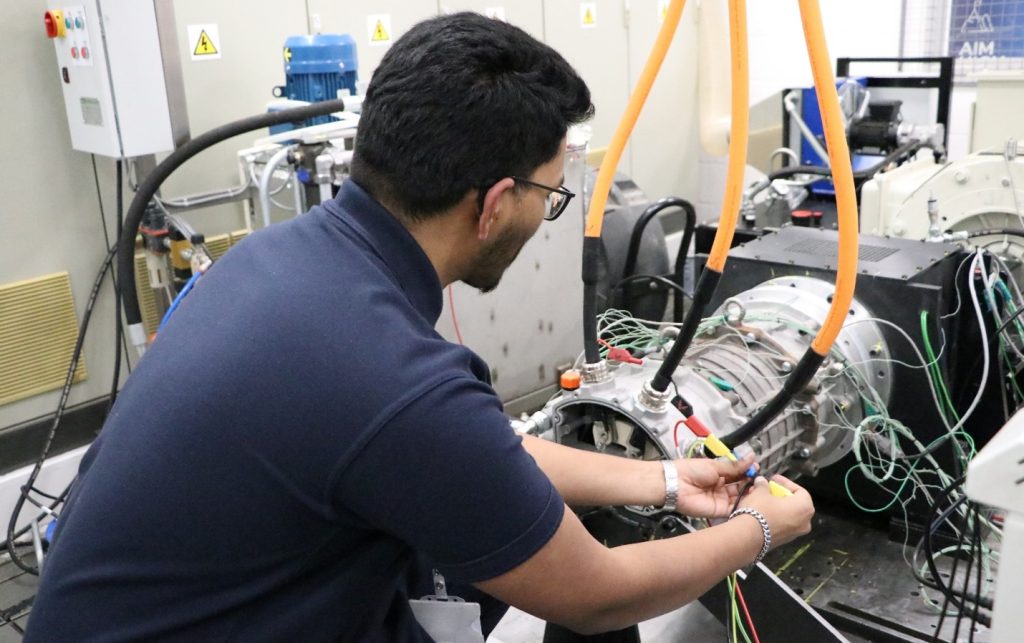
“We are excited to be at the forefront of testing aluminium hairpin windings, and are achieving strong performance data that will support future go-to-market activities,” said Dr Dragica Kostic-Perovic, Ricardo chief engineer responsible for the project. This is a significant development, showing true innovation, and supports our reputation as experts in the design and development of future sustainable technologies.”
The project was partially funded by the UK Innovation Fund and involved a consortium of partners which also included Aspire Engineering, Brandauer, Warwick Manufacturing Group, Phoenix Scientific and Global Technologies Racing. For more info, see www.ricardo.com.